Pregnancy often transforms routine decisions into significant considerations, and dental care is one of these areas. Regular dental visits may raise numerous questions and concerns. A subject that is receiving more attention from expectant mothers is dental laser therapy. Laser dentistry is increasingly being used for gum treatments, cavity removal, and soft tissue procedures. Is dental laser therapy safe during pregnancy?
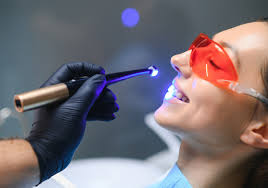
During pregnancy, oral health often receives less attention, despite its significant impact on overall health. Hormonal changes can increase gum sensitivity, inflammation, and the risk of infections. Many pregnant women are reluctant to undergo dental procedures due to concerns about their baby’s safety. Laser dentistry, advertised as a gentler and less invasive option, appears to be a viable alternative, but assurance beyond promise is necessary when pregnancy is concerned.
Dental laser therapy uses concentrated light energy as an alternative to traditional drills or scalpels, typically resulting in a quieter and often less painful experience while potentially decreasing the necessity for anesthesia. For pregnant women who frequently experience nausea, fatigue, and increased sensitivity, these benefits can be particularly attractive. However, safety considerations extend beyond comfort, emphasizing the importance of understanding the interaction between the treatment and a body that is significantly engaged in supporting new life.
How Does Dental Laser Therapy Work?
Dental laser therapy uses advanced laser technology to either replace or complement traditional dental tools in oral care. Instead of employing metal instruments such as drills or scalpels, dentists apply focused beams of light to conduct precise procedures on teeth and gums. Depending on the wavelength and intensity, these lasers can cut, reshape, disinfect, or stimulate tissue.
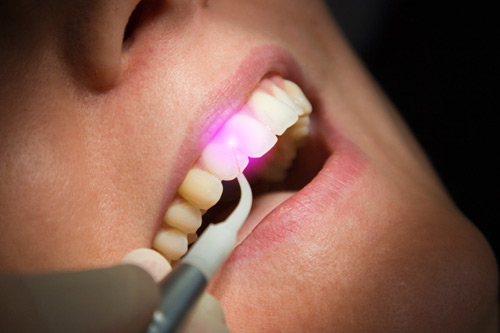
Dental lasers emit energy that interacts with water and pigments in oral tissues. This allows dentists to precisely remove decayed tissue, treat gum disease, or reshape soft tissue. Laser dentists in Vijayawada. Because lasers can target specific areas while sparing surrounding tissue, they are commonly regarded as minimally invasive.
Laser dentistry is frequently used for procedures such as treating gum inflammation, removing bacteria from periodontal pockets, reshaping gum lines, and preparing teeth for fillings. These laser treatments often result in decreased bleeding, reduced swelling, and faster healing.
For pregnant women, a less invasive dental option may seem reassuring; however, it is crucial to recognize that “less invasive” does not necessarily mean “risk-free.” The safety of dental laser therapy during pregnancy depends on factors such as the type of laser used, the specific procedure performed, and the stage of pregnancy.
Why Dental Care Is Crucial During Pregnancy
- Oral health is directly connected to overall health: Dental care is important not only for maintaining a bright smile but also because, during pregnancy, oral health significantly contributes to the mother’s overall well-being and can potentially impact pregnancy outcomes.
- Hormonal changes increase gum sensitivity: Hormonal changes during pregnancy, particularly in estrogen and progesterone levels, can increase the susceptibility of gums to inflammation, swelling, and bleeding, despite consistent brushing and flossing.
- High risk of pregnancy gingivitis: Pregnancy gingivitis is a common condition affecting many pregnant women, marked by red, tender, and bleeding gums as a result of increased blood flow and heightened gum response to plaque.
- Untreated gum problems can worsen over time: If left untreated, gingivitis can develop into periodontal disease, a more severe infection that harms the gums and the bone supporting the teeth.
- Oral infections can affect the whole body: bacteria from untreated dental infections may enter the bloodstream, potentially leading to systemic inflammation, which underscores the importance of maintaining good oral hygiene during pregnancy.
What Makes Laser Dentistry Different from Traditional Dentistry
A significant distinction between laser dentistry and conventional dental approaches is the patient experience. Lasers frequently eliminate the need for noisy drills, potentially reducing anxiety levels, particularly for pregnant women who may already be feeling heightened sensitivity. The precision of lasers enables dentists to focus solely on affected areas, thereby preserving healthy tissue.
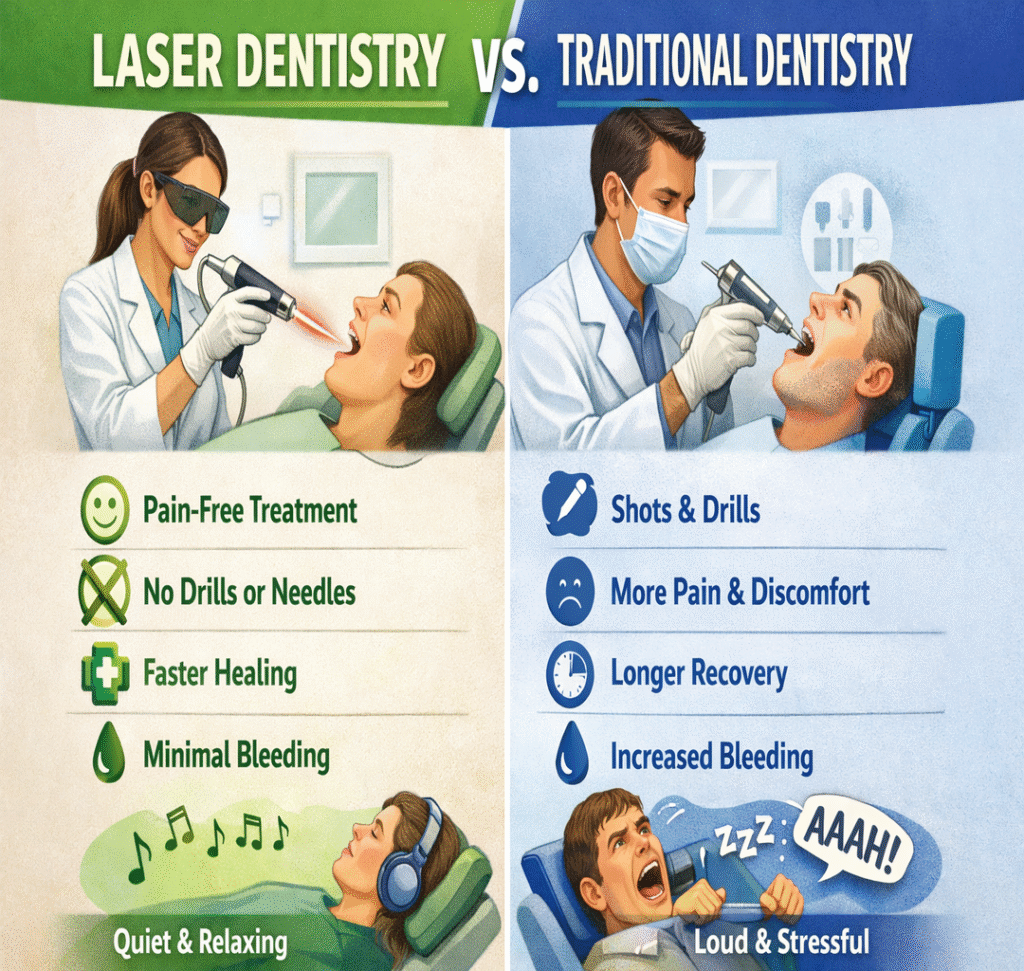
An additional advantage is the reduction in bleeding. Lasers have the ability to cauterize tissue during procedures, reducing blood loss and potentially decreasing the risk of infection. This can be especially beneficial for pregnant women, who may experience increased gum bleeding due to hormonal changes.
Laser dentistry frequently diminishes or removes the necessity for anesthesia. For pregnant women who are often careful about medication use, this can be a notable benefit. Nonetheless, not using anesthesia does not inherently make a procedure safer; it merely alters the risk profile. Although laser dentistry offers certain advantages, it still generates energy and heat, making professional judgment and adherence to proper protocols crucial. Recognizing the differences between laser dentistry and traditional techniques helps explain why it might be advisable in some scenarios and not in others.
Types of Dental Lasers Used in Dentistry
Dental lasers vary based on the specific type of tissue they are designed to address. Soft tissue lasers are intended for use on gums and other soft tissues within the oral cavity. They are frequently employed to treat gum disease, excise inflamed tissue, or modify the gum line.
Hard tissue lasers are intended for use on teeth and bone, enabling them to remove decay or prepare teeth for fillings. Additionally, diagnostic lasers are employed to detect cavities at an early stage by measuring changes in the structure of the tooth.
During pregnancy, soft tissue lasers are frequently utilized to address gum-related issues, which are common during this time. Additionally, hard tissue lasers may be employed for treating cavities, particularly when postponing treatment could result in infection.
General Safety Concerns About Dental Laser Therapy During Pregnancy
The primary challenge in assessing the safety of dental laser therapy during pregnancy arises from the absence of extensive clinical studies involving pregnant women. Ethical guidelines restrict experimental research within this population, resulting in most recommendations being derived from clinical experience and smaller observational studies.
There is no substantial evidence indicating that dental laser therapy poses a direct risk to the fetus. The use of dental lasers is localized and does not penetrate deeply enough to affect the uterus. Nonetheless, a lack of evidence does not equate to confirmation of safety.
Dentists typically adopt a cautious stance, suggesting laser therapy only when the advantages significantly surpass potential risks. Factors such as stress, discomfort, and lengthy procedures are also evaluated, given that maternal stress can indirectly impact pregnancy health.