Best dental clinic for dental plaque treatment in Vijayawada. For the most effective dental plaque treatment in Vijayawada, consider Oracle Dental Care, the city’s first ISO-certified dental clinic, known for providing safe, advanced, and patient-focused dental services.
Dental plaque is a sticky bacterial layer that accumulates on teeth and gums. If not properly addressed, it can cause tooth decay, gum disease, bad breath, and tooth loss. Professional plaque removal protects oral health and improves overall oral hygiene.
Achieving ISO certification as the first dental clinic in Vijayawada demonstrates compliance with international standards for quality, hygiene, and patient safety. Every procedure follows strict sterilization protocols and prioritizes patient comfort.
We offer a comprehensive range of dental services, including plaque removal, gum treatments, cosmetic dentistry, and advanced procedures, all provided with expert care and attentive service.
Best Dental doctors for dental plaque in Vijayawada
Best dental doctors for dental plaque in Vijayawada. Dr. Manohar is one of the best dentists in Vijayawada for his extensive experience and expertise. With years of clinical practice and a focus on patient care, he has provided many individuals with advanced, pain-free dental treatments.
Dr. Manohar established Oracle Dental Care, the first ISO-certified dental clinic in Vijayawada. Under his direction, the clinic maintains high standards of quality, hygiene, and modern dental technology to ensure every patient receives safe and effective treatment.
Dr. Manohar emphasizes the importance of patient education along with treatment. He conducts free dental camps and awareness programs in Vijayawada to actively promote preventive dental care and oral hygiene practices.
Dr. Manohar and his team at Oracle Dental Care provide a comprehensive range of dental services, from routine checkups to complex procedures, all in one location. His commitment to skilled practice and a patient-focused approach distinguishes him in the field of dentistry in Vijayawada.
What Exactly Is Dental Plaque?
Dental plaque is widely recognized, but its nature is not fully understood by everyone. It is a thin, sticky film that consistently forms on teeth. Although it appears nearly invisible and harmless, it harbors a dense bacterial community. These bacteria consume sugars and starches from food, and their digestion produces acids. These acids are the main contributors to dental problems.
Plaque begins to form within hours after brushing, even if the teeth were thoroughly cleaned in the morning, and starts to accumulate again by the afternoon. This is a natural process, but if not addressed, it can lead to significant dental problems. The adhesive nature of plaque causes it to stick firmly to tooth surfaces, especially along the gum line and between teeth, areas that are often difficult for a toothbrush to clean effectively.
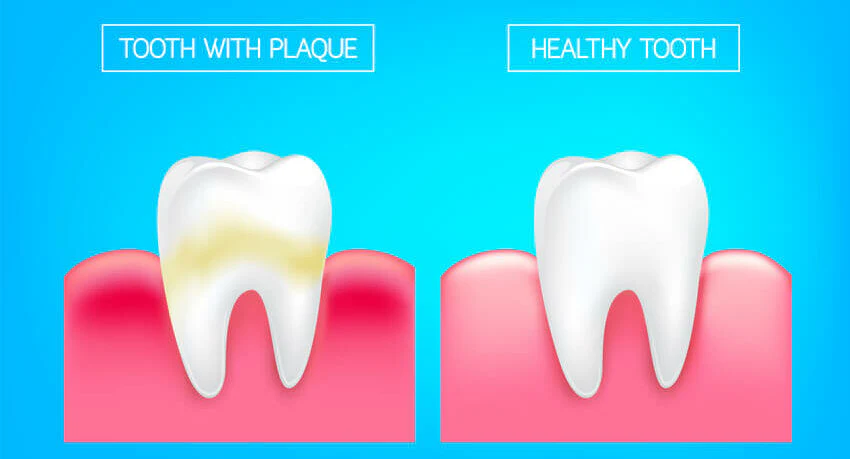
Dental plaque serves as the initial stage for numerous oral health issues. Conditions such as cavities, gum disease, and tooth loss frequently originate from the buildup of plaque. While it may appear minor, neglecting plaque can lead to progressively worsening problems, similar to a small, unattended leak in a roof. Plaque is typically colorless or pale yellow, making it challenging to detect in its early stages. Often, individuals become aware of its presence only when their teeth develop a rough texture or their gums start to bleed during brushing. At this point, plaque may already be irritating.
How Dental Plaque Forms on Your Teeth
Plaque tends to form quickly, even with daily brushing, due to the natural conditions within the mouth. These conditions include warmth, moisture, and an abundance of nutrients, which create an ideal environment for bacteria to thrive. When you eat foods or drink beverages high in sugar or starch, such as rice, bread, sweets, or soft drinks, small food particles can remain in your mouth. Bacteria use these particles as a food source and produce acids as a byproduct. These acids then mix with saliva and debris, leading to the formation of plaque.
The process begins shortly after eating. If brushing is skipped at night, plaque develops undisturbed for 7–8 hours. This sticky film gradually thickens and becomes harder to remove. If plaque is not properly cleaned, it can harden into tartar, also called calculus, which cannot be removed by brushing alone.
Plaque loves hiding in hard-to-reach areas:
- Along the gum line
- Between teeth
- Around dental fillings or crowns
- Under braces or aligners
Maintaining good oral hygiene disrupts the cycle of plaque accumulation. Consistent brushing, flossing, and regular dental visits can prevent plaque from developing into more severe problems. However, if plaque builds up significantly, professional dental treatment is required.
Difference Between Plaque and Tartar
The terms “plaque” and “tartar” are often used interchangeably, but they refer to different things. Recognizing the distinction clarifies the importance of timely treatment.
Plaque is a soft, sticky substance that can be removed with proper brushing and flossing. In contrast, tartar is the hardened form of plaque. When plaque remains on the teeth for an extended period, minerals from saliva interact with it, forming a hard deposit. This transformation usually occurs within 24 to 72 hours.
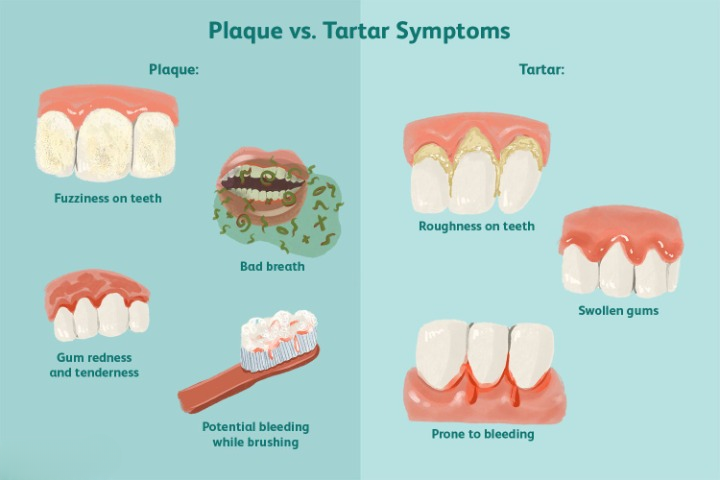
When plaque hardens into tartar, it cannot be removed through home brushing. Only a dental professional can safely eliminate tartar using specialized instruments.
Common Causes of Dental Plaque Buildup
Plaque accumulation does not occur suddenly or without cause; it is worsened by specific habits and conditions. Identifying these underlying factors is essential for preventing future problems.
Inadequate oral hygiene significantly contributes to plaque accumulation. Omitting brushing, neglecting flossing, or using improper brushing techniques can lead to plaque buildup. Additionally, brushing for less than the recommended two minutes may leave some areas uncleaned.
Other common causes include:
- Smoking and tobacco use
- Dry mouth
- Crooked or crowded teeth
- Wearing braces or dental appliances
- Irregular dental checkups
Saliva typically assists in removing food particles and neutralizing acids. When saliva production is reduced due to medications or medical conditions, plaque accumulation occurs more rapidly.
Lifestyle decisions are also significant. Individuals experiencing high-stress levels might overlook oral hygiene. Additionally, certain medical conditions, such as diabetes, can elevate the risk of gum disease, thereby exacerbating the dangers associated with plaque.
Who Is the Ideal Candidate for Dental Plaque Treatment?
Adults with Gum Problems
Adults often need treatment for dental plaque, especially those with gum problems. People who notice symptoms such as bleeding gums, persistent bad breath, or visible tartar deposits are likely suitable candidates for professional cleaning.
As individuals age, plaque buildup often increases due to lifestyle habits, dietary changes, and sometimes neglecting regular dental appointments. People with busy work schedules may postpone dental check-ups, leading to the gradual accumulation of plaque.
Adults who smoke or use tobacco face an increased risk. Tobacco can reduce blood flow to the gums, increasing susceptibility to infections and slowing the healing process.
Timely treatment can help prevent more complicated procedures in the future. Just as routine car maintenance prevents breakdowns, regular dental care is necessary to maintain oral health.
Children and Teenagers
Many parents believe that dental plaque treatment is solely for adults; however, children and teenagers can also benefit significantly from professional cleaning.
Children frequently consume sugary snacks, chocolates, and soft drinks. When combined with irregular brushing habits, this can lead to an ideal environment for plaque formation. Teenagers with braces are particularly susceptible, as the brackets and wires tend to trap food particles.
Professional plaque removal helps:
Prevent cavities
Reduce the risk of gum inflammation
Maintain oral hygiene during orthodontic treatment
Establish healthy habits early
Beginning early establishes a foundation for lifelong oral health. Educating children about the significance of plaque control now can prevent serious dental problems in the future.
What Is Dental Plaque Treatment?
Professional Dental Cleaning (Scaling): Dental plaque treatment typically starts with a professional cleaning, commonly referred to as scaling. This procedure is among the most frequently conducted and effective methods utilized in dental clinics. If you have undergone a professional teeth cleaning, you have experienced plaque treatment.
During scaling, the dentist or dental hygienist uses specialized instruments to remove plaque and tartar from the tooth surfaces and along the gumline. Unlike regular brushing at home, these instruments can reach areas that are otherwise inaccessible.
Ultrasonic scalers are commonly used in modern dental clinics. These devices use high-frequency vibrations to break down hardened tartar while spraying water to remove debris. This method is efficient, safe, and usually painless, although some individuals may experience mild sensitivity.
Professional scaling is recommended at least once every six months. For people prone to heavy plaque buildup, more frequent visits may be necessary. Regular cleanings prevent minor issues from developing into major dental problems.
Deep Cleaning and Root Planing
When plaque accumulation has advanced below the gum line and created deep pockets, a standard cleaning may be insufficient. In such cases, deep cleaning, also referred to as scaling and root planing, is required.
Root planing is a dental procedure that extends beyond standard surface cleaning. It entails the smoothing of the root surfaces of teeth to eliminate bacteria and toxins that are located beneath the gums. This process makes it more difficult for plaque to adhere to these surfaces in the future.
Deep cleaning serves as a restorative measure for gum health by eliminating sources of irritation and infection, allowing the gums to heal naturally.
Why Choose Us in Vijayawada for Dental Plaque Treatment?
Choosing the right dental clinic makes all the difference. In Vijayawada, we are committed to providing safe, effective, and comfortable dental plaque treatment tailored to each patient.
Experienced Dental Specialists: The dental team consists of qualified professionals who prioritize gentle, thorough plaque removal. They emphasize precision to ensure all hidden deposits are effectively eliminated.
Advanced Technology and Equipment: Modern ultrasonic scalers and advanced diagnostic tools are used to ensure treatments are accurate and painless. This technology increases safety and efficiency.
Personalized Treatment Plans: Each smile is unique. We thoroughly assess your oral health and create personalized treatment plans tailored to your specific needs.
Affordable and Transparent Pricing: Dental care should be accessible to all, and we provide competitive pricing with full transparency and no hidden costs.