
Dentures are removable dental appliances designed to replace missing teeth and surrounding tissues. Made to mimic the appearance of natural teeth, they help restore functions such as chewing, speaking, and maintaining facial structure. Modern dentures are constructed from advanced materials such as acrylic resin, metal frameworks, and flexible polymers, providing a more natural appearance and greater comfort than earlier versions.
Dentures are often recommended for individuals who have lost teeth for various reasons, as missing teeth can affect daily activities such as eating, speaking, and smiling. They offer a functional and effective solution for restoring both oral function and appearance.
2. What are “same-day” (immediate) dentures?
“Same-day” or immediate dentures are prepared in advance and placed in your mouth immediately after your teeth are removed, during the same appointment. This means you do not have to go without teeth at any point during the healing process.
Immediate dentures are placed immediately after tooth extraction, allowing patients to leave the clinic with a full set of teeth, unlike traditional dentures, which require a healing period of several weeks or months before placement.
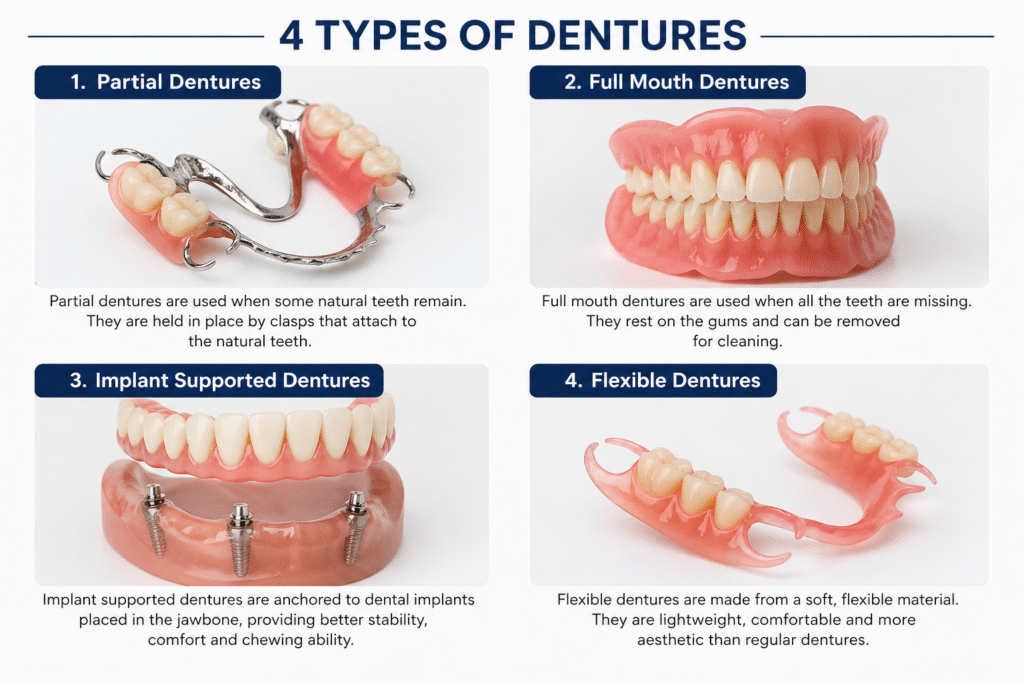
3. What are different types of dentures?
There are 4 different types of dentures:
1. Partial Dentures
2. Complete Dentures
3. Flexible Dentures
4. Implant-supported Dentures
3. What is the cost of dentures in Vijayawada?
- The cost of dentures in Vijayawada may vary depending upon the type of the dentures you wear
- Partial Dentures: ₹8,000 – ₹35,000
- Complete (Full) Dentures: ₹20,000 – ₹100,000
- Flexible Dentures: ₹15,000 – ₹50,000
- Implant-Supported Dentures: ₹80,000 – ₹250,000+
4. What should I expect in the first 30 days of wearing dentures?
The first month of wearing dentures is an adjustment period in which your mouth, gums, and muscles adapt to the new appliance, often involving discomfort, ongoing adaptation, and steady progress.
5. Is it normal to produce more saliva with new dentures?
Yes—it’s completely normal to produce more saliva when you first start wearing dentures.
Your mouth naturally reacts to dentures as a new foreign object, which triggers the salivary glands to become more active. This is a temporary response and part of your body’s way of adjusting.
6. The biggest mistakes in cleaning dentures: Why hot water and toothpaste are bad.
Maintaining dentures requires different care techniques than those used for natural teeth. Improper cleaning methods, such as using hot water or regular toothpaste, can damage dentures, reduce their lifespan, and affect comfort and hygiene.
7. How to properly clean and store your dentures overnight.
An effective overnight routine helps maintain the cleanliness, freshness, and durability of your dentures while protecting your gums from irritation and infection. The following is a straightforward, dentist-recommended method to achieve this.
1. Remove Dentures Gently
2. Rinse Immediately
3. Brush the Right Way
4. Soak Overnight
5. Rinse Before Wearing
8. What Is “Denture Breath”?
The term “denture breath” refers to halitosis commonly experienced by individuals who wear dentures. This condition usually occurs due to the accumulation of bacteria, food particles, and plaque on the dentures or in the mouth, resulting in an unpleasant odor. Although dentures are not natural teeth, they can still serve as a breeding ground for bacteria and fungi if not properly cleaned, potentially causing odor, irritation, and, in some cases, infections.
9. When is it time for a reline?
A denture reline becomes necessary when dentures no longer fit properly due to natural changes in the gums and jawbone. Over time, the shape of the mouth changes, especially after tooth loss, which can cause dentures to feel loose or uncomfortable.
10. What to do immediately when your dentures break?
A broken denture can be difficult to manage; however, it is important not to attempt repairs yourself. Prompt and appropriate action can help minimize further damage and speed up the restoration process.
1. Stop Using Them Right Away
If your dentures are cracked, chipped, or broken:
Remove them immediately Avoid wearing damaged dentures—they can injure your gums or worsen the break
2. Inspect the Damage
3. Clean Them Gently
4. Avoid DIY Repairs
5. Visit a Dentist Immediately
11. Foods to avoid with dentures?
Adjusting your diet is an important part of living comfortably with dentures. While modern dentures are durable, certain foods can cause damage, discomfort, or slipping—especially during the early stages of wearing them.
1. Hard Foods
2. sticky foods
3. Tough & Chewy Foods
4. Foods with Small Particles
12. What is the difference between a dentist and a denturist?
Both professionals help restore your smile, but they have different training, roles, and scope of practice—especially when it comes to dentures.
A dentist is a licensed healthcare professional who diagnoses and treats various oral health conditions.
A dentist can handle complex cases, including surgeries and underlying dental problems, before placing dentures.
A denturist specializes specifically in making and fitting dentures.
Denturists do not perform surgeries or treat oral diseases. Their work is limited to denture-related services.