Maintaining a bright smile involves more than regular brushing and flossing; dietary choices also significantly contribute. A well-balanced diet can help strengthen teeth, support gum health, and reduce the risk of common dental issues such as cavities and sensitivity. Best foods for strong teeth. Understanding which foods promote dental health, identifying items to limit, and incorporating practical tips can naturally enhance oral hygiene.
🥗 Why Does Diet Matter for Strong Teeth?
Your teeth need essential nutrients like calcium, phosphorus, and vitamins to stay strong. These nutrients help:
- Strengthen tooth enamel (the protective outer layer)
- Prevent tooth decay and cavities
- Support healthy gums
- Reduce sensitivity and inflammation
Without proper nutrition, even regular brushing may not fully protect your teeth.
🥦 Best Foods for Strong Teeth
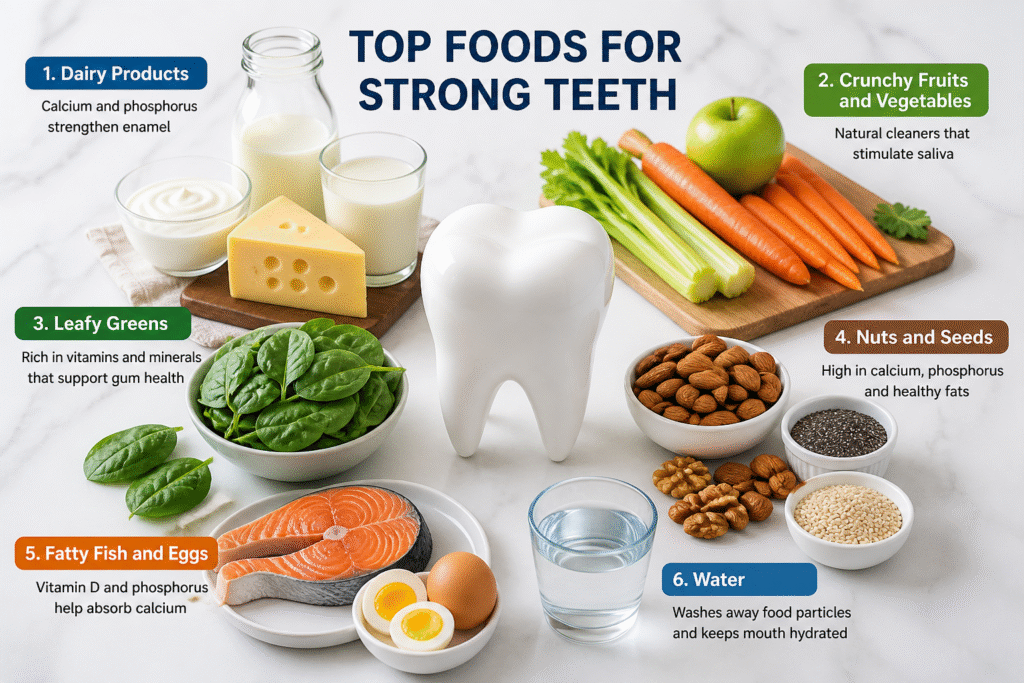
1. Dairy Products: The Calcium Powerhouse for Strong Teeth
Dairy products such as milk, cheese, and yogurt are beneficial for maintaining strong teeth due to their high calcium and phosphorus content, which are essential minerals for rebuilding tooth enamel. Cheese promotes saliva production, aiding in neutralizing harmful acids, while yogurt contains probiotics that contribute to reducing harmful bacteria and supporting gum health. Milk enhances enamel strength and helps maintain overall oral balance. Incorporating dairy into daily meals can contribute to protecting teeth from decay and supporting long-term dental health.
2. Crunchy Fruits and Vegetables: Nature’s Tooth Cleaners
Fruits and vegetables, including apples, carrots, and celery, possess a crunchy texture that aids in cleaning teeth surfaces by removing plaque and food particles. Apples promote saliva production, which helps lower mouth acidity, carrots contain vitamin A to support enamel health, and celery contributes to gum stimulation and increased saliva flow. Consuming these foods in their raw state enhances their natural cleansing properties while supplying valuable nutrients.
3. Leafy Greens: Packed with Essential Vitamins and Minerals
Leafy greens such as spinach, kale, and lettuce contain calcium, folic acid, and essential vitamins that contribute to the health of teeth and gums. These nutrient-dense foods are low in calories and high in fiber, helping to stimulate saliva production and remove harmful bacteria. Folic acid is particularly beneficial for supporting healthy gum tissue and minimizing inflammation, making the inclusion of leafy greens in meals an effective approach to promoting oral health.
4. Nuts and Seeds: Small Foods with Big Dental Benefits
Nuts like almonds and walnuts, as well as seeds such as sesame and chia, are rich sources of calcium, phosphorus, and healthy fats. Almonds, in particular, offer high levels of calcium without added sugars. Additionally, chewing nuts promotes saliva production, which can support dental health by reducing the risk of cavities. These foods contribute to enamel strength and provide sustained energy, making them a beneficial choice for supporting oral and general health.
5. Fatty Fish and Eggs: Vitamin D for Better Calcium Absorption
Fatty fish such as salmon, tuna, and mackerel, along with eggs, provide significant amounts of vitamin D, a nutrient essential for the body’s effective absorption of calcium. Adequate vitamin D levels are important for maximizing the benefits of calcium-rich foods for dental health. Additionally, these foods are sources of phosphorus, which contributes to the strength and repair of tooth enamel, supporting overall oral health.
6. Water – The Most Underrated Tooth Protector
Although not classified as food, water plays a crucial role in maintaining oral health. Consuming adequate amounts of water helps rinse away food particles, balance acid levels, and maintain hydration in the mouth. Additionally, fluoridated water can fortify enamel and reduce the risk of tooth decay, providing an effective and accessible method for daily tooth protection.
Foods to Avoid for Better Dental Health
Certain foods contribute to stronger teeth, while others can gradually harm enamel, elevate the likelihood of cavities, and cause gum issues. Recognizing which foods to reduce or avoid is crucial for preserving dental health.
1. Sugary Foods and Sweets: The Biggest Cause of Tooth Decay
Sugary foods, such as candies, chocolates, pastries, and desserts, are significant contributors to dental health issues. When sugar is consumed, bacteria in the mouth metabolize it and produce acids, which can erode the enamel, the protective outer layer of the teeth, ultimately causing cavities. Sticky sweets, including toffees and gummies, pose additional risks as they adhere to the teeth for extended periods, providing bacteria with a sustained source of sugar to produce acids. Regular consumption of sugary snacks further heightens the risk by subjecting the teeth to repeated acid exposure throughout the day.
2. Carbonated Soft Drinks: Acidic Damage to Enamel
Soft drinks, whether regular or diet, are acidic and have the potential to weaken tooth enamel over time. Beverages labeled as “sugar-free” may still contain acids such as phosphoric and citric acid, which contribute to enamel erosion.
Frequent consumption may contribute to tooth sensitivity, discoloration, and a heightened risk of decay, with prolonged or frequent sipping of such beverages exacerbating the issue by extending acid exposure.
3. Sticky and Chewy Foods: Hard to Remove, Easy to Harm
Certain foods, such as caramel, dried fruits, sugar-containing chewing gum, and specific processed snacks, are more likely to adhere to the surfaces of teeth. Unlike other foods that are easily rinsed away, these may linger in the crevices of teeth for extended durations.
This environment fosters bacterial growth, leading to the production of harmful acids. Similarly, dried fruits, despite being natural, contain concentrated sugars and can have detrimental effects if consumed in excess without adequate oral hygiene.
4. Highly Acidic Foods: Enamel Erosion Over Time
Citrus fruits such as oranges, lemons, and grapefruits, along with foods that contain vinegar, may cause harm if consumed in excess, as their natural acids can progressively erode tooth enamel.
When enamel becomes weakened, teeth are more susceptible to sensitivity, discoloration, and decay. Although these foods offer nutritional benefits, consuming them in moderation and rinsing the mouth with water afterward can help minimize potential effects.
5. Refined Carbohydrates: Hidden Sugars That Feed Bacteria
Starchy foods such as white bread, chips, pasta, and biscuits, though not sweet in taste, break down into sugars in the mouth, providing a food source for bacteria that produce acids and cause enamel damage. These types of foods also tend to lodge between teeth, contributing to plaque accumulation and an elevated risk of cavities. Consuming such foods frequently without adequate brushing can have a detrimental impact on oral health.
6. Alcohol and Drying Beverages: Reduced Saliva Protection
Alcoholic beverages and excessive coffee consumption can contribute to dry mouth by decreasing saliva production, which is essential for removing food particles and neutralizing acids.
A lack of saliva in the mouth can create favorable conditions for bacterial growth, which may elevate the likelihood of bad breath, gum disease, and tooth decay over time.
7. Ice and Hard Foods: Risk of Tooth Damage
Biting down on hard substances such as ice, hard candies, or unpopped popcorn kernels can cause cracks or chips in teeth. Despite being frozen water, ice possesses a hardness that can harm enamel and compromise the tooth structure.
Habits such as chewing ice can lead to long-term damage and may necessitate dental treatment.
Helpful Tips to Protect Your Teeth
Completely avoiding these foods may not always be practical; however, their potential negative effects can be minimized by implementing these straightforward strategies:
- Rinse your mouth with water after consuming sugary or acidic foods.
- Avoid frequent snacking between meals.
- Use a straw when drinking acidic beverages.
- Brush your teeth at least twice a day with fluoride toothpaste.
- Visit your dentist regularly for check-ups and cleanings
Diet plays an important role in dental health. Reducing the intake of sugary, acidic, sticky, and processed foods helps protect enamel, prevent cavities, and support overall oral hygiene. Being selective with food choices now may help prevent significant dental issues later on.