
Dental Bridges and crowns in Vijayawada. Dental bridges and crowns are widely recognized as dependable and long-standing dental treatments. They are used to address issues such as damaged or missing teeth and are effective in restoring the natural appearance and functionality of a person’s smile. In modern society, where factors such as confidence, health, and aesthetics all hold significant importance, the use of dental bridges and crowns is gaining increased popularity.
A single missing or damaged tooth can significantly impact an individual’s ability to chew, self-assurance, and facial symmetry. High-quality restorations, particularly those from skilled practitioners such as Oracle Dental Care in Vijayawada, a reputable and advanced dental clinic in the area, play a crucial role in addressing these issues.
Crowns and bridges serve important roles in contemporary restorative dentistry, acting as protective coverings for weakened teeth and replacements that restore functionality. They contribute to maintaining the alignment and structure of surrounding teeth while also enhancing their aesthetic appeal. When properly implemented, these treatments can be durable, providing comfort and a natural appearance for many years. This article will explore the concepts of crowns and bridges, their significance, target demographics, and benefits, and highlight Oracle Dental Care as a notable provider of these solutions in Vijayawada.
Best Dental Hospital for Dental Bridges and Crowns treatment in Vijayawada
Best Dental Hospital for Dental Bridges and crowns treatment in Vijayawada. Dental crowns are protective coverings placed over teeth that are damaged, weakened, or have cosmetic imperfections. These crowns act as a durable barrier, safeguarding the tooth from additional damage or degradation. In situations where a tooth is cracked, decayed, heavily filled, or otherwise structurally impaired, its inherent strength is compromised. A simple filling may not suffice in these instances, making the application of a crown essential. Crowns encase the entirety of the tooth’s visible portion, thereby reinstating its original shape, strength, and appearance.
Crowns are crafted from different materials, each providing specific benefits. Porcelain crowns are valued for their natural and tooth-like appearance. Zirconia crowns are noted for their strength and durability, making them suitable for individuals who chew hard foods or grind their teeth. Ceramic crowns provide strong aesthetic appeal, while metal-based crowns, such as those made from gold or metal alloys, offer exceptional durability, especially for back teeth subject to significant chewing pressure. The selection of material is influenced by factors such as the patient’s requirements, budget, bite forces, and desired aesthetics.
Crowns serve essential functions in dental care beyond enhancing strength and appearance. They are vital in preventing further deterioration of a tooth that has undergone root canal treatment, which can leave it brittle. A crown acts to protect and maintain the tooth’s functionality over an extended period. Additionally, crowns offer an immediate solution for severe tooth discoloration, which may be caused by conditions such as fluorosis, injury, or old fillings, consequently improving the tooth’s appearance and contributing to a more confident smile. Crowns are also crucial for preserving proper chewing alignment, as a weakened or chipped tooth may cause an unintended shift in biting habits, potentially leading to jaw pain or damage to neighboring teeth.
Dental bridges serve as a reliable and efficient method for addressing the issue of missing teeth. The absence of even a single tooth may lead to a cascade of dental problems, such as the shifting of adjacent teeth, challenges with chewing, misalignment of the bite, and alterations in facial appearance. By bridging the gap created by a missing tooth, dental bridges help restore both functionality and appearance. They act as a sturdy, tailored solution that occupies the space and helps maintain the normal appearance of one’s smile.
A dental bridge generally includes three key parts: the pontic, which is the artificial tooth replacing the missing one, and two abutment teeth, which are the natural teeth on each side of the gap. These abutment teeth are capped with crowns that secure the bridge in position. This design provides a stable and natural-appearing substitute that enables the patient to chew, speak, and smile effectively. The materials for bridges are comparable to those used for crowns, such as porcelain, ceramic, zirconia, or a combination of materials to enhance strength and aesthetic appeal.
Dental bridges are favored by many individuals as a swift and dependable option for tooth replacement that does not necessitate surgical procedures. In contrast to dental implants, which involve placing metal posts into the jawbone and require an extended healing period, bridges can generally be fitted in only a few dental appointments. For those unable to opt for implants due to certain health issues, bone deterioration, or financial constraints, bridges serve as a viable alternative.
Dental bridges offer the advantage of preserving the natural alignment of the remaining teeth. In the absence of a tooth, neighboring teeth may shift into the vacant area, potentially leading to gaps, misaligned teeth, bite issues, and jaw pain associated with the temporomandibular joint (TMJ). Installing a bridge to fill the gap aids in maintaining the mouth’s original structure.
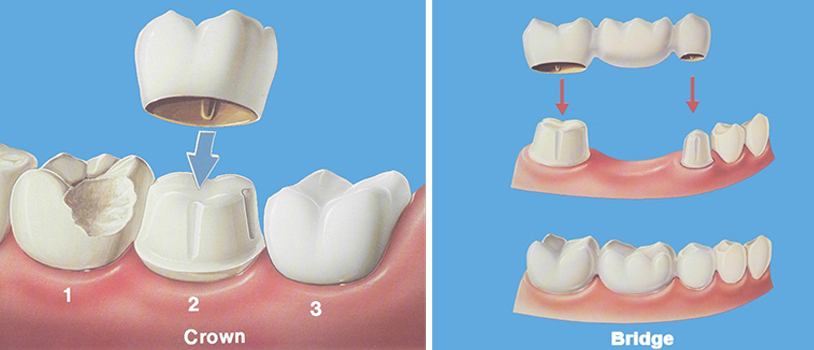
Types of Dental Crowns
Dental crowns are available in various types, each tailored to address specific requirements such as durability, appearance, cost, and the position of the tooth that requires treatment. Familiarity with these types aids patients in making informed decisions, guaranteeing that the crown not only has a pleasing appearance but also performs effectively over an extended period.
Porcelain crowns: Porcelain crowns are widely chosen for dental restoration due to their superior aesthetic qualities. They are designed to closely resemble the natural color and translucency of teeth, which makes them particularly suitable for front teeth or visibly prominent areas of the smile. Individuals seeking natural-looking outcomes frequently opt for porcelain crowns, as they integrate seamlessly with existing teeth even when exposed to bright light, avoiding an artificial appearance.
Ceramic crowns: Ceramic crowns provide an aesthetic comparable to porcelain, with enhanced strength and durability. Additionally, they are metal-free, which makes them an appropriate option for individuals with metal allergies or sensitivities.
Metal crowns: Metal crowns, such as those made from gold and metal alloys, are known for their strength and durability. They are capable of enduring substantial chewing forces, making them well-suited for molars. However, due to their metallic look, they are less commonly selected for front teeth, despite their reliability.
Zirconia crowns: Zirconia crowns are gaining popularity due to their combination of notable durability and appealing appearance. Known for their formidable strength, these crowns are also recognized for their biocompatibility and resistance to wear.
Types of Dental Bridges
Dental bridges are available in various types, each tailored to address specific functional requirements and treatment situations. The selection of the appropriate type is influenced by several factors, including the position of the missing tooth, the condition of adjacent teeth, the state of the jawbone, and the patient’s aesthetic choices.
Traditional dental bridges: Traditional dental bridges are commonly used when healthy natural teeth are present on either side of a missing tooth, as these teeth serve as anchors fitted with crowns to support the pontic, or artificial tooth, effectively. They are strong and reliable, suitable for both front and back teeth, providing excellent chewing strength and a natural appearance.
Cantilever bridges: Cantilever bridges resemble traditional bridges but necessitate support from only one adjacent natural tooth. They are utilized in situations where a missing tooth is adjacent to just one natural tooth, a scenario often encountered when a patient loses the final tooth in a sequence.
Maryland bridges: Maryland bridges, also known as resin-bonded bridges, are considered a more conservative dental option because they do not necessitate reshaping the adjacent teeth. Instead, they utilize metal or porcelain wings that are bonded to the back surfaces of the supporting teeth. These bridges are generally used for front teeth, as they are less suited to handling heavy chewing forces compared to other types.
Implant-supported bridges: Implant-supported bridges represent a highly advanced and durable choice. Rather than depending on natural teeth, these bridges are anchored by dental implants inserted into the jawbone, offering superior strength, stability, and longevity. They are particularly suitable for patients who have lost several consecutive teeth.
Importance of Dental Crowns and Bridges
Dental crowns and bridges are integral to the restoration of oral health, contributing to improved appearance and overall quality of life. Contrary to the common belief that these treatments are solely cosmetic, they serve as necessary restorative solutions. They protect teeth, sustain mouth function, and prevent long-term dental issues. Damaged or missing teeth impact more than just aesthetics; they can decrease chewing efficiency, alter facial structure, and affect speech. Thus, crowns and bridges are critical in reinstating these essential functions within modern dentistry.
Dental crowns and bridges serve a crucial role in providing protection for weakened or fractured teeth, which are susceptible to further damage or infection. The absence of a crown can lead to the tooth breaking or necessitating extraction. Crowns function as protective barriers, safeguarding the tooth structure against bacteria, pressure, and wear. This protective measure can increase the longevity of the tooth and potentially prevent the need for more invasive and costly future dental procedures.
Restoring chewing ability is significantly important, as missing or damaged teeth can hinder proper chewing and may result in the consistent use of only one side of the mouth. This practice can lead to jaw discomfort, uneven wear on existing teeth, and digestion problems due to inadequate chewing. Dental bridges effectively address the gaps left by missing teeth, enabling individuals to chew correctly and sustain a balanced bite.
Crowns and bridges contribute to the maintenance of facial structure by supporting the cheeks and lips with teeth. The absence of teeth may lead to the shrinkage of surrounding bone, resulting in a sunken or aged look. Bridges help prevent this issue by stopping teeth from moving out of place and retaining the mouth’s natural alignment. Crowns also play a role by strengthening damaged teeth to prevent collapse or shortening, thus preserving the face’s natural height and contour.
One often underappreciated aspect of dental restorations, such as crowns and bridges, is their ability to improve an individual’s confidence by addressing issues like cracked, discolored, or missing teeth. These treatments help restore the natural appearance of a smile, thereby enhancing self-esteem and facilitating greater ease in communication, laughter, and social interactions. The emotional advantages provided by these restorations are considered equally significant to their physical benefits.
Who need ideal one for dental bridges and crowns ?
Dental crowns are suggested for individuals with teeth that are impaired, damaged, or have cosmetic issues, providing a durable solution to safeguard and rejuvenate teeth unsuitable for repair with basic fillings. Suitable candidates typically possess teeth that can be preserved but require reinforcement to avert future issues. The application of a crown fortifies the tooth, reinstates its function, and improves its appearance simultaneously.
Extensive tooth decay is a frequent reason for needing a crown, as a large cavity can lead to weakened tooth structure where a filling is insufficient. A crown encapsulates the entire tooth, offering protection against further decay and providing the necessary stability for everyday chewing. Additionally, patients who have had root canal treatment are often suitable for crowns since teeth without live nerves become brittle over time, and a crown helps prevent fractures post-treatment.
Crowns are beneficial for individuals with cracked or fractured teeth, as these can result from accidents, grinding habits, or biting into hard foods. A crown helps to hold the tooth intact, preventing further deterioration of the crack. In certain situations, it can preserve a tooth that might otherwise need to be extracted. Moreover, crowns are often necessary for those with worn-down teeth, typically due to bruxism or acid erosion, to restore the tooth’s height and ensure proper bite alignment. Crowns are also ideal for cosmetic improvements. Some teeth may be misshapen, discolored, or poorly aligned. In such cases, a crown provides a quick and long-lasting makeover, offering a natural-looking enhancement.
Dental bridges are intended for people with one or more missing teeth, providing a functional, durable, and visually appealing replacement. The absence of teeth can result in various oral health concerns, and bridges serve to mitigate these issues while reestablishing the appearance and sensation of a full smile. Those most suitable for dental bridges generally belong to certain categories, each with distinct requirements that bridges can efficiently meet.
Dental bridges are often recommended for individuals who have lost a tooth due to decay, injury, or gum disease. Although a missing tooth might initially appear to be a minor concern, the vacant space can eventually lead to surrounding teeth shifting out of alignment. This can result in bite issues, gaps, misaligned teeth, and potential jaw discomfort. A dental bridge serves to fill the gap and maintain the alignment of remaining teeth, helping to preserve the structure and appearance of the mouth.
Patients who are not eligible for dental implants may find bridges to be a suitable alternative. In situations involving inadequate jawbone density, specific medical conditions, or hesitance towards surgical procedures, bridges present a more accessible and less invasive option. The absence of bone grafts or implant surgeries in bridge treatment offers a practical solution for those preferring quicker and simpler methods. Furthermore, bridges typically have a lower cost compared to implants, providing a cost-effective option for reliable tooth replacement.
Bridges provide significant advantages to individuals seeking improved chewing efficiency and speech clarity. The absence of teeth, particularly molars, can result in discomfort and difficulty while chewing, often causing reliance on one side of the mouth. This can impact digestion and contribute to uneven wear and temporomandibular joint (TMJ) problems. By restoring balance, bridges enable patients to chew comfortably and articulate clearly, eliminating the slurring that may occur with missing anterior teeth.
Cosmetic reasons significantly influence the decision to opt for dental bridges, as they can help individuals who may be self-conscious about gaps in their smile regain confidence. Modern bridges integrate well with existing teeth due to materials such as porcelain and zirconia that closely resemble natural enamel, providing a suitable option for those seeking a more youthful and symmetrical appearance.
Advantages of Dental crowns & Bridges
Dental crowns provide numerous advantages, contributing to their status as a commonly chosen restorative treatment in contemporary dentistry. They serve as a reliable and durable solution for individuals dealing with tooth damage, undergoing root canal treatments, or facing cosmetic issues. In addition to enhancing the appearance of teeth, crowns are essential in reinforcing, safeguarding, and maintaining the health of natural teeth over extended periods.
Dental crowns are known for their notable durability, as they cover the entire visible portion of the tooth, unlike fillings that restore only a small area. This design makes crowns resistant to fractures and daily wear. With appropriate maintenance, high-quality crowns can last between 10 to 15 years or more. Materials such as zirconia and porcelain-fused-to-metal (PFM) enhance their strength, making crowns fitting for both front and back teeth. Their durability allows patients to eat without concern about further damage to the tooth.
Another major benefit is that crowns restore full chewing power and functionality. When a tooth is cracked or weakened, chewing can become painful—or the tooth may be unable to handle pressure. A crown reinforces the tooth, allowing the patient to bite and chew normally again.
Dental bridges provide effective solutions for individuals who have lost one or more teeth, as they are recognized within restorative dentistry for their reliability, longevity, and affordability. Although the absence of a tooth may appear minor, it impacts functions such as chewing and speaking, as well as one’s appearance and general oral health. By reinstating these crucial functions, dental bridges also improve the aesthetics of a person’s smile and mitigate potential long-term dental issues. Here, we examine the primary benefits offered by dental bridges.
Dental bridges offer significant benefits by reinstating the capacity to chew and eat comfortably. The absence of a tooth can result in uneven chewing, necessitating reliance on one side of the mouth, which may cause jaw pain, sensitivity, and increased wear on remaining teeth. By filling the gap, a bridge enables normal and comfortable chewing, and it also prevents food from being trapped in empty spaces, thereby reducing the risk of gum infections.
An additional advantage of dental bridges is their ability to prevent adjacent teeth from moving. Tooth loss can cause nearby teeth to drift into the empty space, leading to misalignment, crooked teeth, and bite issues over time. These changes may impact appearance and can result in jaw discomfort and challenges in maintaining oral hygiene. By occupying the gap left by a missing tooth, a bridge helps to maintain the natural alignment of teeth and supports proper dental positioning.
Bridges are recognized for their capability to restore facial structure and smile aesthetics. The absence of teeth may lead to a sunken or collapsed facial appearance, particularly when several teeth are missing from the same area. A dental bridge provides support to the cheeks and lips, contributing to maintaining a youthful and natural look.
Dental bridges are an attractive option because they offer a swift and minimally invasive solution. In contrast to dental implants, which necessitate surgery and an extended recovery period, dental bridges can typically be completed within two or three dental appointments. This makes bridges a viable choice for individuals who need prompt dental restoration for various purposes, including professional events, social gatherings, or general daily comfort.
Why Choose Oracle Dental Care in Vijayawada?
Selecting an appropriate dental clinic is equally as crucial as choosing the right treatment. For dental procedures such as crowns and bridges, accuracy, expertise, and modern technology are vital for obtaining durable and naturally appearing outcomes. Oracle Dental Care in Vijayawada is well-regarded for providing high-quality dental treatments with a focus on the patient’s needs.
Patients often select Oracle Dental Care due to the expertise and proficiency of its dental specialists. The clinic employs professionals with specializations in restorative and cosmetic dentistry, guaranteeing that each crown and bridge is constructed with precision. Their comprehensive knowledge of dental anatomy, bite alignment, aesthetics, and material science ensures the restorations are both functional and visually appealing. Additionally, the clear communication provided by the dentists regarding each treatment step is valued by patients, contributing to their comfort and understanding.
An important benefit of advanced dental technology at Oracle Dental Care includes the use of digital impressions, intraoral scanners, high-precision X-rays, and computer-assisted design tools to produce accurately fitting crowns and bridges. Unlike traditional impressions, digital imaging enhances precision and efficiency, minimizing patient discomfort and reducing treatment duration. Furthermore, the use of high-quality materials such as zirconia, porcelain, and ceramic contributes to the longevity, natural appearance, and durability of dental restorations.
Oracle Dental Care is recognized for its attention to individualized care and ongoing support. The team goes beyond simply installing a crown or bridge by advising patients on post-procedure care, coordinating follow-up appointments, and making sure that the restorations remain effective over the years.