
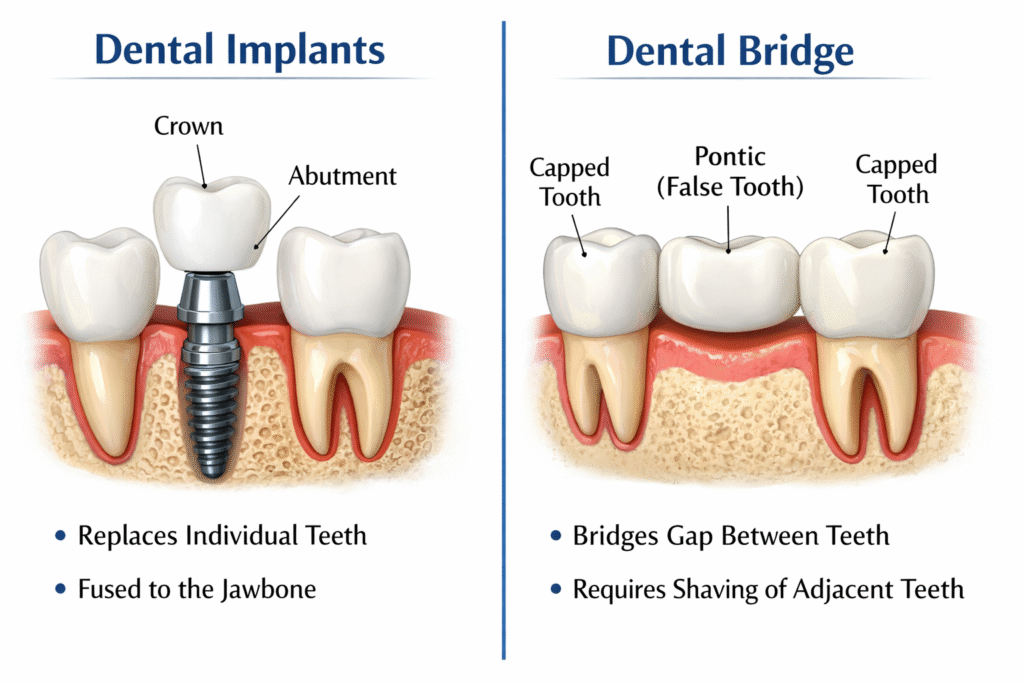
Dental implants vs bridges. When a tooth is missing, prompt replacement is essential for maintaining proper chewing, speech, and overall oral health. Dentists commonly recommend two solutions: dental implants and dental bridges. Both treatments restore the appearance and function of missing teeth, but they work differently. Dental implants involve inserting a small titanium post into the jawbone to serve as an artificial tooth root and support a crown. In contrast, a dental bridge fills the gap by using the neighboring teeth for support to secure an artificial tooth.
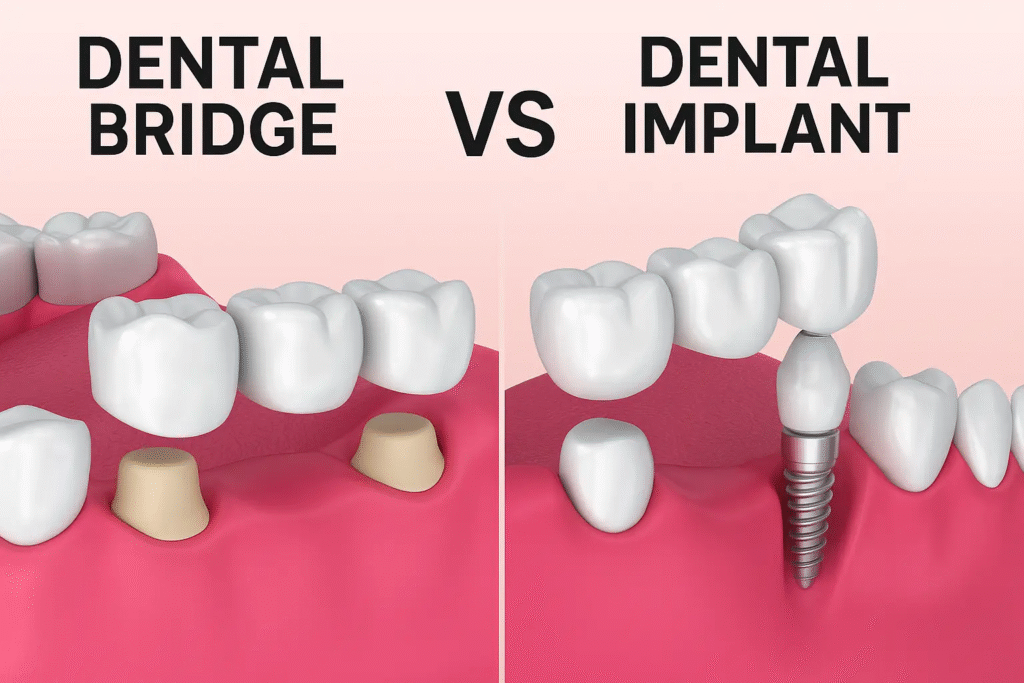
Dental implants are known for their durability and long-term benefits. Anchored directly into the jawbone, they support bone structure and help prevent bone loss after tooth loss. Implants also look and function like natural teeth, allowing for comfortable eating and speaking. In contrast, dental bridges are generally faster and more cost-effective. They usually require less time to complete than implants and do not involve surgery, making them suitable for patients who may not have sufficient bone density for implant placement.
Deciding between dental implants and bridges involves considering factors such as oral health, bone condition, budget, and personal preferences. Implants are often seen as a durable, modern option, while bridges can effectively and reliably meet the needs of many patients. Consulting a qualified dentist can help identify the most suitable choice based on your dental needs, supporting the restoration of a healthy, confident smile.
Dental Implants vs. Dental Bridges: pros, cons
When considering solutions for replacing missing teeth, the pros and cons of dental implants vs dental bridges are effective options. Each has specific benefits and limitations. Evaluating the advantages and disadvantages of each can help determine the most appropriate treatment for individual dental needs.
Pros: Dental Implants vs. Bridges
1. Long-Lasting Solution: Dental implants are known for their durability and can remain functional for many years, potentially even a lifetime, when properly maintained.
2. Preserves Jawbone Health: Implants are placed within the jawbone, functioning like natural tooth roots and helping prevent the bone loss that often follows tooth loss.
3. Natural Look and Function: Dental implants are designed to resemble natural teeth in appearance, function, and feel, allowing comfortable chewing and speaking.
4. Does Not Affect Adjacent Teeth: Unlike bridges, dental implants do not depend on adjacent teeth for support, preserving the health and integrity of surrounding teeth.
5. High Success Rate: Dental implants generally have a high success rate when placed by an experienced dentist.
1. Faster Treatment Process: Dental bridges are usually completed in a few dental visits, providing a relatively quick solution.
2. Lower Initial Cost: Bridges are generally less expensive than dental implants.
3. Non-Surgical Procedure: Bridges do not require surgery, unlike implants, which some patients might prefer.
4. Restores Function and Appearance: Dental bridges serve to restore chewing function and enhance the aesthetic appearance of one’s smile.
Cons of Dental Implants vs Bridges
1. Higher Initial Cost: Dental implants typically have a higher cost compared to dental bridges.
2. Surgical Procedure Required: Implant placement requires a minor oral surgical procedure, which may not be appropriate for all patients.
3. Longer Treatment Time: The entire implant procedure may take several months because the implant needs time to integrate with the jawbone.
4. Requires Adequate Bone Density: Patients who lack sufficient jawbone may need bone grafting before receiving an implant.
1. Affects Neighboring Teeth: The adjacent teeth need to be reshaped to support the bridge, which may weaken them over time.
2. Shorter Lifespan: The typical lifespan of bridges ranges from 10 to 15 years, depending on oral hygiene and maintenance practices.
3. Risk of Tooth Decay: The supporting teeth are at higher risk of decay if adequate oral hygiene is not maintained.
4. Does Not Prevent Bone Loss: Bridges, unlike implants, do not stimulate the jawbone, which can lead to bone loss in the area where the tooth is missing.
Cost of Dental Implants vs Bridges
The cost of dental implants vs bridges. When evaluating tooth replacement options, cost is an important consideration for many patients. Dental implants and dental bridges have different pricing structures influenced by factors such as the number of teeth replaced, the materials used, and the overall complexity of the treatment. Understanding these cost differences can help in making an informed decision.
Cost of Dental Implants
Dental implants usually cost more than dental bridges because they require surgical procedures and multiple treatment phases.
Factors That Affect Implant Cost
- Factors include the number of implants needed.
- The type and quality of the implant material.
- The potential need for additional procedures like bone grafting.
- The dentist’s experience and clinic facilities, & the crown material used on the implant.
Average Cost Range
The price of a single dental implant can vary significantly depending on the clinic and its location. Although the initial cost is higher, implants are often considered a long-term investment because they can last for many years with proper care.
Cost of Dental Bridges
Dental bridges are typically more cost-effective than dental implants because they do not involve surgical procedures, and the treatment process is generally less complex.
Factors That Affect Bridge Cost
- The type of dental bridge, such as traditional, cantilever, or Maryland,
- The number of missing teeth being replaced,
- The materials used, like porcelain or metal-ceramic,
- The condition of the supporting teeth,
- The location and expertise of the dental clinic are factors to consider.
Average Cost Range
The cost of dental bridges varies based on the number of artificial teeth involved and the materials selected. Generally, fewer visits are needed for bridges, which can contribute to lower overall treatment costs.
Which Option Is More Cost-Effective?
The best option for addressing oral health concerns depends on an individual’s dental condition, budget, and long-term goals. Patients who prioritize durability and longevity may choose dental implants, while those seeking a more affordable and faster solution might consider dental bridges. Consulting a qualified dentist can help determine the most appropriate choice based on dental needs and financial situations.
Dental implants and dental bridges are both effective options for replacing missing teeth and restoring dental appearance and function. Dental implants are often considered a more advanced option because they provide strong support, a natural look, and help preserve the jawbone. With proper care and oral hygiene, they offer a long-term solution that can last for many years.
Dental bridges are considered a reliable and cost-effective option for patients, providing faster results without surgery. This makes them appropriate for those who prefer a straightforward treatment process. Bridges can effectively restore chewing function and improve the appearance of the smile.
Choosing between dental implants and bridges depends on several factors, such as oral health, bone condition, budget, and personal preferences. Consulting an experienced dentist can help determine the most appropriate treatment for your needs, ensuring a healthy and functional smile. 🦷✨