
Braces vs aligners, Orthodontic treatments are effective, with the most suitable option depending on the severity of the dental condition and the individual needs of the patient. Selecting an appropriate orthodontic treatment is a key step in addressing dental alignment and achieving improved oral health. Traditional braces and clear aligners are two commonly used methods for straightening teeth, each effective in resolving concerns such as misaligned teeth, spacing issues, and bite irregularities. These options vary in factors such as aesthetics, comfort, treatment timelines, and upkeep requirements
Traditional braces consist of metal or ceramic brackets affixed to the teeth and connected by wires designed to incrementally adjust the teeth’s position. In contrast, clear aligners are discreet, removable trays tailored to fit the teeth and gradually realign them over time. Clear aligners are commonly chosen for addressing mild to moderate cases, including slight crowding, small gaps, or minor alignment issues. They are designed to be comfortable, discreet, and removable, offering an aesthetic and practical solution that minimizes disruption to daily activities.
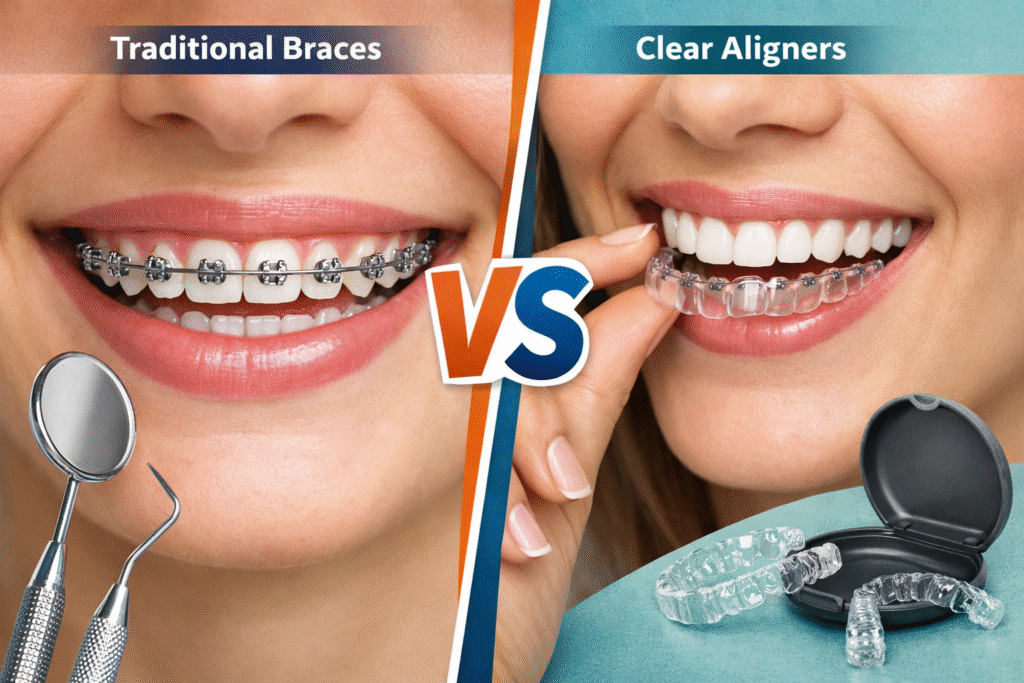
Traditional braces are typically more effective for addressing moderate to severe dental cases, such as significant crowding, complex bite issues like overbite, underbite, or crossbite, and substantial tooth misalignment. Their fixed design allows for consistent pressure and precise control of tooth movement, making them well-suited for managing more complex orthodontic corrections.
Traditional braces vs aligners: Which is better for adults?
Both traditional braces and clear aligners are effective methods for enhancing an adult’s smile, with the optimal choice depending on factors such as lifestyle, aesthetic preferences, and the complexity of the dental condition. Clear aligners are a common choice among adults due to their discreet appearance, which can be suitable for professionals or those mindful of aesthetics. Their removable design allows individuals to enjoy a variety of foods without dietary limitations and to maintain oral hygiene routines, such as regular brushing and flossing. Additionally, aligners offer comfort and convenience, often making them a practical solution for addressing mild to moderate alignment concerns.
Traditional braces are often suggested for adults who have more intricate dental issues, such as severe crowding, substantial spacing concerns, or bite misalignments like overbite or underbite. Fixed directly to the teeth, braces apply continuous, precise force, enabling orthodontists to address complex cases with greater accuracy and predictability.
Braces are typically more effective for addressing complex dental corrections, whereas aligners are suited for mild to moderate cases and for individuals prioritizing aesthetics and comfort. For adults who may struggle to wear aligners for the recommended 20–22 hours daily, braces can be a more practical option since they do not depend on consistent patient adherence.
Traditional Braces vs Clear Aligners: Pros and Cons
1. Appearance
Traditional Braces: Metal or ceramic brackets fixed on teeth
Pros: Durable and effective for all cases
cons: Clearly visible, less aesthetic
Clear Aligners: Transparent, custom-made trays
Pros: Nearly invisible and discreet
Cons: Can become noticeable if not cleaned properly
2. Comfort
Traditional Braces: Wires and brackets may cause irritation
Pros: Continuous correction without removal
Cons: Initial pain and discomfort after tightening
Clear aligners: Smooth plastic trays
Pros: More comfortable, minimal irritation
Cons: Slight pressure when changing trays
3. Effectiveness
- Traditional Braces: Suitable for mild to severe issues
- Highly suitable for addressing complex dental conditions such as severe crowding, bite problems, and tooth rotations,
- providing accurate control over tooth movement.
- They function consistently due to their fixed placement on teeth and are appropriate for individuals of all age groups and various cases.
- Aligners (Clear Aligners) are suitable for addressing mild to moderate alignment concerns, but less effective for severe or complex cases.
- Requires consistent patient adherence, as they need to be worn for 20–22 hours daily.
- facilitating gradual and comfortable tooth movement.
4. Cost Comparison
- Traditional Braces: Typically, braces are considered more cost-effective than aligners.
- Their price depends on the type, such as metal or ceramic.
- They generally involve fewer replacements or additional expenses throughout the course of treatment.
- Aligners (Clear Aligners): Typically, the cost of aligners exceeds that of braces and varies based on the brand and the number of aligners needed.
- Additional expenses may arise in cases where aligners are lost or damaged.
5. Treatment Time
Traditional Braces: Generally quicker for intricate cases.
With an average treatment duration ranging from 18 to 24 months.
Aligners: It can be faster for minor adjustments but may require additional time if not used correctly.
Deciding between traditional braces and aligners involves considering several factors, as both methods effectively improve dental alignment. The best choice depends on the complexity of the orthodontic issue, lifestyle, and personal preferences. Traditional braces are known for their effectiveness in treating complex dental problems and delivering precise, reliable results. In contrast, aligners provide a modern, discreet option that is especially suitable for mild to moderate cases and for those who prioritize comfort and aesthetics.
Cost and commitment are key factors in the decision-making process. Braces tend to be more cost-efficient and function without relying on patient compliance, making them a dependable option for many individuals. Aligners, though typically more expensive, are removable, allowing tasks such as eating, brushing, and social activities. Their effectiveness, however, is closely tied to the user adhering to the recommended daily wear time.
To determine the best option for your needs, consult a qualified dentist or orthodontist. They can create a personalized treatment plan to help you achieve optimal results efficiently and comfortably. Whether you choose traditional braces or aligners, the goal is a healthier, more confident smile.