Salt water has long been utilized as a straightforward, natural method to aid oral health. Rinsing with warm salt water may assist in maintaining cleanliness, alleviating discomfort, and supporting healing processes. Although it does not substitute regular brushing, flossing, or professional dental care, it can serve as a supplemental practice within an oral hygiene routine.
1. Helps Reduce Bacteria
2. Promotes Faster Healing
3. Soothes Sore Gums
4. Helps Relieve Mouth Sores
5. Reduces Bad Breath
6. Cleans Hard-to-Reach Areas
7. Helps Ease a Sore Throat
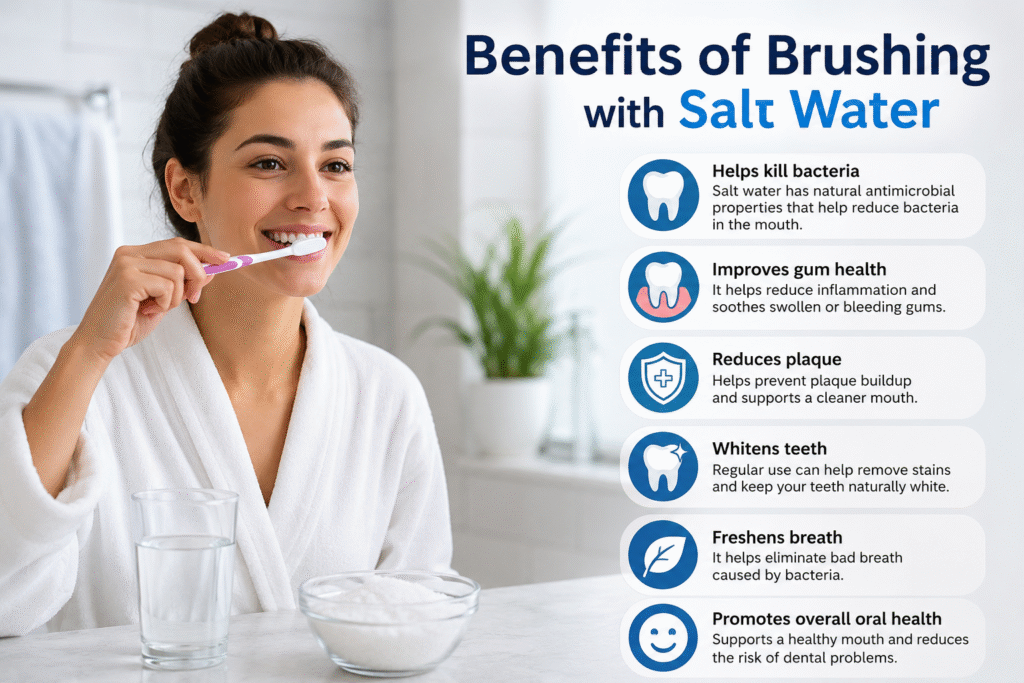
Benefits of brushing teeth with salt
Using salt to brush your teeth is a widely recognized home remedy, but it is crucial to consider both its possible advantages and its limitations. It is important to note that salt cannot substitute fluoride toothpaste, which remains the most reliable method for cavity prevention.
1. Helps Reduce Harmful Bacteria: Salt can create conditions that are less conducive to the survival of certain bacteria, potentially aiding in the reduction of bacterial presence in the mouth and contributing to improved oral hygiene.
2. Supports Gum Health: A gentle saltwater solution can alleviate minor gum irritation and inflammation, which is why dental professionals commonly advise rinsing with warm salt water following specific dental treatments.
3. Freshens Breath: By helping reduce bacteria and cleaning the mouth, salt can temporarily improve bad breath.
4. Gently Cleans the Teeth: Fine salt, when used gently, may assist in removing surface stains and plaque. Nonetheless, excessive force while brushing with salt can gradually erode tooth enamel.
5. Promotes Healing: Salt possesses gentle antiseptic qualities that may aid in maintaining oral cleanliness and contribute to the healing process of minor mouth sores or small gum injuries.
side effects of rinsing mouth with salt water
Side effects of rinsing mouth with salt water rinses are generally safe and can help soothe sore gums, reduce bacteria, and promote healing. Using salt water rinses excessively or with highly concentrated solutions may lead to unintended side effects, such as tissue dryness, irritation, or discomfort in the mouth.
Strong salt solutions can cause a burning sensation, particularly for individuals with mouth sores or sensitive gums, and frequent use might temporarily alter the sense of taste. While salt water rinses can provide temporary relief, they are not a replacement for brushing with fluoride toothpaste or utilizing other oral care products recommended by dentists, as they do not prevent tooth decay. Generally, rinsing with a mild solution of warm water and salt once or twice daily for a limited period is considered safe, but persistent or worsening symptoms should be addressed by consulting a dentist.
Can i use salt water as mouthwash everyday
Salt water can occasionally be used as a mouth rinse to help reduce bacteria, soothe sore gums, and support healing after dental procedures, but it is not intended as a daily substitute for regular mouthwash or routine oral hygiene practices. Overuse may lead to dryness or irritation in the mouth, particularly if the solution is overly concentrated.
Unlike fluoride mouthwash, salt water does not strengthen tooth enamel or prevent cavities. For optimal oral health, it is recommended to brush twice daily with fluoride toothpaste, floss regularly, and use fluoride or dentist-approved mouthwash as necessary. If daily salt water rinses are being considered for specific dental concerns, consulting a dentist for tailored guidance is advised.
How long does it take for salt water to heal gums
Salt water can assist in alleviating gum irritation and promoting the natural healing process, though the duration of healing varies based on the underlying cause and severity of the issue. Minor gum irritation, small mouth sores, or mild inflammation may show improvement within 2 to 3 days when rinsing with warm salt water once or twice daily. In cases of more significant inflammation, noticeable progress may take 1 to 2 weeks when paired with effective oral hygiene practices.
Persistent symptoms such as bleeding, swelling, or pain lasting beyond a week could indicate gum disease or another dental condition requiring professional attention. While salt water rinses can support healing, they do not serve as a cure for gum disease, emphasizing the importance of proper brushing, flossing, and routine dental visits for maintaining gum health.
can i brush my teeth with salt and toothpaste
Yes, you can occasionally brush your teeth with a small amount of fine salt mixed with fluoride toothpaste, but it is not recommended as a daily practice. Salt possesses mild antibacterial qualities that may assist in reducing oral bacteria and refreshing breath, while also aiding in the gentle removal of surface stains. Nonetheless, frequent use of salt or brushing with coarse grains can be abrasive, potentially contributing to enamel erosion and gum irritation over time.
To maintain optimal oral health, it is recommended to brush twice daily using a fluoride toothpaste, as fluoride aids in strengthening enamel and preventing cavities. For those considering the use of salt, it should be limited to once or twice a week, applied in small quantities of fine salt, and used with gentle brushing. Individuals with sensitive teeth, gum disease, or enamel erosion are advised to consult a dentist prior to incorporating salt into their oral care regimen.