
Here you will find the inlays vs overlays vs onlays vs crowns
| Comparison Point | Inlays | onlays | Overlays | Crowns |
| 1. Coverage Area | Fits within the grooves of the tooth and does not cover any cusps. | Covers one or more damaged cusps along with the chewing surface. | Covers most or all chewing cusps while preserving some natural tooth walls. | Covers the entire visible portion of the tooth above the gum line. |
| 2. Best Used For | Small to moderate cavities confined to the center of the tooth. | Moderate tooth damage involving one or more cusps. | Significant damage has occurred to the majority of the chewing surface, warranting restoration, though the placement of a full crown is not required. | Teeth that are significantly damaged, cracked, weakened, or have undergone root canal treatment and require complete protection. |
| 3. Tooth Preservation | Maintains the greatest possible amount of healthy tooth structure. | Retains a greater portion of the natural tooth structure compared to a crown. | Preserves more of the tooth structure compared to a crown while offering substantial coverage. | The restoration necessitates the most significant degree of tooth reduction to ensure proper fitting. |
| 4. Strength & Durability | Strong and durable for moderate chewing forces. | Stronger than inlays and ideal for restoring weakened cusps | Provides superior durability for teeth that are significantly worn or damaged. | Offers optimal strength and protection designed for teeth that are significantly compromised. |
| 5. Appearance | Tooth-colored and designed to integrate seamlessly with natural teeth. | Ceramic materials create a virtually invisible and natural appearance. | The design is visually appealing with well-coordinated color combinations. | Available in porcelain, ceramic, zirconia, or metal for both function and aesthetics. |
| 6. Ideal Candidate | Patients exhibiting minor tooth damage with intact and healthy cusps. | Patients with compromised cusps but with sufficient healthy tooth structure intact. | Patients with extensive restorations who prefer to avoid opting for a full crown when feasible. | Patients who have significant tooth decay, fractures, large restorations, or require comprehensive coverage and durable protection for their teeth. |
Inlays vs Onlays vs Overlays vs Crowns: Which Restoration Is Right for You?
Inlays vs onlays vs overlays vs crowns the right dental restoration is determined by the extent of tooth damage, the location of the cavity, and the amount of healthy tooth structure that can be maintained. The dentist will assess the condition of the tooth and suggest the most suitable option to achieve an optimal balance of durability, functionality, and aesthetics.
Inlays
Suitable for addressing small to moderate cavities located within the grooves of a tooth, these treatments help maintain the maximum amount of natural tooth structure.
Onlays
Suggested for cases where the damage involves one or more tooth cusps but does not necessitate a full crown, these provide strong durability while preserving healthy tooth structure.
Overlays
Ideal for teeth with significant damage to the chewing surface requiring protection for most cusps, while retaining sufficient healthy tooth structure to eliminate the need for a full crown.
Crowns
Crowns are commonly used for teeth that are severely damaged, cracked, weakened, or have undergone root canal treatment. They fully encase the tooth, offering enhanced strength, protection, and long-term durability.
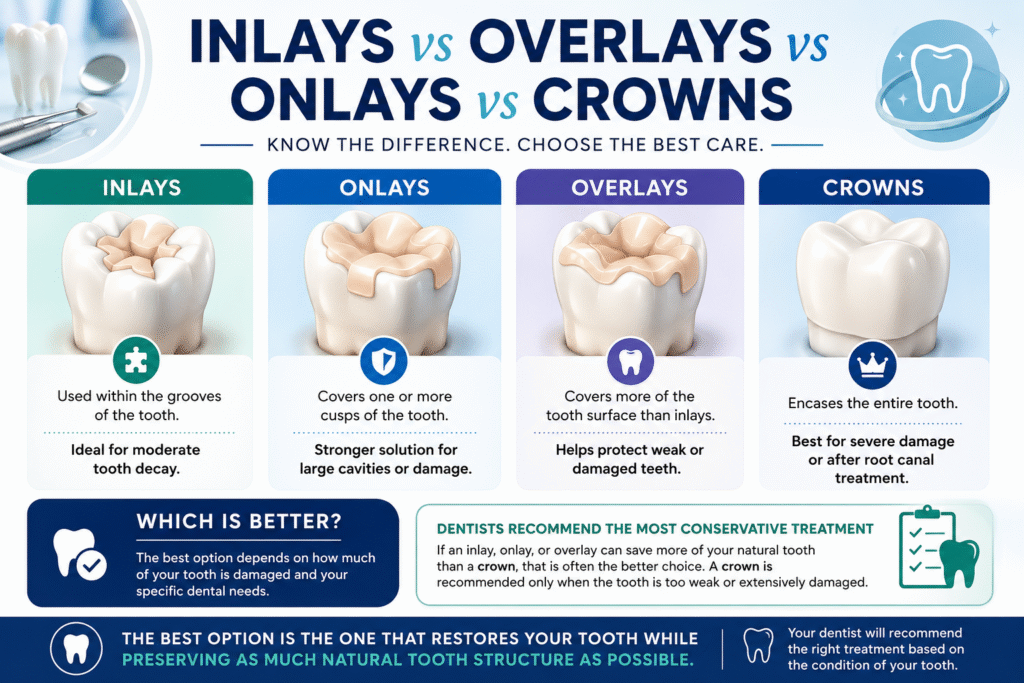
How Dentists Decide Between Inlays, Onlays, Overlays, and Crowns
Dentists determine whether to use an inlay, onlay, overlay, or crown by assessing the severity of tooth damage, the quantity of remaining healthy tooth structure, the position of the affected tooth, and the functional strength needed for restoration. Digital X-rays and comprehensive clinical evaluations are utilized to establish whether the tooth can be restored with a conservative approach or requires full coverage to ensure long-term durability.
If the damage is confined to the center of the tooth, an inlay is typically suitable as it helps retain the maximum amount of healthy tooth structure. An onlay is generally recommended when one or more cusps are affected, as it restores strength without removing excessive healthy enamel. An overlay is considered appropriate when protection for most of the chewing surface is needed, provided sufficient tooth structure remains to avoid the need for a full crown.
A crown is typically suggested for a tooth with extensive decay, large fractures, considerable wear, or after root canal treatment. Covering the entire visible part of the tooth, a crown ensures optimal strength and durability. The dentist will determine the most appropriate restoration based on factors such as function, appearance, durability, and the preservation of the natural tooth structure.
Which Dental Restoration Preserves More Natural Tooth Structure?
Inlays are a type of dental restoration that preserve the most natural tooth structure, as they are specifically designed to fit within the damaged portion of a tooth without extending over the cusps. Similarly, onlays and overlays are regarded as conservative treatments, as they address more extensive damage while conserving a greater amount of the healthy tooth compared to a full crown.
A crown involves more reshaping of the tooth as it fully encases the visible section above the gum line. Although crowns offer strong protection for teeth that are significantly damaged or weakened, they necessitate removing a greater amount of healthy tooth structure compared to alternatives like inlays, onlays, or overlays. Consequently, dentists typically advise opting for the most conservative restoration that adequately restores the tooth’s strength and functionality.
The decision is based on factors such as the severity of the damage, the condition of the tooth, and long-term oral health requirements. Dentists generally strive to retain as much of the natural tooth as feasible, as preserving healthy tooth structure enhances durability, functionality, and overall oral health.
Inlays vs Onlays vs Overlays vs Crowns: Cost, Durability, and Appearance
The choice between inlays, onlays, overlays, and crowns depends on factors such as budget, the severity of tooth damage, and long-term dental requirements. Inlays are typically a conservative and cost-efficient solution for minor to moderate damage, while onlays and overlays provide broader coverage and enhanced durability without necessitating a full crown. Crowns, often the most expensive option, fully encase the tooth and are generally recommended for significant damage or weakened teeth.
All four types of restorations, when crafted from durable materials like ceramic, porcelain, or zirconia and maintained with proper oral hygiene, are designed for long-lasting performance. Crowns offer the greatest protection for severely damaged teeth, onlays and overlays provide strong reinforcement while preserving more natural tooth structure, and inlays are well-suited for smaller restorations involving minimal tooth damage.
Modern ceramic and porcelain inlays, onlays, overlays, and crowns are designed to replicate the natural color, shape, and translucency of teeth, resulting in a cohesive and natural appearance while restoring the tooth’s strength and functionality. Dentists typically recommend restorations based on a combination of factors, including cost, durability, appearance, and overall long-term oral health.
Who Is a Good Candidate for Inlays, Onlays, Overlays, or Crowns?
The appropriate dental restoration is determined by the degree of tooth damage, the quantity of healthy tooth structure remaining, and the individual’s overall oral health. Dental professionals prioritize selecting a conservative treatment approach that enhances strength, functionality, and appearance while maintaining the maximum amount of the natural tooth.
Inlays are suitable for patients with small to moderate cavities that do not compromise the tooth’s cusps, while onlays are more appropriate for cases where damage involves one or more cusps. Overlays are typically recommended for teeth with significant damage to the chewing surface, requiring protection for most of the cusps but allowing preservation of enough healthy tooth structure to avoid the need for a full crown. These restorations offer a durable, tooth-colored option that helps maintain the natural structure of the tooth.
A dental crown is an effective solution for teeth that are severely damaged, cracked, weakened, or have undergone root canal treatment, providing complete coverage and protection. Following a comprehensive examination, the dentist will determine the most suitable restoration to address the specific dental needs, prioritizing durability, functionality, and maintaining a natural appearance.
FAQ
1. Are Inlays Better Than Crowns?
Inlays and crowns serve distinct purposes based on the condition of the tooth. Inlays are suitable for addressing small to moderate tooth damage while maintaining more of the natural tooth structure, whereas crowns are typically used for severely damaged or weakened teeth requiring full coverage and enhanced protection. The dentist will determine the most appropriate option to restore the tooth’s strength, functionality, and overall health.
2. What Is the Difference Between an Onlay and an Overlay?
An onlay repairs a damaged tooth by covering one or more cusps and a portion of the chewing surface, while an overlay offers wider coverage, safeguarding most or all of the chewing cusps and retaining more of the natural tooth structure compared to a full dental crown.
3. Is an Overlay Better Than a Crown?
The choice between an overlay and a crown depends on the condition of the tooth. An overlay is suitable when sufficient healthy tooth structure is intact, offering strong protection while preserving more of the natural tooth. Conversely, a crown is more appropriate for teeth that are severely damaged, cracked, or have undergone root canal treatment, as it provides full coverage and enhanced strength.
4. Which Option Is More Cost-Effective: Inlay, Onlay, Overlay, or Crown?
The most cost effective choice varies based on the level of tooth damage and the necessary treatment. Inlays are usually the least expensive for minor restorations, while onlays and overlays tend to be costlier due to their broader coverage. Crowns are often the priciest option but offer extensive protection for significantly damaged teeth, making them a practical long-term solution when complete coverage is required.
5. Which Dental Restoration Is the Most Durable?
Dental crowns are widely recognized for their durability, as they fully encase and safeguard the tooth, making them suitable for significantly damaged or weakened teeth. Onlays and overlays offer strong, long-term support while maintaining more of the natural tooth structure, and inlays are known for their resilience in addressing smaller areas of tooth damage.