Braces play a significant role in aligning teeth, promoting oral health, and improving the appearance of one’s smile. However, braces care is just as important as the treatment itself. Orthodontic brackets and wires can create areas where food particles and plaque accumulate more readily, potentially heightening the likelihood of cavities, gum issues, and unpleasant breath.
With the right braces care tips, regular dental visits, and good oral hygiene habits, you can keep your teeth and braces clean throughout your orthodontic treatment.
How to Take Care of Braces: Essential Tips
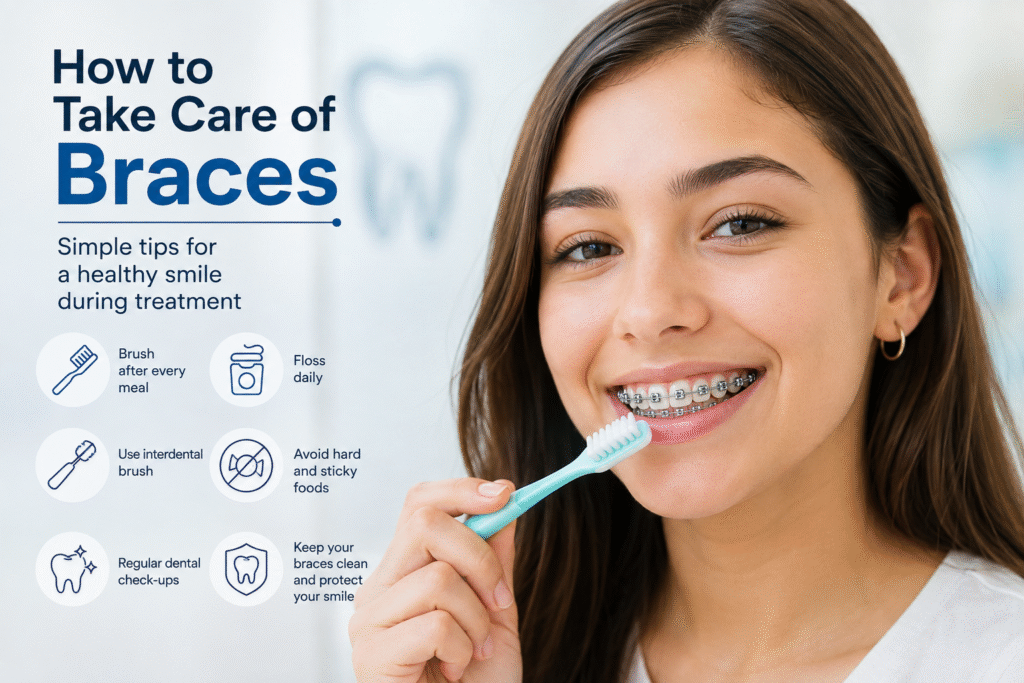
Knowing how to take care of braces can help you avoid common problems and keep your orthodontic treatment on track. Follow these simple tips:
- Maintain proper oral hygiene by thoroughly brushing your teeth after meals when feasible.
- using a soft-bristled toothbrush and fluoride toothpaste, ensuring you clean around brackets, wires, and along the gumline.
- Incorporate daily flossing with orthodontic floss or a floss threader, and use an interdental brush for hard-to-reach areas.
- Limit consumption of hard, sticky, or chewy foods that might damage braces, adhere to the prescribed use of orthodontic elastics, attend all scheduled appointments.
- Consult your dentist promptly if a bracket becomes loose or a wire causes discomfort.
Caring for Braces: You’re on Your Way to a Healthy Smile
Caring for braces requires consistency and patience. Orthodontic braces work by gradually aligning teeth to their proper positions, and it is important to maintain good oral hygiene throughout this process.
Food may become lodged between brackets and wires, and if not thoroughly removed, it can contribute to plaque accumulation, potentially resulting in tooth decay, gum inflammation, and bad breath.
Incorporating brushing and flossing into your daily routine is essential. Spending a few additional minutes to clean your teeth thoroughly can contribute to achieving better oral health and a healthier smile after completing your braces treatment.
Dental Hygiene With Braces: Keep Your Teeth and Gums Healthy
Proper dental hygiene while wearing braces is a crucial aspect of orthodontic care.
Brush Your Teeth Properly
It is recommended to brush at least twice daily using a soft-bristled toothbrush and fluoride toothpaste, and whenever possible, brushing after meals can help eliminate food particles around the brackets.
Hold the toothbrush at different angles to clean:
- Above the brackets
- Around the brackets
- Below the brackets
- Along the gumline
- The chewing surfaces of your teeth
An electric toothbrush can also be useful for maintaining effective dental hygiene with braces.
Floss Every Day
Flossing may require additional effort when wearing braces, but it remains an essential practice. Tools such as floss threaders, orthodontic floss, or interdental brushes can be utilized to effectively clean between the teeth and beneath the orthodontic wire.
Consider an Interdental Brush
An interdental brush is designed to clean areas around brackets and wires that may be difficult for a regular toothbrush to reach.
Use Fluoride Products
Using fluoride toothpaste along with a dentist-recommended fluoride mouthwash can assist in strengthening teeth and minimizing the risk of cavities during orthodontic treatment.
How to Care for Braces and Prevent Common Problems
Learning how to care for braces also means knowing what can damage them.
Avoid Hard Foods
Hard foods can loosen or break brackets and wires. Avoid foods such as:
- Hard nuts
- Ice Hard candies
- Popcorn kernels
- Very hard biscuits
- Raw hard vegetables unless cut into small pieces
Avoid Sticky and Chewy Foods
Sticky foods can get caught around brackets and may damage orthodontic appliances. Try to avoid:
- Chewing gum
- Caramel
- Toffee
- Sticky candies
- Chewy sweets
Cut Food Into Smaller Pieces
To minimize pressure on brackets and facilitate easier consumption, it is advisable to cut hard fruits and vegetables into small, manageable pieces rather than biting into them directly.
What to Eat With Braces the First Week?
Knowing what to eat with braces the first week can make the adjustment period much easier. As teeth tend to feel sensitive after braces are applied or tightened, opting for soft foods can provide greater comfort.
Best Foods to Eat With Braces in the First Week
Try foods such as:
- Soft rice
- Idli
- Upma
- Soft dosa
- Khichdi
- Curd and yogurt
- Soft-cooked vegetables
- Dal
- Soups
- Mashed potatoes
- Oatmeal
- Bananas and other soft fruits
- Scrambled eggs
- Soft pasta
As your teeth adjust, you can progressively expand your food choices, ensuring you continue to avoid items that could harm your braces.
Braces Care Tips for Eating and Drinking
Your eating habits can have a major impact on braces care.
Select nutrient-rich foods that are simple to chew, and limit the intake of sugary snacks and beverages, as excessive sugar can contribute to increased plaque accumulation around brackets.
Maintain adequate hydration by drinking water regularly throughout the day, as it can assist in removing food particles and promoting a sense of oral freshness.
After consuming sugary foods or beverages, consider brushing your teeth or, when immediate brushing is not feasible, rinsing your mouth with water as an alternative.
What to Do If a Bracket or Wire Breaks?
Despite proper care, brackets or wires on braces may sometimes loosen or sustain damage.
If this occurs, remain calm and refrain from pulling or cutting the wire on your own. If the wire is causing irritation to your cheek or gums, applying orthodontic wax may offer temporary relief.
Contact your dentist or orthodontist promptly to have the braces examined and repaired as needed.
Protect Your Braces During Sports
For those involved in contact sports, wearing a well-fitted mouthguard can provide protection for teeth, gums, and braces against potential injuries. Consult your dentist or orthodontist to determine the most appropriate type of mouthguard for your braces.
Regular Dental and Orthodontic Check-Ups
Regular orthodontic appointments are crucial for effective braces care, allowing the orthodontist to monitor tooth movement and perform necessary adjustments.
Additionally, routine dental check-ups remain important, as orthodontic treatment does not prevent cavities or gum disease.
Your dentist can check your teeth and gums and provide professional cleaning when required.
Common Braces Care Mistakes to Avoid
Some common mistakes can affect your oral health and orthodontic treatment.
Avoid:
- Skipping regular brushing
- Not flossing
- Eating hard or sticky foods
- Biting your nails or pens
- Chewing ice
- Ignoring loose brackets or wires
- Missing orthodontic appointments
- Consuming too many sugary foods and drinks
Good braces care is not complicated, but it requires consistency every day.
How Long Should You Care for Your Braces?
It is important to practice proper brace care consistently throughout the duration of orthodontic treatment, which may extend for several months or longer depending on individual dental needs.
Additionally, adhering to your orthodontist’s guidance regarding retainer use after braces are removed is essential for preserving the results of the treatment.
Braces Care: Your Daily Checklist
For easy braces care, remember this simple daily routine:
Morning: Ensure thorough brushing using fluoride toothpaste and carefully clean around the brackets.
After meals: It is recommended to rinse your mouth with water and brush your teeth whenever feasible.
Evening: Ensure thorough brushing of your teeth and proper flossing around your braces and between your teeth.
Before bed: Ensure that all food particles are thoroughly removed from around the brackets and gumline.
Every day: Refrain from consuming foods that may harm your braces and adhere to the guidance provided by your orthodontist.
Proper braces care plays an important role in maintaining healthy teeth and gums throughout orthodontic treatment. Maintaining oral health while improving your smile involves brushing regularly, flossing daily, selecting foods that are safe for braces, avoiding harmful habits, and attending routine dental checkups.
Want to know about your braces condition please visit the oracle dental care