Are you experiencing jaw pain while chewing, speaking, yawning, or opening your mouth?
Jaw pain may indicate an issue involving the teeth, jaw muscles, bite, or temporomandibular joint (TMJ), rather than being merely temporary discomfort.
If you are looking for jaw pain treatment in Vijayawada, identifying the possible cause is the first step. This is the path toward receiving appropriate treatment.
At Oracle Dental Care in Vijayawada, patients can have their jaw pain evaluated by a dental professional.
What Is Jaw Pain?
Jaw pain refers to discomfort affecting the jawbone, jaw muscles, or temporomandibular joint (TMJ), which connects the lower jaw to the skull. Temporomandibular joint disorders (TMD) can cause pain in the jaw joint and surrounding jaw muscles. They may also bring difficulty chewing, facial pain, headaches, and noises like clicking or grating sounds. Opening or closing the mouth may be difficult.
Jaw pain can have several causes, so treatment depends on the underlying problem.
What Causes Jaw Pain?
Jaw pain may result from various dental or jaw-related conditions. Common causes include:
1. TMJ Disorders
The temporomandibular joints facilitate jaw movement during talking, chewing, and yawning. Disorders affecting these joints or the surrounding muscles may cause jaw pain.
TMJ-related symptoms may include:
- Jaw pain or tenderness
- Pain while chewing
- Clicking or grating sounds
- Difficulty opening the mouth
- Jaw locking
- Facial pain
- Headaches Pain around
- EarNeck discomfort
Not every clicking jaw requires treatment; however, clicking accompanied by pain or restricted jaw movement should be evaluated by a healthcare professional.
2. Teeth Grinding or Clenching
Teeth clenching or grinding often occurs unconsciously, particularly during sleep or periods of stress, and can place excessive pressure on the teeth and jaw muscles, potentially contributing to jaw discomfort.
3. Dental Problems
A damaged or infected tooth may cause pain that seems to originate in the jaw. An examination may be necessary to rule out cavities, dental infections, impacted teeth, or other dental conditions.
4. Jaw Injury
An accident, sports injury, fall, or direct impact to the face can affect the jaw joint, muscles, or surrounding structures.
What Are the Symptoms of TMJ-Related Jaw Pain?
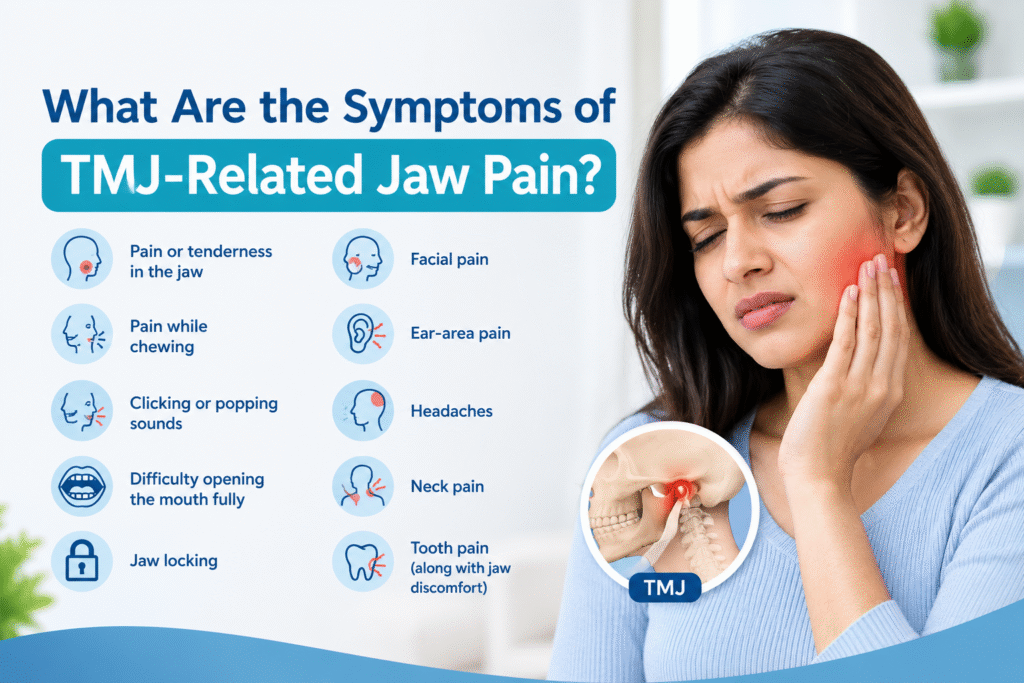
Jaw pain can present differently from person to person.
Pain while opening or closing
The mouthPain while chewing
Tenderness around the jaw Clicking or popping sounds
Jaw locking
Facial pain
Ear-area pain
Headaches
Neck pain
How Is Jaw Pain Diagnosed?
A dentist will first discuss your symptoms and examine your jaw.
The examination may include:
The evaluation includes checking jaw movement, observing the range of mouth opening, assessing the jaw muscles and joints for tenderness, examining the teeth and bite, looking for signs of clenching or grinding, and determining whether a dental problem may be causing the pain.
Depending on the symptoms, dental X-rays or other imaging studies, such as CT or MRI scans, may be recommended to evaluate the teeth, bones, joints, or surrounding soft tissues.
What Is the Treatment for Jaw Pain?
No single treatment is effective for all types of jaw pain; the appropriate treatment depends on the underlying cause.
Conservative Treatment
For many temporomandibular joint (TMJ) conditions, initial treatment may focus on reducing jaw strain and managing symptoms.
A dentist or healthcare professional may recommend:
Temporarily eat softer foods, avoid chewing gum and hard or chewy foods, limit excessive mouth opening and jaw clenching, perform gentle jaw exercises when appropriate, use heat or cold therapy, practice stress-management techniques, and consider physical therapy in selected cases.
Mouth Guards or Oral Splints
If teeth grinding or clenching contributes to jaw symptoms, a dentist may recommend an oral appliance or mouthguard. The suitability of an appliance depends on the individual patient’s condition and should therefore be determined and monitored by a dental professional.
Medication
Depending on the cause and severity of the pain, a healthcare professional may recommend appropriate pain-relieving or anti-inflammatory medication. Such medication should be used as directed, particularly when pain is persistent or recurring.
Physical Therapy
Some patients with temporomandibular joint (TMJ) disorders may benefit from physical therapy that includes appropriate stretching and strengthening exercises for the jaw muscles.
Advanced Treatment
When conservative treatment does not provide sufficient relief and a specific joint problem is identified, additional procedures may be considered.
These may include procedures such as arthrocentesis, injections, or arthroscopic treatment. Surgery is generally considered when appropriate, after less-invasive approaches have been evaluated.
When Should You See a Dentist for Jaw Pain?
You should consider seeing a dentist if:
- Jaw pain continues for several days or keeps returning
- You have pain while chewing
- Your jaw clicks or pops along with pain
- Your jaw feels stiff or difficult to move
- Your jaw locks
- You have difficulty opening or closing your mouth
- You experience frequent headaches along with jaw pain
- You suspect teeth grinding or clenching
Why Choose Oracle Dental Care for Jaw Pain Treatment in Vijayawada?
Oracle Dental Care is a multi-specialty dental clinic in Vijayawada, located on Road No. 16, opposite Swapna Hospitals, Bharathi Nagar, Vijayawada
We provide a range of dental services focused on modern care, diagnostics, and patient-centered treatment, including preventive dentistry, orthodontics, oral surgery, restorative dentistry, dental implants, and other dental procedures.
For jaw pain, the first step is to identify the underlying cause. A professional dental evaluation can determine whether the discomfort is related to the temporomandibular joint, teeth, bite, jaw muscles, or another dental condition.
FAQ’S
1. What is the best treatment for jaw pain?
Treatment depends on the underlying cause. TMJ-related jaw pain may improve with conservative measures, such as dietary changes, reducing jaw strain, physical therapy, and appropriate oral appliances. Other causes may require dental treatment or additional care.
2. Can jaw pain be caused by teeth grinding?
Yes. Teeth grinding and clenching can place stress on the jaw muscles and temporomandibular joints, potentially contributing to jaw pain.
3. Is jaw clicking always a problem?
Clicking without pain or restricted jaw movement may not require treatment; however, clicking accompanied by pain, locking, or difficulty moving the jaw should be evaluated.
4. Can stress cause jaw pain?
Stress may contribute to teeth clenching and grinding, potentially placing additional strain on the jaw muscles and temporomandibular joint (TMJ).
5. Can TMJ pain go away on its own?
TMJ-related pain and discomfort may be temporary and may improve with self-care or nonsurgical treatment. Persistent or worsening symptoms should be evaluated by a healthcare professional.
6. Should I see a dentist for jaw pain?
Yes, particularly if the pain is persistent or recurrent, affects chewing, causes difficulty opening or closing the mouth, or is accompanied by jaw locking. A dentist can evaluate potential dental and temporomandibular joint (TMJ) causes.
7. Where can I get jaw pain treatment in Vijayawada?
Oracle Dental Care in Vijayawada offers dental evaluations for jaw pain and related symptoms. The clinic is located at Road No. 16, opposite Swapna Hospitals, Bharathi Nagar, Vijayawada.
Looking for jaw pain treatment in Vijayawada?
Visit Oracle Dental Care for an evaluation and discuss the most appropriate treatment options for your condition.
📍 Oracle Dental Care
Road No. 16, Opp. Swapna Hospitals, Bharathi Nagar, Kanuru, Vijayawada
📞 094902 27599