Tobacco is a significant contributor to oral health issues, prompting dental professionals to recommend cessation. Smoking cigarettes, chewing tobacco, and other tobacco use can lead to tooth discoloration, persistent bad breath, and a heightened risk of gum disease. Prolonged use of tobacco also decreases blood flow to the gums, impairing the mouth’s ability to heal and combat infections.
Tobacco use is strongly associated with an increased risk of oral cancer, including cancers of the mouth, tongue, throat, and lips. Early indicators, such as white or red patches, non-healing mouth sores, or persistent pain, may often go unnoticed. Routine dental check-ups are essential for identifying these early warning signs, potentially enhancing the effectiveness of treatment.
Stopping tobacco use can lead to both immediate and long-term improvements in oral and overall health. In just a few weeks after quitting, breath freshness enhances, the sense of taste improves, and gum health begins to recover. Over time, the likelihood of developing gum disease, tooth loss, and oral cancer is significantly reduced. This World No Tobacco Day highlights the importance of making choices that support a healthier future, including avoiding tobacco for better oral well-being.
Smoking vs Smokeless Tobacco: Which Is More Harmful to Oral Health?
Smoking and smokeless tobacco both pose risks to oral health, impacting the mouth in distinct ways, but neither can be considered a safe option.
Effects of Smoking on Oral Health
- Contributes to discoloration of teeth
- Including yellow or brown stains.
- Promotes persistent bad breath (halitosis) and heightens susceptibility to gum disease and gum recession.
- Impairs the healing process following dental treatments and oral surgeries, increases the likelihood of tooth loss, and substantially elevates the risk of developing oral, throat, and lung cancers.
Effects of Smokeless Tobacco on Oral Health
- Contributes to the development of white patches (leukoplakia) inside the mouth,
- irritates and damages the gums at the site of tobacco placement and heightens the likelihood of gum recession and exposed tooth roots.
- It may also lead to tooth decay due to the presence of added sugars in certain products, cause bad breath and tooth discoloration, and significantly raise the risk of oral cancer, particularly in the cheeks, gums, and lips.
Which Is More Harmful?
- Both smoking and smokeless tobacco pose serious health risks.
- Smoking impacts the entire body, elevating the likelihood of various cancers and respiratory illnesses, while smokeless tobacco harms oral tissues, leading to severe dental and gum issues.
- Both forms are strongly associated with a heightened risk of oral cancer and gum disease.
Smokeless tobacco is not a risk-free substitute for smoking, as both can cause significant harm to your teeth, gums, and overall health. Quitting all forms of tobacco remains the most effective approach for promoting better oral and overall well-being.
This World No Tobacco Day, make the commitment to protect your oral health by saying NO to tobacco.
Small Steps to Quit Tobacco Successfully
1. Make a Strong Decision to Quit: The initial step in achieving a tobacco-free life is to make a determined decision to quit. Establish specific reasons for this choice, such as enhancing your health, preserving your dental health, reducing expenses, or supporting your loved ones. Defining a clear purpose can help maintain your motivation during the process.
2. Set a quit date: Select a specific date to quit using tobacco and note it on your calendar. Mentally preparing for this day can assist in maintaining focus and commitment. Communicate your plans to family and friends to ensure their support throughout the process.
3. Identify Your Triggers: Identify situations, emotions, or activities that may prompt tobacco cravings, such as stress, social events, drinking coffee, or boredom. Being aware of these triggers can help in devising healthier alternatives.
4. Find Healthy Substitutes: Substitute tobacco use with healthier practices, such as chewing sugar-free gum, drinking water, opting for nutritious snacks, or going for a brief walk. These options may assist in managing cravings while keeping both your hands and mouth engaged.
5. Seek Support from Family and Friends: Stopping tobacco use can be more manageable with a support system in place. Communicate your goal to family, friends, or colleagues who can provide encouragement and help you maintain accountability during challenging times.
6. Stay Active and Manage Stress: Engaging in physical activities like walking, yoga, cycling, or exercising can help alleviate cravings, enhance mood, reduce stress, and serve as a distraction from tobacco use.
7. Avoid High-Risk Situations: In the initial phase of quitting, it is advisable to avoid environments or situations that may encourage tobacco use, as steering clear of such triggers can help minimize temptation and improve the likelihood of success.
8. Reward Yourself for Milestones: Acknowledge your accomplishments, whether you’ve been tobacco-free for a day, a week, or a month. Recognizing your progress and rewarding yourself can help sustain motivation and highlight how far you’ve come.
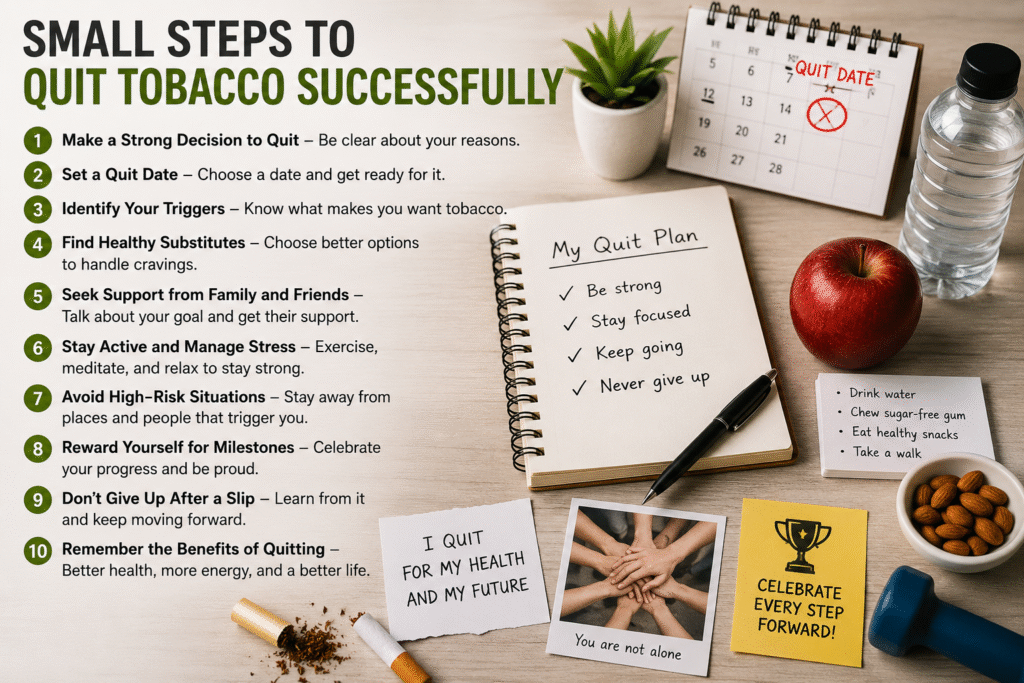
9. Don’t Give Up After a Slip: If you resume using tobacco after quitting, it should not be considered a failure. It is common for individuals to require several attempts to quit successfully. Reflect on the experience, determine the factors that contributed to the relapse, and persist in striving toward your goal.
10. Remember the Benefits of Quitting: Each day without tobacco contributes to improved health, including fresher breath, healthier gums, a reduced risk of oral cancer, and enhanced overall well-being. Remember these benefits when managing cravings.
How Tobacco Affects Your Oral Health at Every Age
Childhood and Teenage Years
Tobacco use is uncommon among young children but is often initiated during adolescence, with many teenagers experimenting with smoking or smokeless tobacco. Early tobacco use may lead to issues such as bad breath, tooth discoloration, an increased risk of cavities, and potential disruptions in the healthy development of gums and oral tissues, which can contribute to long-term dental problems.
Young Adults (20–35 Years)
During young adulthood, tobacco use can have a significant impact on oral health, leading to stained teeth, persistent bad breath, and increased plaque accumulation. Additionally, tobacco weakens the body’s capacity to combat infections, heightening the likelihood of gum inflammation and the onset of early-stage gum disease.
Middle Age (36–55 Years)
Prolonged tobacco use over time substantially elevates the risk of developing severe dental issues, including advanced gum disease, gum recession, loose teeth, and eventual tooth loss. Additionally, the recovery process following dental procedures, such as extractions or implants, tends to be slower and less effective.
Older Adults (56 Years and Above)
Tobacco use in older adults can significantly affect both oral and overall health, increasing the likelihood of oral cancer, tooth loss, and severe gum disease. Additionally, older individuals who use tobacco may encounter issues such as dry mouth, difficulty chewing, and diminished quality of life resulting from oral health problems.
Increased Risk of Oral Cancer at Any Age
Tobacco use is closely associated with an increased risk of oral cancer, affecting areas such as the mouth, tongue, throat, or lips, regardless of whether it is smoked, chewed, or consumed in other forms. Routine dental examinations play a key role in identifying early signs and supporting more effective treatment.
Benefits of Quitting Tobacco at Any Age
It is never too late to stop using tobacco, as quitting enables gum healing, fresher breath, and a gradual reduction in the risk of serious oral diseases. Regardless of age—whether a teenager, young adult, or senior—quitting tobacco can significantly benefit both oral and overall health.
FAQ’S
- Myths and Facts About Tobacco and Oral Health?
It is a common misconception that tobacco use only impacts the lungs or that smokeless tobacco is a safer option; however, all forms of tobacco can negatively affect oral health, leading to issues such as stained teeth, bad breath, gum disease, tooth loss, and even oral cancer. Additionally, while maintaining good oral hygiene is important, it cannot fully prevent or reverse the damage caused by tobacco. On a positive note, ceasing tobacco use at any stage can greatly enhance oral health, lower the risk of severe dental problems, and contribute to overall well-being.
2. Is Occasional Smoking Safe for Your Teeth and Gums?
Occasional smoking is not safe for oral health, as it exposes the mouth to harmful chemicals that can lead to issues such as bad breath, tooth staining, gum irritation, and an increased risk of gum disease. Even infrequent smoking may contribute to long-term oral health problems, including tooth loss and oral cancer. To best maintain oral health, avoiding tobacco use entirely is recommended.
3. Are E-Cigarettes and Vapes Safer for Oral Health?
E-cigarettes and vapes are not entirely risk-free for oral health. Although they may have fewer harmful chemicals compared to traditional cigarettes, they can contribute to dry mouth, gum irritation, bad breath, and an increased likelihood of gum disease. Prolonged use may also have adverse effects on teeth and oral tissues. To support optimal oral and overall health, avoiding all tobacco and nicotine products is advised.
4. Does Smokeless Tobacco Really Cause Less Damage?
Smokeless tobacco is not a safer alternative to smoking and does not cause less harm. Its use can result in gum recession, tooth decay, bad breath, stained teeth, and white patches inside the mouth. Additionally, it significantly raises the risk of developing oral cancer. Both smoking and smokeless tobacco negatively impact oral health, and quitting all forms of tobacco is crucial for maintaining oral well-being.
5. Why Brushing Alone Can’t Reverse Tobacco Damage?
Regular tooth brushing plays a key role in maintaining oral hygiene; however, it cannot completely undo the harm caused by tobacco use. Tobacco contains chemicals that can stain teeth, harm gum health, decrease blood flow to oral tissues, and elevate the risk of gum disease and oral cancer. While brushing helps to remove plaque and maintain cleanliness, quitting tobacco is crucial for preventing additional damage and supporting better oral health.