Teeth scaling vs polishing has its own benefits Proper oral hygiene plays a crucial role in maintaining dental health. Despite regular brushing and flossing, plaque, tartar, and stains may accumulate over time. For this reason, dentists commonly suggest professional dental cleaning methods, including teeth scaling and polishing.
Many people wonder, “Teeth Scaling vs Polishing: Which is Better?” The truth is that both treatments serve different purposes and work together to improve your oral health.
What Is Teeth Scaling?
Teeth scaling is a professional dental procedure designed to eliminate plaque, tartar (hardened plaque), and bacteria from the teeth’s surfaces and beneath the gum line. As tartar cannot be removed through standard brushing or flossing, its accumulation over time may contribute to gum disease, tooth decay, and bad breath. The process involves dentists utilizing specialized ultrasonic or manual tools to effectively remove these deposits.
Benefits of Teeth Scaling
- Effectively removes plaque and tartar buildup.
- Aids in the prevention of gum disease and gingivitis.
- Helps minimize bad breath, supports the prevention of tooth decay.
- Promotes healthier gums, and contributes to protecting teeth from potential long-term damage.
What Is Teeth Polishing?
Teeth polishing is a process conducted following scaling to smooth and enhance the tooth surfaces. This procedure aids in removing minor stains and provides a polished finish, contributing to a cleaner and brighter appearance. Typically, it involves the use of a polishing paste in combination with a specialized rotating brush.
Benefits of Teeth Polishing
- Eliminates surface stains.
- smoothens the tooth surface.
- enhances the visual appearance of teeth.
- provides a cleaner feeling, minimizes future plaque buildup.
- contributes to an improved overall smile.
Teeth Scaling vs Polishing: Understanding the Key Differences
Many individuals often believe that scaling and polishing are identical procedures; however, these treatments serve distinct purposes.
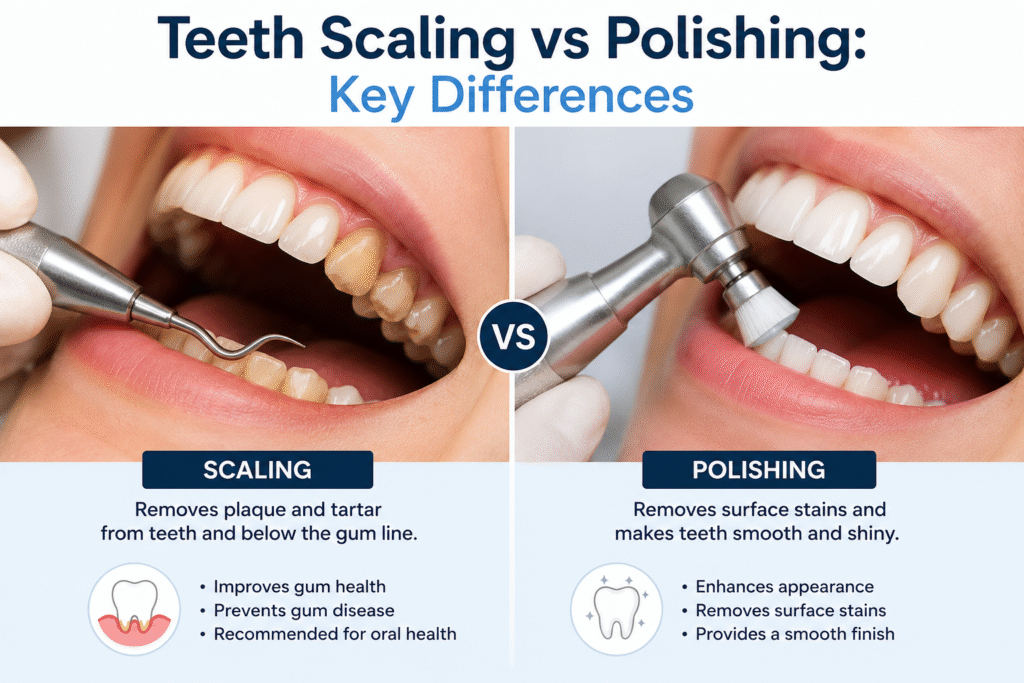
| Feature | Teeth Scaling | Teeth Polishing |
| Primary Purpose | Focuses on oral health and hygiene | Focuses on appearance and smoothness |
| What It Removes | Plaque, tartar, and bacteria buildup | Minor surface stains and discoloration |
| Cleaning Area | Cleans above and below the gum line | Polishes the outer surface of the teeth |
| Oral Health Benefits | Helps prevent gum disease and tooth decay | Helps maintain a smooth tooth surface |
| Effect on Appearance | Improves overall oral health | Enhances smile brightness and shine |
| Procedure Goal | Removes harmful deposits from teeth and gums | Creates a clean, smooth, and polished finish |
| When It’s Needed | Necessary when plaque and tartar have accumulated | Usually performed after scaling for a better finish |
| Importance | Essential for maintaining healthy gums and teeth | Complements scaling and improves aesthetics |
| Role in Professional Cleaning | First step of professional dental cleaning | Final step of professional dental cleaning |
Teeth Scaling vs Polishing: Which Is Better?
The answer depends on your dental condition.
Teeth scaling is particularly important when addressing oral health issues such as plaque, tartar buildup, gum inflammation, or early stages of gum disease, as it targets the root causes of these conditions.
Teeth polishing can help enhance the appearance of your smile by addressing minor stains or rough surfaces, provided your teeth are already clean.
Dentists typically advise combining scaling and polishing to achieve optimal results.
Why Dentists Recommend Teeth Scaling and Polishing Together
Scaling eliminates harmful deposits from the teeth and gums, while polishing smooths the tooth surfaces and removes residual stains.
Together they help:
- Improve oral hygiene
- Enhance smile appearance
- Prevent gum disease
- Reduce plaque buildup
- Maintain healthier teeth and gums.
This combination is regarded as a comprehensive professional dental cleaning.
Teeth Scaling vs Polishing for Stain Removal
Many individuals pursue treatment to address tooth discoloration, and teeth polishing is an effective method for removing minor surface stains often resulting from:
- TeaCoffee
- Soft drink
- Certain foods
- Smoking
Deep stains and tartar deposits must be removed through scaling to ensure optimal results from polishing.
Teeth Scaling vs Polishing for Gum Disease Prevention
Scaling is an effective method for promoting gum health by removing bacteria and tartar from around the gums, thereby reducing inflammation and aiding in the prevention of gingivitis and periodontal disease, whereas polishing solely targets the outer surface of the teeth and does not address gum disease.
Is Teeth Scaling Painful?
The majority of patients encounter minimal to no discomfort during routine scaling; however, if there is substantial tartar accumulation or gum inflammation, some sensitivity might arise. Advances in dental techniques and the use of ultrasonic scalers generally ensure the procedure remains comfortable for most individuals.
Is Teeth Polishing Safe for Teeth?
Professional teeth polishing is a safe procedure when carried out by a qualified dental professional, as it effectively smooths the tooth surface without causing harm to healthy enamel when performed correctly.
How Often Should You Get Teeth Scaling and Polishing?
Most dentists generally advise undergoing professional scaling and polishing every six months, though certain patients might need more frequent cleanings depending on their specific circumstances, such as:
- Gum disease
- Heavy tartar buildup
- Smoking habits
- Orthodontic braces
- Certain medical conditions
Who Needs Teeth Scaling and Polishing?
Professional scaling and polishing may be beneficial if you have:
- Yellow or stained teeth
- Tartar buildup
- Bad breath
- Bleeding gums
- Swollen gums
- Plaque accumulation
- A history of gum disease
Regular professional cleaning helps maintain a healthier mouth and brighter smile.
Common Myths About Teeth Scaling and Polishing
Myth 1: Scaling Damages Teeth
Fact: Scaling eliminates harmful tartar without causing damage to healthy teeth.
Myth 2: Polishing Whitens Teeth Permanently
Fact: Polishing removes surface stains but is not a permanent whitening treatment.
Myth 3: Brushing Alone Is Enough
Fact: Brushing cannot remove hardened tartar. Professional scaling is necessary.
Teeth Scaling vs Polishing
When comparing teeth scaling and polishing, it is important to note that these treatments serve distinct purposes rather than one being superior to the other. Scaling focuses on removing plaque and tartar buildup to prevent gum disease and support overall oral health, while polishing is aimed at enhancing the appearance of teeth by eliminating surface stains and providing a smooth, polished finish.
Dentists typically advise combining both scaling and polishing as integral components of a thorough dental cleaning regimen. If more than six months have passed since your last dental cleaning, scheduling a professional scaling and polishing appointment can help maintain the health and appearance of your teeth and gums.