Here are the top 7 foods and drinks that naturally stain your teeth:
1. Coffee
Coffee is a frequent contributor to tooth staining due to its tannin content, which enables dark-colored pigments to adhere to tooth enamel. Consuming several cups daily may result in gradual yellow or brown discoloration. Furthermore, its slight acidity can weaken enamel, increasing the likelihood of stain formation.
2. Tea
Tea is often regarded as a healthier substitute for coffee, but it has the potential to stain teeth similarly or even more significantly. Black tea is particularly associated with tooth discoloration due to its high tannin content, while green tea and certain herbal teas can also contribute to staining, especially with regular or frequent consumption.
3. Red Wine
Red wine is recognized for its ability to stain fabrics and can similarly affect teeth. It contains dark pigments, tannins, and acids that contribute to the discoloration of tooth enamel. The acids soften the enamel temporarily, enabling the pigments to penetrate more readily and cause visible stains over time.
4. Berries
Blueberries, blackberries, cherries, cranberries, and pomegranates are rich in vitamins and antioxidants, which support overall health. However, their deeply pigmented natural compounds may adhere to teeth and cause staining, particularly with frequent consumption. Berry juices can also contribute to dental discoloration.
5. Tomato-Based Foods
Tomato-based products such as sauce, ketchup, soups, and curries are acidic and vividly pigmented, which can contribute to enamel softening and increased likelihood of surface staining due to the red pigments. Frequent consumption without adequate oral hygiene may potentially diminish the natural brightness of teeth over time.
6. Soy Sauce & Balsamic Vinegar
Soy sauce and balsamic vinegar, known for their dark coloration, have the potential to cause tooth staining due to their deep pigments. These pigments can adhere to enamel, particularly if teeth are slightly porous from exposure to acidic foods or drinks, and regular use of such condiments may result in surface discoloration over time.
7. Colored Soft Drinks & Sports Drinks
Dark sodas, colas, brightly colored soft drinks, and sports drinks are typically made with artificial colors, sugars, and acids. These acids can weaken tooth enamel, increasing susceptibility to stains, while artificial coloring may contribute to noticeable discoloration. Regular consumption of such beverages may also heighten the risk of cavities and enamel erosion.
How to Prevent Teeth Stains
Maintaining a bright smile does not require completely cutting out favorite foods and beverages. Adopting a few straightforward oral care practices can help minimize staining and support healthier-looking teeth over time.
1. Rinse Your Mouth with Water After Eating or Drinking
Rinsing your mouth with plain water immediately after consuming stain-causing foods or beverages is an effective way to help prevent stains. It aids in removing pigments, sugars, and acids before they can adhere to the tooth enamel and contributes to maintaining a balanced pH level in the mouth.
2. Use a Straw for Colored Beverages
Using a straw when consuming coffee, iced tea, soft drinks, or other pigmented beverages can help limit the liquid’s contact with your front teeth, thereby reducing the exposure of staining pigments to your enamel while enabling you to continue enjoying these drinks.
3. Wait 30 Minutes Before Brushing After Acidic Foods or Drinks
Acidic foods and drinks can temporarily soften the outer surface of your teeth. Brushing right after consumption may erode this softened enamel, increasing the risk of stains and sensitivity. It is recommended to wait approximately 30 minutes before brushing to allow saliva to naturally strengthen and restore the enamel.
4. Brush Twice Daily and Floss Every Day
Adhering to a regular oral hygiene routine is important for minimizing stains. Brushing twice daily with fluoride toothpaste helps eliminate plaque and surface discoloration, while daily flossing removes food debris and plaque from areas between the teeth that are less accessible to a toothbrush, promoting cleanliness and oral health.
5. Schedule Regular Professional Dental Cleanings
Despite maintaining good brushing and flossing habits, some stains and tartar may still accumulate over time. Scheduling a professional dental cleaning every six months aids in the removal of persistent surface stains, plaque, and tartar that are difficult to address with at-home care. Additionally, routine dental visits enable early detection of potential oral health concerns.
6. Consider Professional Teeth Whitening
If teeth have become stained or discolored despite adequate oral hygiene, professional teeth whitening offers a safe method to restore their natural brightness. Compared to over-the-counter whitening options, professional treatments are tailored to individual needs, deliver quicker and more distinct results, and are conducted under the supervision of a qualified dental professional.
Can Natural Remedies Effectively Reverse Stains from These 7 Foods?
Natural remedies might assist in diminishing minor surface stains but are not effective in fully eliminating deep tooth discoloration caused by substances such as coffee, tea, red wine, berries, tomato-based dishes, soy sauce, and colored soft drinks. Frequent use of certain natural methods may also pose risks due to their abrasive or acidic nature, potentially harming tooth enamel.
Some Natural Remedies That May Help
1. Baking Soda
Baking soda possesses gentle abrasive qualities that may aid in polishing away surface stains. Using a toothpaste formulated with baking soda several times a week could contribute to a brighter smile, though it is not effective for eliminating deep stains.
2. Oil Pulling
Swishing coconut oil in the mouth for 10–15 minutes may assist in reducing bacteria and supporting oral hygiene; however, scientific evidence regarding its effectiveness in significantly whitening stained teeth remains limited.
3. Crunchy Fruits and Vegetables
Certain foods, such as apples, carrots, and celery, may assist in reducing plaque and surface stains while promoting saliva production, which plays a natural role in cleaning the teeth.
4. Dairy Products
Certain foods, such as apples, carrots, and celery, may assist in removing plaque and surface stains while promoting saliva production, which contributes to the natural cleansing of teeth.
The Most Effective Solution
Teeth that display noticeable discoloration resulting from prolonged consumption of stain-causing foods and beverages can benefit from professional dental cleaning and whitening treatments. Dental cleanings help eliminate plaque and surface stains, while whitening procedures effectively address deeper stains that are typically beyond the reach of at-home solutions.
what are best toothpaste options to prevent stains from common foods?
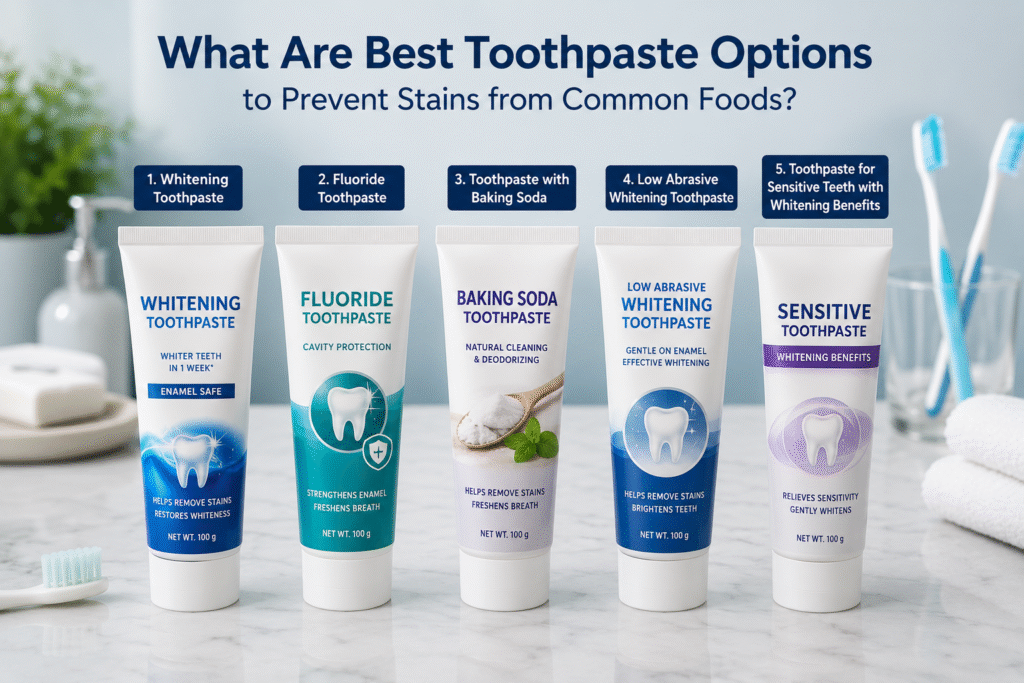
The best toothpaste options to prevent stains from common foods
Regular consumption of coffee, tea, berries, tomato-based foods, or soft drinks may contribute to surface stains on teeth, making it important to select a suitable toothpaste to help reduce these stains and maintain a brighter appearance. Although whitening toothpaste is not capable of significantly altering the natural color of teeth, it can efficiently remove common surface stains and assist in preventing the accumulation of new stains.
1. Whitening Toothpaste
Whitening toothpastes are formulated with gentle polishing agents to remove surface stains from food and beverages, and some contain components designed to break down stain particles effectively while minimizing abrasiveness. These products can support the upkeep of a brighter appearance between professional dental cleanings.
2. Fluoride Toothpaste
Fluoride toothpaste enhances the strength of tooth enamel, increasing its resistance to stains, cavities, and acid erosion. Enamel that is reinforced is less prone to retaining pigments from foods and beverages that can cause staining.
3. Toothpaste with Baking Soda
Baking soda serves as a mild abrasive that aids in removing surface stains and neutralizing acids in the mouth, making it a practical option for individuals who often consume coffee or tea.
4. Low-Abrasive Whitening Toothpaste
Certain whitening toothpastes may cause enamel wear if used daily due to their abrasive properties. Opt for a low-abrasive formula designed to gently remove stains while safeguarding the enamel.
5. Toothpaste for Sensitive Teeth with Whitening Benefits
For individuals experiencing tooth sensitivity, it is advisable to choose a toothpaste designed to provide relief from sensitivity while incorporating gentle whitening properties. Such formulations are intended to alleviate sensitivity and gradually eliminate surface stains.
How to Remove Brown Stains from Teeth Naturally
Brown stains on teeth may arise over time as a result of factors such as dietary choices, aging, lifestyle habits, or inadequate oral hygiene. While certain natural methods may assist in diminishing surface-level stains, they are ineffective against discoloration caused by tooth decay, trauma, or internal factors within the tooth. For deep or persistent stains, consulting a dentist is recommended for accurate diagnosis and appropriate treatment.
1. Brush Your Teeth Properly Twice a Day
Brushing your teeth twice daily with fluoride toothpaste, using a soft-bristled toothbrush, and ensuring each session lasts at least two minutes while covering all tooth surfaces is a straightforward method to help reduce brown stains. Regular brushing aids in plaque removal and can contribute to preventing stains from becoming more prominent over time.
2. Maintain Good Oral Hygiene
Brown stains may become more noticeable as plaque and tartar accumulate on teeth. To address this, floss daily to remove plaque from between teeth, clean your tongue routinely to minimize bacteria, and rinse your mouth with water after meals to help eliminate food particles and substances that can cause staining.
3. Eat Crunchy Fruits and Vegetables
Certain foods, such as apples, carrots, celery, and cucumbers, can aid in cleaning teeth during chewing. Their fibrous texture promotes saliva production, assisting in the removal of food particles and bacteria that may lead to stains.
4. Increase Saliva Production
Saliva serves as a natural defense for the body, aiding in the prevention of stains and cavities by neutralizing acids and cleansing the mouth. Maintaining hydration throughout the day and chewing sugar-free gum, if necessary, can help support saliva production.
5. Quit Smoking and Tobacco Use
Smoking and chewing tobacco are significant contributors to brown and yellow tooth stains due to the presence of tar and nicotine, which can penetrate tooth enamel and lead to persistent discoloration. Ceasing tobacco use can help reduce staining and support both oral health and overall well-being.
6. Rinse Your Mouth After Staining Foods
Rinsing your mouth with plain water after consuming coffee, tea, or other staining beverages can help minimize the pigments that remain on your teeth and reduce the likelihood of long-term staining.
7. Eat a Tooth-Friendly Diet
A diet that includes adequate amounts of calcium, phosphorus, and vitamin D supports the maintenance of strong enamel, which is more resistant to staining and damage. Incorporating dairy products, leafy greens, nuts, and lean proteins into daily meals can contribute to this goal.
Natural Remedies: Do They Really Work?
Many home remedies are popular online, but their effectiveness varies.
Baking soda: It can help eliminate surface stains due to its mild abrasive qualities, but it should be used sparingly to avoid potential enamel wear with excessive application.
Oil pulling: Swishing coconut oil may contribute to reducing bacteria and improving oral hygiene; however, scientific evidence supporting its effectiveness in significantly removing brown stains remains limited.
Hydrogen peroxide: Certain whitening products include diluted hydrogen peroxide; however, using concentrated solutions or homemade mixtures without proper professional supervision may lead to gum irritation and potential damage to teeth.
Lemon juice or vinegar: Acidic substances, while sometimes perceived as natural whiteners, can erode tooth enamel and increase vulnerability to staining, making them unsuitable for dental care.
Are There Any Dental Clinics Offering Stain Removal Treatments for Food-Related Discoloration?
Oracle Dental Care provides various advanced stain removal treatments designed to address tooth discoloration caused by food and beverages. Their experienced dentists offer tailored treatment plans, taking into account the type and severity of stains caused by substances like coffee, tea, red wine, soft drinks, turmeric, tobacco, and other pigmented items.
Stain Removal Treatments Available at Oracle Dental Care
1. Professional Scaling & Polishing
The initial process involves addressing surface discoloration caused by plaque, tartar, and food pigments. Scaling helps eliminate hardened buildup, while polishing refines the tooth surface, contributing to a cleaner, brighter appearance and reducing the likelihood of future staining.
2. Air Polishing
Air polishing employs a combination of air, water, and fine polishing powder to eliminate persistent surface stains resulting from substances such as coffee, tea, tobacco, and other staining foods. This method is efficient, minimally invasive, and designed to restore the natural look of teeth.
3. Professional Teeth Whitening
Professional teeth whitening offers a reliable solution for stains that are resistant to regular cleaning. This treatment utilizes clinically approved whitening agents to safely lighten the color of teeth, delivering results that are visibly brighter compared to over-the-counter whitening products.
4. Dental Bonding
If deep or permanent discoloration does not respond to whitening treatments, dental bonding can be used to enhance the appearance of teeth. A tooth-colored composite resin is applied to mask persistent stains, chips, or minor flaws, resulting in a more natural-looking smile.
5. Porcelain Veneers
Porcelain veneers serve as a durable cosmetic option for addressing severe or persistent discoloration that cannot be corrected through whitening. These custom-designed, thin porcelain shells are adhered to the front surfaces of the teeth, effectively altering their color, shape, and overall appearance.
Why Choose Oracle Dental Care?
At Oracle Dental Care, stain removal treatments begin with a thorough dental examination to determine the cause of discoloration. Dentists develop individualized treatment plans utilizing modern dental technology and advanced cosmetic procedures to ensure safe, effective, and durable outcomes.
Services range from professional cleanings to more comprehensive smile enhancement solutions, aimed at promoting a healthier and brighter appearance.
If food-related stains are impacting the appearance of your teeth, consider scheduling an appointment at Oracle Dental Care, where professionals can suggest the most appropriate stain removal treatment for your needs.