
No, not all wisdom teeth need to be removed. If wisdom teeth are healthy, fully erupted, properly aligned, and easy to clean, extraction may not be necessary. However, they may need to be removed if they become impacted, cause pain, lead to infections, damage adjacent teeth, or heighten the risk of gum disease or tooth decay. Regular dental examinations and X-rays can assist in evaluating whether treatment for wisdom teeth is required.
2. What are the common signs of an impacted wisdom tooth?
Impacted wisdom teeth may not always present symptoms, but common indicators can include pain or swelling at the back of the mouth, red or swollen gums, difficulty opening the mouth, jaw discomfort, bad breath, an unpleasant taste, or pain during chewing. In certain instances, impacted wisdom teeth may lead to infections, damage to adjacent teeth, or dental crowding. Individuals experiencing these symptoms are advised to consult a dentist for evaluation and X-rays.
3. What are the common symptoms that indicate my wisdom tooth needs removal?
The common symptoms that wisdom teeth removal are :
Wisdom teeth, also called third molars, usually appear between the ages of 17 and 25. Some wisdom teeth develop without issues, growing normally, while others may become impacted, grow at an angle, or not fully erupt, potentially causing pain, infection, and other oral health complications that might necessitate their removal.
Here are the most common symptoms that may indicate your wisdom tooth needs to be removed:
Persistent Pain at the Back of the Mouth
Persistent pain or discomfort in the area near the back of the jaw is often an early indicator. This pain might be continuous or intermittent, and it tends to intensify during activities such as chewing or biting.
Swollen or Tender Gums
Swelling, redness, or tenderness of the gum tissue surrounding a wisdom tooth can indicate inflammation or infection, which may also lead to bleeding during brushing or flossing.
Jaw Pain and Stiffness
An impacted wisdom tooth may exert pressure on the surrounding jawbone and muscles, potentially causing jaw pain, stiffness, or difficulty in fully opening the mouth.
Frequent Infections
Partially erupted wisdom teeth can create gaps where food particles and bacteria may accumulate, potentially causing gum infections, swelling, pus formation, and a condition referred to as pericoronitis.
Bad Breath or an Unpleasant Taste
Persistent bad breath or an unpleasant taste in the mouth can develop as a result of bacteria accumulating around an impacted or infected wisdom tooth.
Difficulty Chewing or Biting
Discomfort or pain experienced during eating, particularly when chewing on the affected side, could suggest that the wisdom tooth is contributing to irritation or inflammation.
Damage to Nearby Teeth
When a wisdom tooth grows at an angle, it may press against the adjacent molar, potentially leading to issues such as tooth decay, enamel erosion, gum disease, or root damage.
Tooth Crowding
Impacted wisdom teeth can sometimes cause nearby teeth to crowd or shift, especially when the jaw has limited space.
Cysts or Damage to the Jawbone
An untreated impacted wisdom tooth, though less frequent, has the potential to form a cyst around it. This condition may, over time, lead to damage to the surrounding bone, nearby teeth, or nerves, thereby increasing the complexity of treatment.
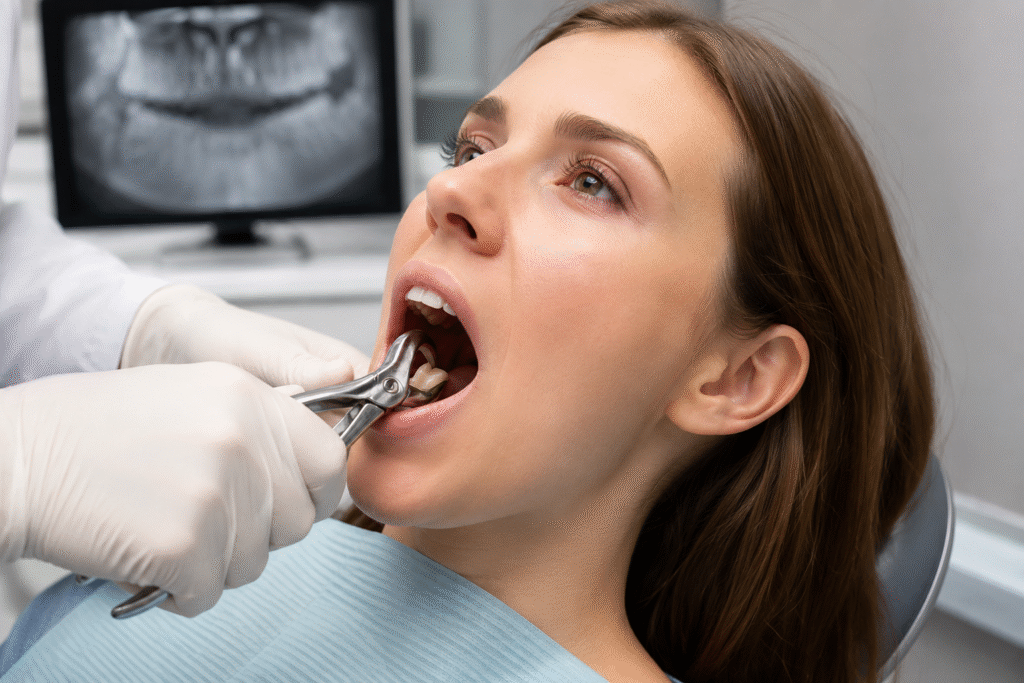
4. Average cost of wisdom tooth extraction procedure in Vijayawada?
The cost of wisdom tooth extraction in Vijayawada depends on various factors, such as whether the tooth is fully erupted or impacted, the procedure’s complexity, the number of teeth being extracted, and whether surgical intervention is necessary.
Oracle Dental Care provides wisdom tooth removal services at affordable and transparent prices, ensuring no compromise on safety, comfort, or treatment quality. Prior to the procedure, experienced dentists conduct a comprehensive clinical examination and digital X-rays to determine an optimal treatment plan and present a detailed cost estimate.
Oracle Dental Care provides professional wisdom tooth extraction services, utilizing advanced techniques to ensure the procedure is safe, effective, and conducted in a clean environment. Individuals experiencing discomfort or requiring wisdom tooth removal are encouraged to schedule a consultation for expert care at a competitive price.
5. Can wisdom teeth cause bad breath?
Yes, it cause bad breath, especially if they are partially erupted or impacted. These teeth frequently create small gaps that can trap food particles, plaque, and bacteria, making thorough cleaning challenging. Over time, this accumulation may result in bad breath, an unpleasant taste in the mouth, gum inflammation, or infections like pericoronitis.
If bad breath is present alongside pain, swelling, bleeding gums, or difficulty chewing, it may indicate the need for professional evaluation of a wisdom tooth. A dentist can assess the situation, perform X-rays if required, and suggest suitable treatment options, such as enhanced oral hygiene practices, medication, or wisdom tooth extraction if deemed necessary.
5. Which dental clinics in India offer affordable wisdom tooth removal services?
Oracle Dental Care is one of the trusted dental clinics in Vijayawada, offering affordable wisdom tooth removal without compromising on quality or patient comfort. Our experienced dental team performs pain-free wisdom tooth extraction using modern techniques, advanced equipment, and strict sterilization protocols.
If you are dealing with an impacted wisdom tooth or experiencing pain, swelling, or infection, treatment is offered tailored to address specific dental requirements. Oracle Dental Care is the first ISO-certified dental clinic in Vijayawada. Committed to maintaining high standards of patient care, hygiene, and clinical excellence.
For affordable and dependable wisdom tooth removal services in Vijayawada, consider scheduling a consultation with the team to receive an accurate diagnosis and a treatment plan tailored to your needs.