vaping vs smoking are commonly associated with risks to the lungs and heart, but these habits can also negatively impact oral health, including teeth, gums, and the mouth.
Nicotine and other chemicals present in tobacco and many vaping products may lead to issues such as dry mouth, gum disease, bad breath, tooth staining, and other dental problems.
Is vaping better than smoking for your teeth?
While vaping may involve exposure to fewer harmful chemicals compared to traditional cigarette smoke, it is not without risks to oral health. Both smoking and vaping can have adverse effects on the mouth and should not be regarded as healthy practices.
Vaping vs Smoking: What Is the Difference?
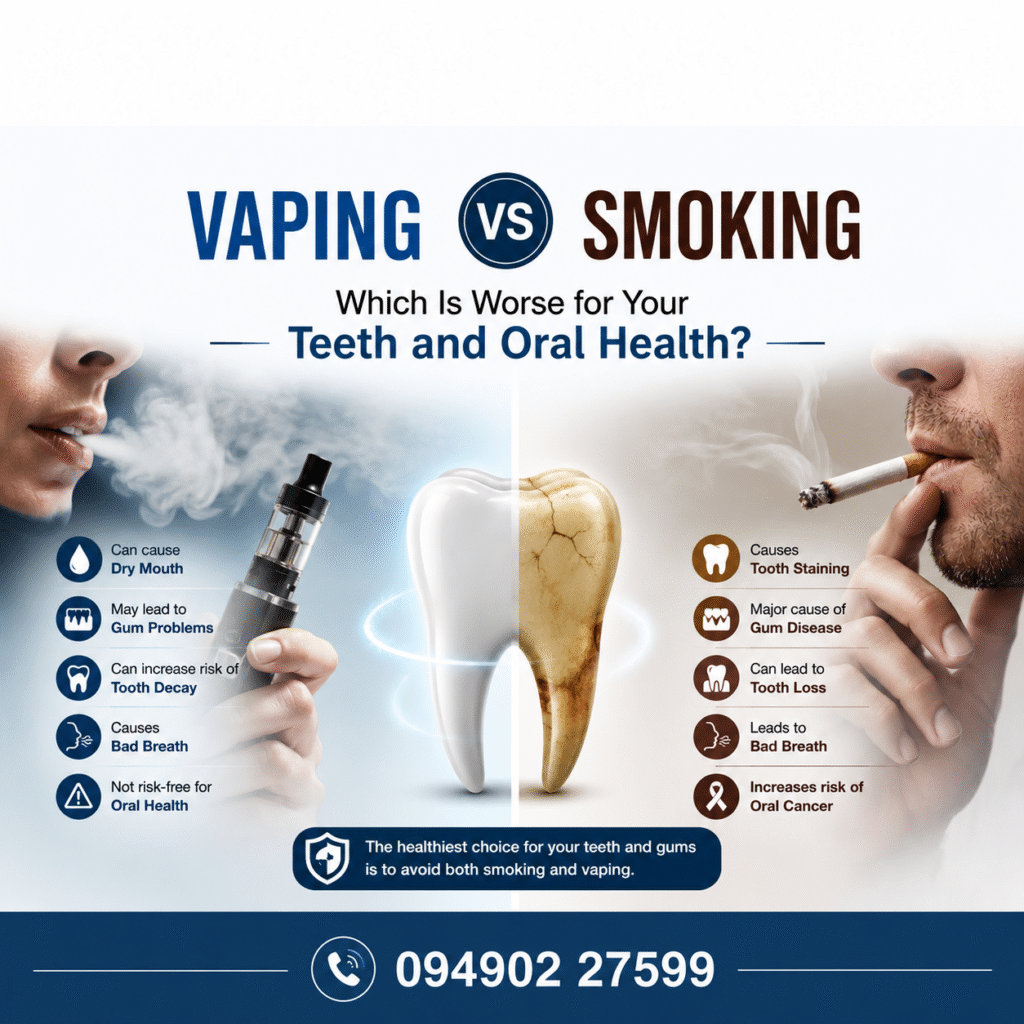
Traditional cigarettes function by burning tobacco, producing smoke that contains thousands of chemicals, some of which can harm bodily tissues. Smoking is closely linked to gum disease, tooth discoloration, halitosis, slower recovery from oral injuries, and a heightened risk of oral cancer.
Vaping uses an electronic device to heat a liquid and create an aerosol. Vaping liquids frequently include nicotine, a substance that can impact blood circulation and potentially lead to oral health issues. Additionally, the aerosol may contain flavoring chemicals and various compounds that could irritate the oral cavity.
How Smoking Affects Your Teeth and Gums
Smoking can have several negative effects on dental health.
1. Smoking Can Cause Tooth Staining
Tobacco smoke carries compounds capable of staining the surfaces of teeth. Frequent smoking often leads to yellow or brown discoloration, which can diminish the brightness of one’s smile. While professional teeth cleaning can eliminate certain surface stains, persistent smoking may result in recurring discoloration.
2. Smoking Increases the Risk of Gum Disease
Smoking is a significant risk factor for gum disease, as it can impair the body’s ability to combat infections and hinder the natural healing process.
Gum disease can cause symptoms such as:
- Red or swollen gums
- Bleeding gums
- Persistent bad breath
- Gum recession
- Loose teeth
- Tooth loss in advanced cases
3. Smoking Can Cause Bad Breath
Tobacco smoke can create a noticeable odor in the mouth and may also lead to dry mouth, potentially exacerbating unpleasant breath.
4. Smoking Increases Oral Cancer Risk
Tobacco use is a significant risk factor for cancers of the mouth and throat, and routine dental examinations can assist dentists in detecting abnormal changes in the mouth that may need additional assessment.
How Vaping Affects Teeth and Oral Health
Vaping does not involve the combustion of tobacco; however, it remains a relevant topic in discussions about vaping and oral health.
1. Vaping Can Contribute to Dry Mouth
Nicotine is associated with decreased saliva production, which is essential for protecting teeth and maintaining a balanced oral environment. Reduced saliva can lead to dryness in the mouth, potentially increasing the likelihood of issues such as tooth decay, bad breath, and oral discomfort.
2. Vaping May Increase the Risk of Gum Problems
Nicotine has the potential to impact blood vessels and circulation, which may affect the health of gum tissues and the body’s ability to respond to infection. Individuals who vape frequently are advised to monitor for symptoms such as swollen gums, bleeding, tenderness, or gum recession.
3. Vaping May Affect the Teeth
Certain vaping liquids include components that may create an acidic environment in the mouth, which, depending on the product and usage frequency, could potentially lead to enamel erosion and tooth decay.
4. Vaping Can Cause Bad Breath
Dry mouth and the components found in vaping aerosols have the potential to lead to unpleasant breath.
5. Vaping Is Not Risk-Free for Oral Health
A common misunderstanding about vaping is the belief that it is entirely harmless. While vaping differs from smoking in its chemical exposure, it has the potential to impact oral health, including the teeth and gums.
Vaping vs Smoking and Tooth Discoloration
Smoking and vaping can impact the appearance of your smile, with traditional smoking being especially associated with significant tooth staining.
If your teeth are stained, a dentist can assess the cause and suggest suitable solutions, such as professional cleaning or teeth whitening, if applicable. It is essential to note that whitening procedures do not eliminate the underlying impact of ongoing tobacco or nicotine use.
How Can You Protect Your Teeth If You Smoke or Vape?
Maintaining proper oral hygiene is particularly important for individuals who smoke or vape.
Follow a Good Oral Hygiene Routine
It is recommended to brush your teeth two times a day with fluoride toothpaste and to clean between your teeth daily using floss or an appropriate inter dental cleaning tool.
Drink Plenty of Water
Maintaining hydration may assist in alleviating dry-mouth symptoms and contribute to regular saliva production.
Visit Your Dentist Regularly
Regular dental checkups enable dentists to detect cavities, gum issues, oral infections, and other changes in their early stages.
Avoid or Quit Smoking and Vaping
Ceasing the use of tobacco and nicotine products significantly benefits both oral health and overall well-being.
If quitting proves challenging, consider consulting a qualified healthcare professional for evidence-based support in cessation efforts.
Can a Dentist Tell If You Smoke or Vape?
A dentist might observe indications potentially linked to smoking or vaping, such as tooth discoloration, dry mouth, alterations in the gums, unpleasant breath, or slower healing processes, though these symptoms are not solely attributable to smoking or vaping.
Disclosing tobacco or vaping use to your dentist enables them to assess your risk factors accurately and offer suitable preventive care.
Whether you smoke, vape, or neither, you should seek dental care if you experience:
- Bleeding gums
- Persistent bad breath
- Tooth sensitivity
- Toothache
- Swollen or painful gums
- Receding gums
- Loose teeth
- Unexplained sores in the mouth
- Changes in the color or appearance of oral tissues
- A sore or lump that does not heal
Vaping vs Smoking
Neither vaping nor smoking is beneficial for oral health, as both pose risks to teeth and gums. Smoking is widely recognized for its detrimental effects, including heightened risks of gum disease, tooth loss, discoloration, slower healing processes, and oral cancer. While vaping may involve exposure to fewer harmful chemicals compared to traditional cigarettes, it can still negatively impact oral tissues and is not without risk.
Maintaining oral health begins with proper hygiene practices, routine dental visits, and refraining from using tobacco or nicotine products. Individuals who smoke or vape and have concerns about their teeth or gum health are encouraged to consult a dentist for tailored guidance and suitable treatment options.
Do You Smoke or Vape?
Habits can influence the condition of your teeth, gums, breath, and overall oral health. At Oracle Dental Care, a dental clinic in Vijayawada, professionals can evaluate your oral health and provide insights into how smoking or vaping may impact your mouth.
Want to know your actual oral health condition?
Visit Oracle Dental Care for a professional dental check-up and get the right guidance based on your habits and oral health condition.
Your habits may be hidden, but their effects can show in your mouth. Take a step towards better oral health today!