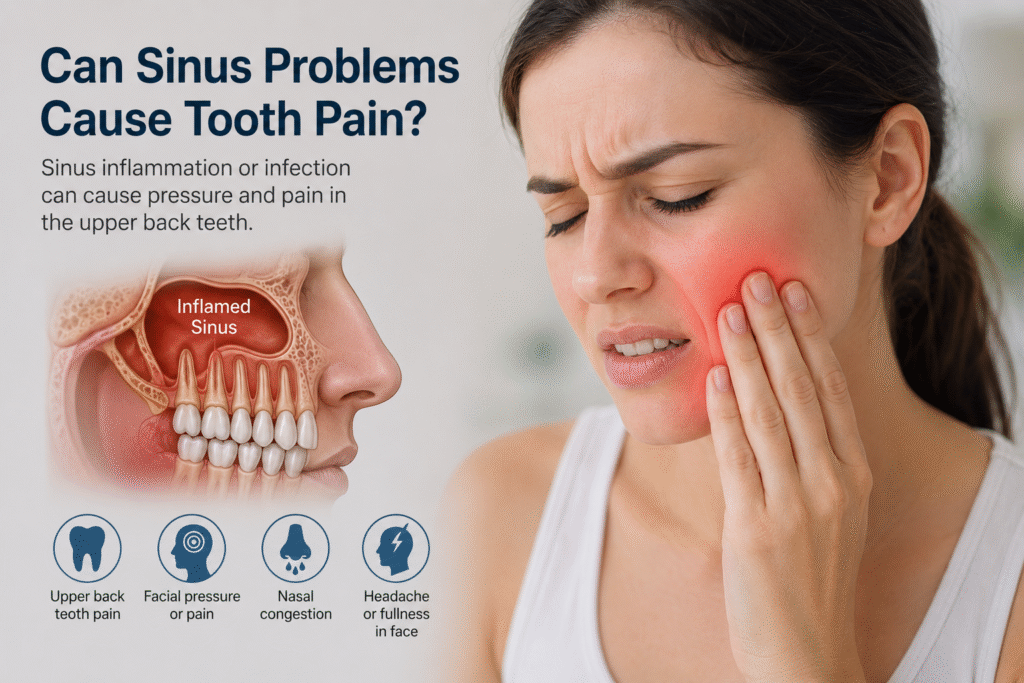
A toothache is often associated with dental issues, but sinus problems can also trigger pain in the upper back teeth. The roots of the upper molars are situated near the maxillary sinuses, and inflammation in these sinuses, whether caused by infection, allergies, or a cold, can result in pressure that leads to tooth pain or discomfort.
How Do Sinus Problems Cause Tooth Pain?
Tooth pain can occasionally result from sinus problems due to the proximity between the maxillary sinuses and the upper back teeth, such as molars and premolars. The maxillary sinuses are air-filled cavities situated behind the cheeks and just above the roots of the upper teeth. In certain individuals, the roots of these teeth are positioned near the sinus floor, and in some instances, they may extend into the sinus cavity.
When a sinus infection (sinusitis), allergies, or a severe cold occurs, the lining of the sinuses becomes inflamed and swollen, leading to mucus buildup and increased pressure within the sinus cavity. This pressure can affect the nerves near the upper teeth, causing sensations of soreness, sensitivity, or pain, despite the teeth being otherwise healthy.
Sinus-related tooth pain, which differs from typical toothaches caused by cavities or infections, often impacts multiple upper teeth simultaneously rather than just one. This type of pain is commonly characterized as a dull, aching sensation that may intensify during activities such as bending over, lying down, jumping, or making sudden head movements, as these positions can increase sinus pressure.
People with sinus-related dental discomfort often experience other symptoms, such as:
- Nasal congestion or a blocked nose.
- facial pressure around the cheeks, eyes, or forehead.
- Headache.
- Thick nasal discharge, fever in certain cases of sinus infections.
- A diminished sense of smell, and ear pressure or fullness are potential symptoms associated with sinus conditions.
Sinus-related tooth pain can often be differentiated from a dental issue by observing the associated symptoms. Tooth pain that coincides with a cold, allergies, or a sinus infection and diminishes as the sinus condition improves is likely linked to the sinuses. Conversely, if the pain is localized to a single tooth, is intense, or persists after sinus symptoms subside, it may suggest a dental concern such as a cavity, a cracked tooth, gum disease, or an abscess.
Common Symptoms of Sinus Tooth Pain
1. Pain in the Upper Back Teeth
Discomfort in the upper back teeth, particularly the molars and premolars, is a common indication of sinus-related tooth pain. This occurs because these teeth are situated near the maxillary sinuses, and inflammation in the sinuses—caused by factors such as infection, cold, or allergies—can create pressure that irritates the surrounding nerves. The resulting sensation is typically a dull ache and tends to affect multiple upper teeth rather than being localized to a single tooth, as might occur with a cavity.
2. Pressure Around the Cheeks, Nose, or Forehead
Sinus inflammation can lead to a sensation of pressure or fullness in areas such as the cheeks, around the nose, and across the forehead. This occurs as the sinus cavities swell and accumulate mucus, resulting in increased pressure within the facial structure. This sensation is commonly described as heaviness or tightness, which may intensify when bending forward or during abrupt head movements.
3. Nasal Congestion or a Blocked Nose
Nasal congestion, characterized by a blocked or stuffy nose, is frequently associated with sinus issues. Swelling in the nasal passages and an increase in mucus can obstruct normal breathing through the nose. As sinus infections or allergies often lead to nasal blockage, the presence of upper tooth pain alongside this symptom may suggest that the underlying cause is related to the sinuses rather than a dental concern.
4. Headache or Facial Pain
Sinus inflammation may lead to headaches and facial pain as a result of elevated pressure within the sinus cavities. This discomfort is commonly experienced around the forehead, behind the eyes, or across the cheeks, and can vary in intensity from mild to severe, potentially affecting nearby areas such as the jaw and upper teeth. In contrast to migraines, sinus headaches are typically associated with nasal congestion and a sensation of facial pressure.
5. Tooth Pain That Gets Worse When Bending Over or Lying Down
Sinus-related tooth pain often intensifies during actions like bending over, lying down, or sudden head movements, as these positions can elevate pressure within inflamed sinus cavities. This increased pressure may affect the nerves near the upper teeth. Toothaches that vary depending on body position are more likely attributed to sinus pressure rather than dental issues.
6. Cold or Allergy Symptoms Along with Tooth Discomfort
Tooth pain that occurs during a cold, seasonal allergies, or a sinus infection may be associated with sinus inflammation rather than originating from the teeth. Common symptoms that accompany these conditions include sneezing, nasal congestion or discharge, sore throat, coughing, watery eyes, fatigue, and mild fever. Typically, as the cold or allergy subsides and sinus inflammation reduces, the tooth discomfort also tends to resolve. However, if the pain persists after the cold or allergy has cleared, consulting a dentist is recommended to check for potential dental issues such as cavities, gum disease, or other conditions.
How to Tell the Difference Between a Sinus Toothache and a Dental Toothache
| Feature | Sinus Tooth Pain | Dental Tooth Pain |
| Affected Teeth | Usually affects multiple upper back teeth (molars and premolars) because they are close to the maxillary sinuses. | Usually affects one specific tooth that has a dental problem. |
| Cause | Caused by sinus infections, allergies, or inflammation, which create pressure in the sinus cavities. | Caused by cavities, tooth decay, cracked teeth, gum disease, abscesses, or damaged dental restorations. |
| Type of Pain | A dull, aching, or pressure-like pain that can potentially radiate across multiple upper teeth. | Pain that is typically focused on a single tooth and may present as sharp, throbbing, or persistent. |
| Location of Pain | Pain is primarily experienced in the upper back teeth and can potentially radiate to the cheeks or jaw. | Discomfort is typically confined to the impacted tooth and the adjacent gum area. |
| Treatment | Treatment options include the use of decongestants, saline nasal sprays, allergy medications, maintaining hydration, steam inhalation, or seeking medical care for sinus infections. | Professional dental care may be necessary, which could include treatments such as fillings, root canal therapy, crowns, gum procedures, or tooth extraction, depending on the underlying issue. |
How Is Sinus Tooth Pain Treated?
The course of treatment varies based on the underlying cause. For pain resulting from a sinus infection or allergies, a doctor may suggest the following:
Decongestants
Decongestants are used to reduce swelling in the nasal passages, which can facilitate easier breathing and alleviate sinus pressure. As the pressure decreases, discomfort or pain in the upper teeth may also lessen. It is important to use these medications strictly as directed by a healthcare provider.
Saline Nasal Sprays
Saline nasal sprays contain a saltwater solution designed to hydrate the nasal passages and assist in clearing excess mucus. They may help alleviate nasal congestion, support sinus drainage, and reduce pressure, all without the risk of medication-related side effects. These sprays are generally considered safe for regular use in most individuals.
Steam Inhalation
Inhaling warm steam may assist in loosening mucus and alleviating nasal congestion, potentially enhancing sinus drainage and easing facial pressure or sinus-related tooth discomfort. Methods for steam inhalation include taking a warm shower or carefully inhaling steam from a bowl of hot water, ensuring precautions are taken to prevent burns.
Staying Hydrated
Maintaining adequate hydration can help keep the mucus in the sinuses thin, promoting better drainage. Drinking enough fluids may alleviate sinus congestion, assist in recovery, and reduce the pressure associated with tooth discomfort. It is particularly important to ensure sufficient fluid intake throughout the day, especially during instances of a cold or sinus infection.
Antibiotics (Only if Prescribed for a Bacterial Infection)
Antibiotics are effective in treating sinus infections caused by bacteria but are not effective against viral infections, which are the most common cause of sinus-related issues. A doctor may prescribe antibiotics if a bacterial sinus infection is identified. It is important to take antibiotics exactly as directed and to complete the full course, even if symptoms improve before finishing the medication.
When Should You Visit a Dentist?
Experiencing tooth pain should not be disregarded, as it may stem from various causes. While temporary discomfort might result from factors such as sinus pressure, ongoing or intense pain could signal a dental issue that necessitates professional evaluation. There are certain circumstances where arranging a dental appointment is advisable.
Tooth Pain Lasts More Than a Few Days
If tooth pain persists for more than two or three days without improvement, it may indicate an underlying issue such as tooth decay, a cavity, gum disease, or an infection. Consulting a dentist can help determine the cause and provide suitable treatment to prevent further complications.
The Pain Is Severe or Worsening
A mild toothache has the potential to resolve on its own, but persistent or worsening pain should be addressed promptly. Escalating discomfort may signify issues such as a deep cavity, an abscess, or nerve damage within the tooth. Seeking timely treatment can mitigate complications and alleviate discomfort.
You Notice Swelling in the Gums or Face
Swelling in the gums, jaw, or face may indicate an infection, and in certain cases, a dental abscess can lead to considerable swelling that may extend to surrounding tissues if not addressed. Prompt dental care is recommended if swelling is accompanied by tooth pain to prevent the infection from worsening.
You Have Difficulty Chewing
Discomfort during chewing or biting may result from issues such as a cracked tooth, tooth decay, gum disease, or an infection involving the tooth’s root. Such difficulty can interfere with proper eating and may require prompt dental evaluation to address the underlying problem.
The Pain Is Limited to One Tooth
Sinus-related tooth pain often impacts multiple upper teeth simultaneously, while pain concentrated on a single tooth is more likely attributed to a dental condition such as a cavity, cracked tooth, worn filling, or infection. A thorough dental evaluation can identify the underlying cause and guide appropriate treatment.
There Are Signs of Tooth Decay or Infection
Indicators like a hole in the tooth, discoloration such as black or brown spots, sensitivity to temperature extremes, pus near the gums, unpleasant breath, or a bad taste in the mouth may suggest tooth decay or an infection. These conditions typically do not resolve independently and necessitate professional dental intervention to prevent progression and safeguard oral health.
Don’t Delay Your Dental Visit
Prompt identification and treatment can prevent minor dental issues from escalating into serious conditions. When experiencing tooth pain, determining whether it stems from a sinus issue or a dental problem is crucial, and consulting a dentist ensures a comprehensive evaluation to pinpoint the cause and provide appropriate treatment for effective, lasting relief.
Why Choose Oracle Dental Care?
First ISO-Certified Dental Clinic in Vijayawada
Oracle Dental Care is recognized as the first ISO-certified dental clinic in Vijayawada, demonstrating a dedication to upholding high standards of quality, patient safety, and clinical efficiency. Treatments are provided in adherence to stringent hygiene and sterilization measures to maintain optimal care.
Experienced and Skilled Dentists
The team of dentists at our practice is skilled and experienced, offering dental care tailored to patients of all ages. They provide a range of services, from regular check-ups to specialized procedures, with an emphasis on effective treatments and maintaining patient comfort during each visit.
Advanced Dental Technology
Modern dental equipment and advanced technology are utilized to diagnose and address various dental conditions with accuracy. State-of-the-art diagnostic tools enable early identification of issues, facilitating precise treatment planning and improved long-term outcomes.
Comprehensive Dental Services
Oracle Dental Care provides a comprehensive array of dental services in a single location, including preventive care, cosmetic dentistry, root canal procedures, dental implants, orthodontics, smile design, and emergency dental care, designed to address various oral health requirements.
Personalized Treatment Plans
Each patient has distinct oral health needs, which are addressed through personalized treatment plans tailored to their individual requirements, lifestyle, and objectives. By thoroughly evaluating oral health, a patient-focused approach is utilized to provide appropriate and effective care.
High Standards of Hygiene and Safety
Ensuring patient safety is a primary focus. Strict sterilization procedures and infection control protocols are implemented to maintain a clean and secure environment for all patients. Adherence to hygiene standards aims to minimize the risk of infections and promote a safe experience during each visit.
Comfortable and Patient-Friendly Environment
Visiting the dentist can sometimes be a source of stress for individuals, so a calm and comfortable environment has been established to help patients feel at ease. The staff is available to address any questions and provide assistance throughout the treatment process.
Accurate Diagnosis and Effective Treatment
The dentists prioritize determining the underlying cause of dental issues instead of solely addressing the symptoms. Through precise diagnoses and treatments grounded in evidence, they aim to promote lasting oral health and effective treatment results.
Affordable and Transparent Care
Quality dental care should be accessible to all, which is why Oracle Dental Care provides transparent treatment plans, offering clear explanations of procedures and costs to support patients in making informed decisions without unexpected charges.
Trusted by Thousands of Happy Patients
Oracle Dental Care has established a reputation for providing reliable dental services in Vijayawada, earning the trust of numerous patients through high-quality care, attentive service, and effective treatment results.
FAQ’S
1. Can sinus problems really cause tooth pain?
Sinus issues, such as sinus infections or sinusitis, may lead to tooth pain due to the proximity of the maxillary sinuses to the upper back teeth. Inflammation or fluid buildup in the sinuses can exert pressure on nearby nerves, potentially causing discomfort or pain in the affected area.
2. Which teeth are most affected by sinus pressure?
Sinus pressure often impacts the upper back teeth, such as molars and premolars, due to the proximity of their roots to the maxillary sinuses, and the discomfort may extend to multiple teeth rather than being isolated to a single one.
3. How can I tell if my tooth pain is caused by a sinus infection?
Tooth pain caused by sinus issues is commonly associated with symptoms like nasal congestion, facial pressure, headaches, and a runny nose, often affecting several upper teeth and intensifying during activities like bending over. In contrast, a dental-related toothache generally involves a single tooth and may be aggravated by exposure to temperatures or sweet foods.
4. Can allergies cause tooth pain?
Seasonal allergies may result in swollen sinuses and nasal congestion, which can increase pressure on the upper teeth. This pressure has the potential to cause mild to moderate tooth discomfort until the allergy symptoms subside.
5. Will sinus tooth pain go away on its own?
Sinus-related tooth pain often subsides once the underlying sinus infection, cold, or allergies are addressed. However, if the discomfort persists after the sinus symptoms have cleared, it is advisable to consult a dentist to determine if any dental issues are present.
6. Should I see a dentist or a doctor for sinus tooth pain?
If you are experiencing sinus infection symptoms accompanied by tooth pain, it is advisable to consult a doctor for treatment. In cases where the pain is intense, isolated to a single tooth, or continues after sinus-related symptoms subside, seeking a dental examination from a dentist is recommended.
7. Can a sinus infection feel like a toothache?
A sinus infection can lead to a dull, aching pain in the upper teeth, which may feel similar to a toothache. This occurs due to swollen sinuses exerting pressure on the nerves near the upper molars.
8. When should I visit a dentist for tooth pain?
It is advisable to arrange a dental appointment if tooth pain persists for several days, intensifies, is accompanied by swelling, is localized to a single tooth, or is linked to noticeable tooth decay or gum infection.
9. How is sinus-related tooth pain treated?
The treatment primarily aims to alleviate sinus inflammation, and healthcare providers may suggest decongestants, saline nasal sprays, steam inhalation, maintaining hydration, or antibiotics in cases of bacterial infection. If the discomfort stems from a dental issue, suitable dental care will be necessary.
10. Can a cold cause tooth pain?
The common cold can cause sinus congestion and inflammation, potentially increasing pressure in the maxillary sinuses and resulting in temporary discomfort in the upper teeth. This pain generally subsides as the cold resolves.