Dental health tips is essential at all stages of life, particularly for senior citizens, as aging brings an increased need for dental care. Visit oracle dental care one of best and First ISO certified dental clinic in Vijayawada. Issues such as tooth decay, gum disease, dry mouth, and tooth loss are more prevalent with age. Preserving dental health supports the ability to enjoy a variety of foods, contributes to clear speech, boosts confidence, and promotes overall well-being.
Proper oral hygiene is essential not only for preserving the appearance of one’s smile but also for promoting overall health and well-being. Maintaining healthy teeth and gums enables effective chewing, which contributes to improved digestion and nutrition. Additionally, good oral health supports clear speech, fosters confident smiling, and facilitates comfortable social interactions.
Inadequate oral hygiene has the potential to cause significant dental infections and may also be linked to other health issues, including heart disease, complications related to diabetes, and respiratory infections. Therefore, maintaining habits such as regular brushing, flossing, consuming a balanced diet, staying hydrated, and attending routine dental check-ups is particularly important for senior citizens.
Adopting a straightforward daily oral hygiene regimen and consulting professional dental services as required can help seniors reduce the risk of common dental issues and maintain oral health over time.
Why Oral Health Is Important for Senior Citizens?
Oral health encompasses more than just clean teeth and an attractive smile; it is closely linked to overall health and significantly impacts daily life, particularly for older adults. With age, the susceptibility to dental issues increases, highlighting the importance of proper oral care in supporting general health and quality of life.
Oral hygiene may result in the accumulation of plaque, the development of cavities, and gum disease. If not addressed, these issues can lead to complications such as pain, tooth loss, challenges with eating, and severe infections. Studies have also indicated potential connections between poor oral health and various chronic health conditions, including heart disease, diabetes, respiratory infections, and stroke. Additionally, individuals with diabetes may experience greater difficulty in managing blood sugar levels due to gum disease, while untreated oral infections could potentially compromise the immune system.
Maintaining healthy teeth and gums enables seniors to chew food effectively, which is crucial for proper digestion and adequate nutrition. Dental issues that make chewing painful may cause older adults to avoid nutritious foods like fruits, vegetables, and proteins, potentially resulting in nutritional deficiencies and impacting overall health.
Maintaining good oral health enables seniors to speak clearly, smile confidently, and engage in social interactions without discomfort or embarrassment. Healthy teeth and gums contribute to emotional well-being by enhancing self-esteem and minimizing stress linked to dental issues such as pain or missing teeth.
Senior citizens can maintain their oral health and minimize the risk of serious dental and medical issues by practicing daily brushing and flossing, consuming a balanced diet, staying hydrated, and attending regular dental check-ups. Proper oral care plays a significant role in promoting overall health and well-being.
Common Dental Problems in Older Adults
With age, teeth and gums may become more susceptible to dental issues due to factors such as natural wear and tear, medical conditions, medications, and lifestyle habits. Recognizing common oral health concerns can aid older adults in taking preventive steps and pursuing timely treatment to address potential problems before they worsen.
Tooth Decay
Tooth decay is a prevalent dental issue among senior citizens, with older adults facing a significant risk alongside children. As individuals age, the enamel that protects teeth gradually thins, increasing susceptibility to decay. Cavities frequently form around existing fillings, crowns, or exposed tooth roots, areas where bacteria tend to accumulate.
Dry mouth, frequent snacking, inadequate oral hygiene, and the consumption of sugary foods can contribute to an increased risk of tooth decay. Without proper treatment, cavities may result in significant tooth pain, infections, and potential tooth loss.
How to Prevent Tooth Decay
- Brush twice a day with fluoride toothpaste.
- Floss daily to remove plaque between teeth.
- Limit sugary foods and drinks.
- Drink plenty of water.
- Visit your dentist regularly for professional cleanings and early cavity detection.
Gum Disease
Periodontal disease, commonly referred to as gum disease, is a primary cause of tooth loss among older adults. It originates from plaque accumulation along the gum line, which may lead to symptoms such as redness, swelling, and bleeding gums. If left untreated, the condition can progress and affect the supporting tissues and bones surrounding the teeth.
Severe gum disease may lead to loose teeth, chronic bad breath, gum recession, and challenges with chewing. However, it is a preventable condition and can frequently be treated effectively if identified in its early stages.
How to Prevent Gum Disease
- Brush and floss every day.
- Schedule regular dental check-ups and cleanings.
- Avoid smoking and tobacco products.
- Eat a healthy, balanced diet.
- Seek dental treatment as soon as you notice symptoms.
Dry Mouth
Dry mouth, is a frequently observed condition in older adults, often resulting from the saliva-reducing effects of certain medications. Saliva is essential for oral health as it helps remove food particles, neutralize acids, and inhibit bacterial growth.
Insufficient saliva production can lead to dryness and discomfort in the mouth, potentially heightening the risk of tooth decay, gum disease, mouth infections, and bad breath. It may also cause challenges with chewing, swallowing, or speaking effectively.
Tips to Manage Dry Mouth
- Drink water frequently throughout the day.
- Chew sugar-free gum to stimulate saliva.
- Avoid alcohol, tobacco, and caffeinated beverages.
- Use saliva substitutes if recommended by your dentist.
- Discuss medication-related dry mouth with your healthcare provider.
Tooth Sensitivity
Tooth sensitivity is common among senior citizens and often results from worn enamel or exposed tooth roots. Age-related gum recession can expose the sensitive inner layer of the tooth, leading to discomfort or sharp pain when consuming hot, cold, sweet, or acidic foods and beverages.
Tooth sensitivity may be caused by cavities, cracked teeth, worn fillings, or gum disease. Although occasional sensitivity is typically not a major concern, ongoing discomfort should be assessed by a dentist.
Ways to Reduce Tooth Sensitivity
- Use toothpaste specifically formulated for sensitive teeth.
- Brush gently using a soft-bristled toothbrush.
- Avoid consuming extremely hot or cold foods if they provoke discomfort, practice consistent oral hygiene, and consult a dentist to determine and address the root cause.
Tooth Loss
Tooth loss is frequently observed among older adults and is typically the result of untreated gum disease, advanced tooth decay, injury, or other dental issues. Missing teeth can impact essential functions such as chewing, speaking, and smiling, and may also alter facial appearance, potentially causing a sunken look over time
Replacing lost teeth is essential to preserving oral function and overall well-being. Contemporary dental solutions, including implants, bridges, and dentures, are designed to restore functionality and appearance, enabling individuals to eat, speak, and smile with ease.
Why Replacing Missing Teeth Is Important
- Enhances chewing efficiency and supports digestion.
- facilitates clear speech, prevents adjacent teeth from shifting position.
- Helps preserve facial structure and appearance, and contributes to overall confidence and well-being.
Treatment Options
- Dental Implants
- Dental Bridges
- Full or Partial Dentures
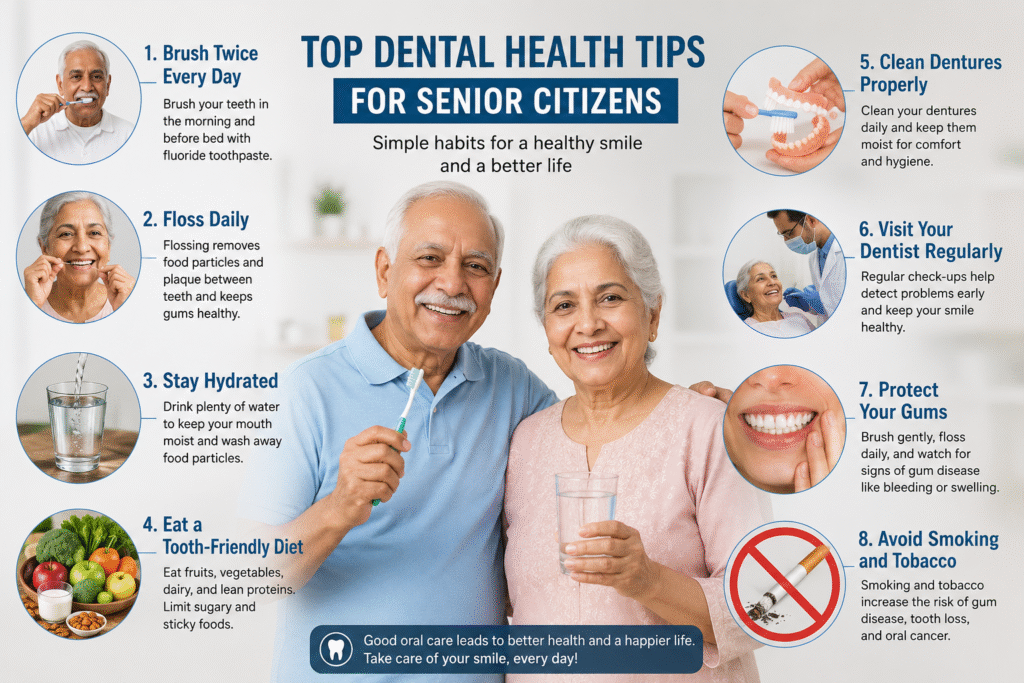
Top Dental Health Tips for Senior Citizens
Brush Twice Every Day
Brush your teeth for two minutes with a soft-bristled toothbrush and fluoride toothpaste to effectively remove plaque while minimizing the risk of gum damage.
Tip: It is recommended to replace your toothbrush every three months or earlier if the bristles show signs of wear.
Floss Daily
Flossing effectively eliminates food particles and plaque from areas between the teeth that are inaccessible to a toothbrush.
Tip: If using regular floss presents challenges, consider alternatives such as floss picks or water flossers.
Stay Hydrated
Consume an adequate amount of water during the day to help minimize dry mouth and assist in rinsing away food particles.
Tip: Chewing sugar-free gum may aid in stimulating the production of saliva.
Eat a Tooth-Friendly Diet
Select foods that promote dental health, including strong teeth and healthy gums.
Best Foods for Oral Health
- Fresh fruits and vegetables
- Dairy products like milk, yogurt, and cheese.
- Nuts and seedsLeafy green vegetables
- Lean proteinsPlenty of water
Foods to Limit
- Sugary snacks
- Soft drinks
- Sticky sweets
- Excessive tea or coffee
- Tobacco products
Clean Dentures Properly
Dentures should be cleaned daily using a denture cleanser, and it is recommended to remove them at night to allow the gums to rest.
Tip: Regular toothpaste should not be used on dentures, as it can potentially scratch their surface.
Visit Your Dentist Regularly
Regular dental checkups aid in identifying issues at an early stage, preventing them from developing into more severe conditions.
Benefits of Regular Dental Visits
- Professional teeth cleaning
- Early cavity detection
- Gum disease screening
- Oral cancer examination
- Denture adjustment if needed
Protect Your Gums
Healthy gums are essential for keeping your teeth strong.
Signs of Gum Disease
- Bleeding gums
- Swollen gums
- Bad breath
- Loose teeth
- Receding gums
Manage Medical Conditions
Conditions like diabetes, osteoporosis, and heart disease can affect oral health.
Tip: It is important to provide your dentist with details about your medical history and the medications you are currently using.
Avoid Smoking and Tobacco
Smoking is associated with an elevated risk of gum disease, tooth loss, bad breath, and oral cancer, while cessation of tobacco use significantly enhances both oral and overall health.
Benefits of Good Oral Health for Seniors
Maintaining healthy teeth and gums offers many benefits:
- Easier chewing and digestion
- Fresher breath
- Lower risk of infections
- Improved confidence
- Better speech
- Reduced risk of tooth loss
- Better overall health
Why Choose Oracle Dental Care for Senior Dental Care?
Oracle Dental Care addresses the specific dental needs of senior citizens by offering personalized care from experienced dentists, utilizing modern technology to promote oral health and comfort.
Our Senior Dental Services
Comprehensive Dental Check-ups
Routine dental check-ups play a vital role in maintaining oral health. During a thorough examination, dentists evaluate the condition of your teeth, gums, tongue, jaw, and overall oral health to identify any early indicators of cavities, gum disease, infections, oral cancer, or other potential issues. Detecting problems at an early stage facilitates prompt treatment and helps prevent more significant complications.
Professional Teeth Cleaning
Despite regular brushing and flossing, plaque and tartar can accumulate in areas of the mouth that are difficult to reach. Professional teeth cleaning effectively eliminates these buildup, aiding in the prevention of tooth decay, gum disease, and bad breath. Additionally, routine cleanings contribute to a refreshed, clean, and polished appearance, while promoting overall oral health.
Gum Disease Treatment
Maintaining healthy gums is crucial for ensuring the strength and stability of your teeth. Symptoms such as bleeding gums, swelling, gum recession, or persistent bad breath may indicate gum disease, which can be addressed with professional treatments designed to manage infection and improve gum health. Prompt intervention can help prevent tooth loss and safeguard the supportive bone structure surrounding the teeth.
Denture Care and Adjustments
Dentures necessitate consistent maintenance to preserve their comfort and functionality. Natural changes in the jawbone over time can lead to looseness in dentures. Services such as cleaning guidance, repairs, relining, and adjustments are provided to maintain a proper fit. Properly fitted dentures contribute to improved chewing, speech, and overall comfort.
Dental Implants
Dental implants are a dependable and durable option for replacing missing teeth, designed to resemble and function like natural teeth. They can enhance chewing efficiency, restore smiles, prevent bone loss, and support the maintenance of facial structure. Patients are thoroughly evaluated by the dental team to assess suitability for implants.
Tooth-Colored Fillings
Tooth-colored fillings provide a practical option for addressing cavities or minor tooth damage. Designed to match the color of natural teeth, they blend seamlessly and are barely noticeable. These fillings help restore the functionality and appearance of teeth while minimizing the removal of healthy tooth structure.
Crowns and Bridges
Crowns are utilized to reinforce teeth that are damaged or weakened, whereas dental bridges serve to replace one or more missing teeth. Both procedures aim to restore chewing functionality, enhance appearance, and support proper tooth alignment. Custom-made crowns and bridges are designed to be durable, comfortable, and harmonize naturally with surrounding teeth.
Oral Cancer Screening
Early detection plays a crucial role in effectively addressing oral cancer. During routine dental visits, examinations are conducted on the lips, tongue, cheeks, throat, and other oral tissues to check for any unusual changes or signs of concern. Consistent oral cancer screenings can help identify issues in their early stages, increasing the likelihood of successful treatment.
Preventive Dental Care
Preventive care plays a crucial role in maintaining oral health as individuals age, focusing on preserving healthy teeth and gums. Services include tailored oral hygiene instructions, fluoride applications, recommendations for dietary habits, and routine dental examinations aimed at reducing the risk of cavities, gum disease, and other dental issues. The objective is to support long-term oral health and minimize the need for extensive dental procedures.