Oral health is very important now days if we ignoring it will affect the overall health. Stress is an increasingly prevalent aspect of modern life, arising from factors such as work demands, financial obligations, family challenges, and lifestyle adjustments, often impacting individuals on a daily basis without their full awareness. Though frequently associated with issues like mental health concerns, sleep disruptions, and cardiovascular conditions, stress also significantly affects oral health. The mouth often reflects internal bodily conditions, and prolonged stress can contribute to the gradual deterioration of teeth, gums, and oral tissues.
Stress-related oral symptoms, such as jaw pain, teeth grinding, mouth ulcers, gum inflammation, and dry mouth, are often overlooked until they become severe or painful. Recognizing the connection between stress and oral health can aid in taking early preventive measures to support long-term dental well-being.
The Connection Between Stress and Oral Health
Stress initiates a series of reactions within the body, prompting the release of hormones like cortisol and adrenaline. While these hormones are intended to facilitate rapid responses to potential threats, prolonged or chronic stress can impair the immune system and adversely impact various bodily functions, including those related to oral health.
A compromised immune system can reduce the body’s ability to combat bacteria and infections in the mouth, heightening the likelihood of gum disease, tooth decay, and oral infections. Additionally, stress may contribute to behaviors such as smoking, excessive alcohol use, poor dietary habits, and neglect of oral hygiene, collectively fostering conditions that may negatively impact dental health.
Stress can influence behavior patterns, potentially leading individuals to neglect proper brushing, miss dental appointments, or turn to sugary foods for comfort, all of which can gradually result in significant oral health issues that might necessitate costly treatments over time.
Teeth Grinding and Jaw Clenching Due to Stress
Teeth grinding, or bruxism, is a prevalent oral health issue often associated with stress. This condition frequently occurs unconsciously, particularly during sleep, and is commonly triggered by stress and anxiety. Persistent grinding exerts significant pressure on the teeth and jaw muscles, potentially resulting in various complications.
Common Symptoms:
- Headaches
- Jaw pain
- Tooth sensitivity
- Facial discomfort
- Worn tooth surfaces
- Pain around the jaw or ears after waking up
Jaw clenching stemming from emotional tension can contribute to temporomandibular joint disorders, often referred to as TMJ disorders. This condition impacts the jaw joint and nearby muscles, potentially causing discomfort during chewing and speaking. Symptoms commonly linked to TMJ disorders include clicking sounds, limited jaw mobility, and persistent facial pain.
Stress and Gum Disease
Stress is an important factor in the development and progression of gum disease, as maintaining healthy gums depends on a strong immune system to combat harmful bacteria. Chronic stress can impair the body’s defense mechanisms, increasing the susceptibility of gums to inflammation and infection.
Gingivitis, an early stage of gum disease, is characterized by symptoms such as redness, swelling, bleeding gums, and bad breath. Without treatment, it can develop into periodontitis, a more serious condition that affects the supporting structures of the teeth, potentially resulting in tooth mobility and loss.
Stress can lead individuals to neglect oral hygiene routines or postpone professional dental care, which, when coupled with elevated cortisol levels, creates conditions conducive to rapid bacterial growth around the gum line. Additionally, smoking and poor dietary choices often associated with stress may exacerbate gum-related issues.
Dry Mouth Caused by Anxiety and Stress
Stress and anxiety may contribute to decreased saliva production, a condition referred to as xerostomia or dry mouth. Saliva is essential for maintaining oral health as it aids in removing food particles, neutralizing acids, and inhibiting the growth of bacteria in the mouth.
Reduced saliva production can lead to dryness, stickiness, and discomfort in the mouth, potentially causing challenges with swallowing, speaking, or tasting food effectively. Ongoing dryness may also heighten the likelihood of cavities, gum disease, bad breath, and oral infections.
Some medications prescribed for anxiety, depression, or stress management may have dry mouth as a side effect, which can reduce saliva production and increase the vulnerability of tooth enamel to acid exposure and decay.
Mouth Ulcers and Stress-Related Sores
Stress is a significant factor contributing to the development of mouth ulcers and canker sores, as it weakens the immune system and increases the vulnerability of the mouth’s soft tissues to irritation and inflammation. These ulcers typically manifest as small, painful sores located on the inner cheeks, lips, gums, or tongue.
Common Areas Where Ulcers Appear:
- Inside the cheeks
- Lips
- Gums
- Tongue
Stress-related ulcers typically heal within one to two weeks; however, recurring ulcers may suggest persistent emotional stress or potential nutritional deficiencies. Additionally, inadequate sleep quality and unhealthy dietary habits linked to stress can play a role in the frequent occurrence of mouth sores.
Adopting a balanced diet, utilizing stress management strategies, and refraining from consuming spicy or acidic foods may contribute to minimizing ulcer occurrences. For persistent ulcers, seeking a professional dental assessment is recommended to identify any potential underlying conditions.
The Impact of Stress on Oral Hygiene Habits
Stress can interfere with daily routines, including oral hygiene practices, as individuals experiencing emotional or mental fatigue might neglect brushing before bed, forget to floss, or delay dental visits. Over time, such habits can contribute to plaque buildup, cavities, gum disease, and unpleasant breath.
Stress-induced eating significantly impacts oral health. During periods of stress, individuals often turn to sugary snacks, carbonated beverages, and processed foods, which contribute to increased acid production in the mouth. This heightened acidity can result in enamel erosion and a greater risk of tooth decay.
Establishing a consistent oral care routine remains important, even during times of stress. Brushing twice a day, flossing consistently, staying hydrated, and following healthy eating practices can help minimize dental issues associated with stress.
Ways to Protect Oral Health During Stressful Times
Effectively managing stress is an important approach to safeguarding both oral and overall health, with even small lifestyle adjustments having the potential to significantly minimize stress-related dental issues.
Healthy Habits to Reduce Stress:
- Regular physical activity helps lower stress hormone levels.
- Exercise naturally improves mood and mental health.
- Meditation can help relax the mind and body.
- Yoga helps reduce tension and stress.
- Breathing exercises can reduce anxiety and jaw clenching.
- Relaxation techniques help control emotional stress.
Importance of Sleep:
- Getting enough sleep is very important for oral health.
- Lack of sleep increases stress levels.
- Poor sleep weakens the immune system.
- Good sleep helps the body heal and recover properly.
Healthy Diet for Strong Teeth and Gums:
- Consume a well-rounded diet that includes essential vitamins and minerals to support overall health.
- Calcium contributes to the strength of teeth and bones, while vitamin C promotes healthy gums.
- Antioxidants play a role in minimizing inflammation in oral tissues, and staying hydrated by drinking sufficient water helps maintain oral health.
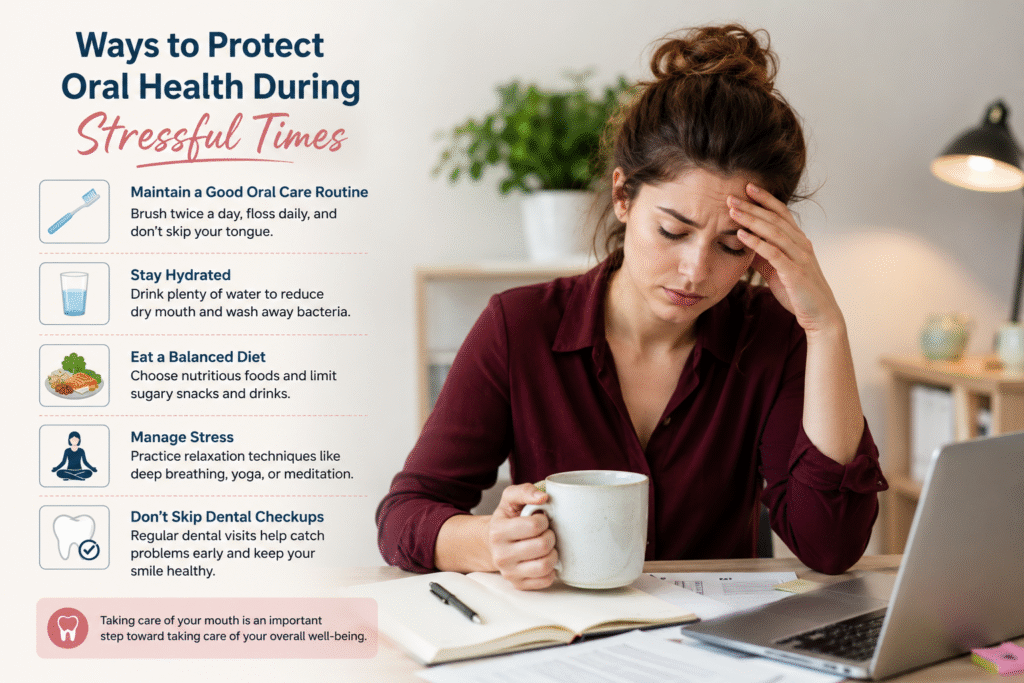
Regular dental checkups play a vital role in identifying early indicators of stress-related oral issues, such as tooth wear, gum disease, dry mouth, and oral lesions, allowing for timely intervention before these problems worsen. Incorporating professional advice alongside effective stress management practices can support overall oral health and well-being.
Stress extends its influence beyond emotional well-being, exerting a significant impact on oral health by affecting teeth, gums, jaw muscles, saliva production, and overall immunity. Issues such as teeth grinding, gum disease, mouth ulcers, and dry mouth can arise from chronic stress, potentially causing harm to oral tissues if not addressed.
Recognizing the link between stress and oral health can help in implementing early preventive measures. Adopting healthy lifestyle practices, maintaining proper oral hygiene, managing stress effectively, and attending regular dental checkups collectively contribute to safeguarding oral health. Achieving and maintaining a healthy smile involves not only routine dental care but also fostering emotional well-being and overall health.
Faqs
1. Can stress really cause tooth pain?
Stress can contribute to tooth pain by causing teeth grinding, jaw clenching, gum inflammation, and heightened tooth sensitivity.
2. How do I know if I grind my teeth during sleep?
Typical indicators include headaches in the morning, jaw discomfort, worn-down teeth, tooth sensitivity, and disrupted sleep patterns.
3. Can stress cause bleeding gums?
Chronic stress can compromise the immune system and elevate inflammation levels, which may increase the likelihood of gum bleeding and infection.
4. Why does my mouth feel dry during anxiety?
Stress and anxiety can decrease saliva production, leading to dryness, unpleasant breath, and discomfort within the mouth.
5. What is the best way to protect oral health during stress?
Maintaining proper oral hygiene, managing stress, consuming nutritious foods, staying adequately hydrated, and scheduling regular dental visits are effective preventive practices.