
Dental Implants at Oracle Dental Care is recognized as one of the leading dental clinics in Vijayawada. The first ISO certified dental clinic in Vijayawada Providing a range of dental services utilizing modern technology and personalized care, the clinic offers treatments from routine checkups to complex procedures, including smile makeovers, dental implants, root canal treatments, orthodontics, and cosmetic dentistry.
Focused on maintaining a comfortable and hygienic environment, the clinic is dedicated to delivering comprehensive oral healthcare in Vijayawada through advanced techniques and a patient-centered approach.
Led by Dr. Manohar, the clinic has earned a strong reputation for excellence in modern dentistry. With extensive clinical experience and a commitment to advanced dental care, Dr. Manohar emphasizes accurate diagnoses, efficient treatment plans, and durable dental solutions for patients. His focus on ethical practices and patient-centered care has contributed to improved oral health and confidence for many individuals.
Modern advancements in digital technology have significantly enhanced dental implant treatments, improving the safety, speed, and comfort of procedures for patients. Oracle Dental Care utilizes these advanced implant technologies to increase precision, support efficient healing, and enhance long-term success rates. Below are some of the cutting-edge technologies being applied to dental implants in 2026.
1. 3D CBCT Scanning
2. Computer-Guided Implant Surgery
3. Digital Intraoral Scanners
4. 3D Printed Dental Implants
5. Zirconia Dental Implants
6. Same-Day Dental Implants
7. Smart Dental Implants
Full Mouth Dental Implants: Procedure, Cost & Recovery
Full-mouth dental implants are a comprehensive tooth replacement option intended for individuals who have lost several or all teeth in either the upper or lower jaw. This procedure involves the precise placement of dental implants into the jawbone to anchor a full set of fixed artificial teeth.
The process typically starts with a thorough dental assessment, digital imaging, and treatment planning, followed by the surgical placement of implants and the fitting of custom-designed prosthetic teeth. Compared to traditional dentures, this solution offers a natural appearance, enhanced chewing functionality, and durable stability.
The cost of full-mouth dental implants in Vijayawada may vary depending on the number of implants required, the type of implant system used, bone grafting needs, and the overall complexity of the treatment.
The recovery period following full-mouth dental implant treatment typically ranges from a few weeks to several months, depending on the patient’s bone healing ability and overall oral health. Minor swelling and discomfort may occur during the initial healing phase but are generally manageable with appropriate care and prescribed medications. Adhering to the dentist’s instructions, maintaining proper oral hygiene, and attending regular follow-up appointments are essential for successful healing and durable implant outcomes.
Immediate Dental Implants – Same Day Teeth Explained
What Are Immediate Dental Implants?
- Immediate dental implants are a modern tooth replacement method in which the implant is inserted directly following tooth extraction.
- In certain instances, temporary teeth may also be attached on the same day,
- A procedure often referred to as “Same Day Teeth” or “Teeth in a Day.”
How Does the Procedure Work?
- A dental examination and digital scans are conducted, followed by the careful removal of the damaged tooth.
- The dental implant is then placed into the jawbone immediately after the extraction.
- In some cases, a temporary crown or bridge may be attached on the same day.
- Once healing is complete, permanent teeth are secured in place.
Benefits of Same Day Dental Implants
- Quicker restoration of smiles.
- shorter treatment duration.
- Reduced number of dental appointments.
- Preservation of jawbone structure.
- Enhanced chewing and speaking functions.
- Natural-looking outcomes.
- Minimally invasive approach compared to traditional techniques.
Signs You Need Dental Implants
Dental implants can help restore your smile, improve oral function, and provide long-lasting tooth replacement solutions.
- Missing one or more teeth
- Difficulty while chewing food
- Loose or shifting teeth
- Severe tooth damage or fracture
- Persistent tooth pain or infection
- Difficulty speaking clearly due to missing teeth
- Bone loss in the jaw area
- Uncomfortable or loose dentures
- Gaps affecting smile appearance
- Difficulty biting or chewing properly
- Sunken facial appearance due to tooth loss
- Repeated dental bridge failures
- Low confidence because of missing teeth
- Advanced gum disease causing tooth loss
- Teeth that cannot be saved with other treatments
Are dental implants painful?
Dental implant procedures are typically not associated with significant pain, as local anesthesia is administered during treatment. Patients commonly report experiencing mild discomfort, swelling, or soreness for a few days following the procedure. With modern technology and appropriate aftercare, dental implants are regarded as a reliable and comfortable option for tooth replacement.
How Long Do Dental Implants Last?
Dental implants are widely regarded as a durable and long-lasting option for replacing missing teeth. When combined with proper oral hygiene, routine dental checkups, and overall good health, they can last between 15 to 25 years or, in some cases, a lifetime. The titanium implant embedded in the jawbone is engineered to fuse securely with the bone, offering strong stability and reliable support for prosthetic teeth.
The longevity of dental implants can differ based on factors such as oral hygiene practices, smoking, gum health, bone condition, and consistent dental care. Although the implant itself is designed to last for many years, the crown or artificial tooth attached to it may require replacement over time due to typical wear and tear. Maintaining good oral hygiene and attending regular dental check-ups are essential for supporting the durability and effectiveness of dental implants.
Bone Grafting Before Dental Implants – Why Is It Needed?
Bone grafting is a dental procedure conducted when the jawbone lacks sufficient health or density to support dental implants. Factors such as tooth loss, gum disease, injuries, infections, or extended denture use can contribute to bone loss. As dental implants require a solid bone foundation to ensure stability and durability, bone grafting serves to reconstruct and fortify the jawbone in preparation for the implant process.
Specialized bone graft materials are applied to the affected area during treatment to promote natural bone regeneration and enhance bone density. This procedure establishes a stable base for implant placement, with contemporary bone grafting methods designed to be safe, effective, and minimally invasive, contributing to improved implant stability, enhanced oral function, and durable dental outcomes.
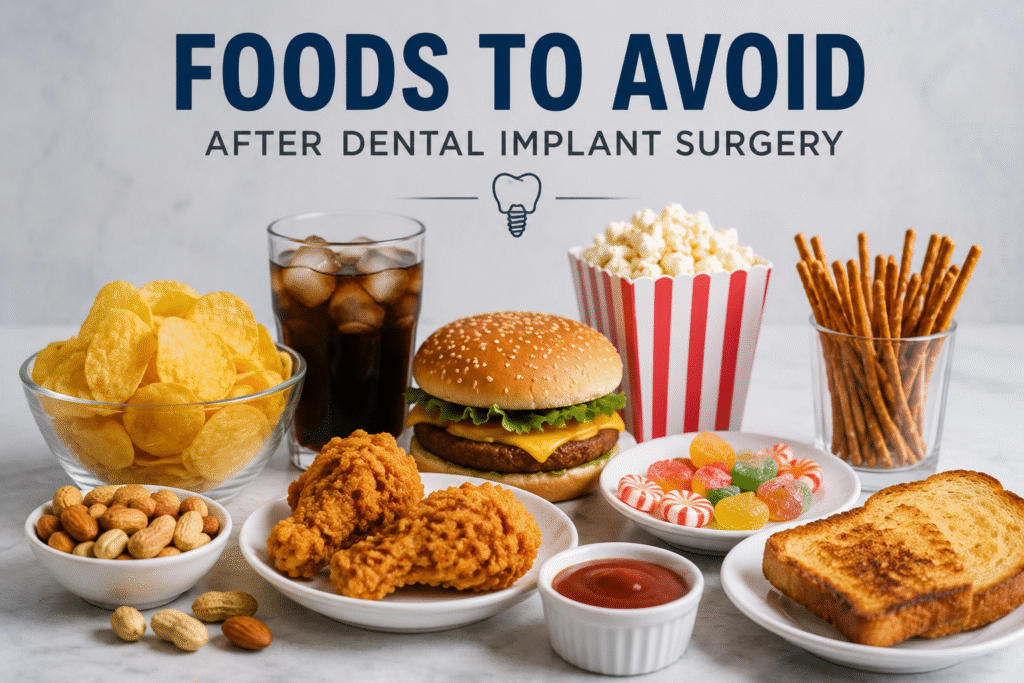
Foods to Avoid After Dental Implant Surgery
Following dental implant surgery, maintaining appropriate care and adhering to a soft diet are essential for effective healing and implant recovery. It is advisable to avoid specific foods during the healing process, as they may cause irritation, exert pressure on the implant area, or heighten the likelihood of complications. Hard foods like nuts, chips, hard candies, and ice should be excluded, as they have the potential to harm the surgical site or apply undue pressure to the implant.
Sticky and chewy foods, including chewing gum, caramel, and tough meats, should be avoided, as they can interfere with the healing process. Additionally, spicy and very hot foods may cause gum irritation and discomfort post-surgery. Patients are also encouraged to refrain from consuming carbonated drinks and alcohol and from smoking, as these may hinder recovery and impact the success of implants. During the initial recovery phase, soft foods like yogurt, mashed potatoes, soups, smoothies, and soft rice are typically recommended to support a more comfortable healing experience.
Dental implants serve as an effective and durable option for replacing missing teeth and enhancing smile functionality. Achieving successful outcomes depends on thorough treatment planning, the use of advanced dental technology, and adherence to post-treatment care instructions. Procedures like bone grafting and maintaining a soft diet following surgery contribute to improved healing and increased implant stability.
Modern implant procedures and professional dental care enable patients to achieve enhanced oral functionality, comfort, and aesthetically natural smiles. Consistent dental visits and proper oral hygiene practices are crucial for ensuring the longevity of dental implants and maintaining overall oral health.