Seeing your baby’s first tooth appear is a precious moment that fills every parent with joy. It may be just a tiny tooth, but it marks an important step in your little one’s development. Some parents believe that their child’s first teeth don’t need much attention because they are only temporary. Although they are temporary, baby teeth help children chew their food comfortably, develop clear speech, and create enough space for their permanent teeth to grow properly. That is why caring for your child’s milk teeth from the beginning is so important.
The short answer is yes, they do. Milk teeth shape your child’s speech, eating habits, jaw growth and even the position of the permanent teeth that follow. In this guide, we explain how milk teeth develop, how to look after them, and when to bring your child to the dentist.

What Are Milk Teeth?
Milk teeth, also called baby teeth, are the first little teeth that appear as a child grows. They play an important role in a child’s early development by helping them chew food, speak clearly and develop a healthy smile. As children grow, they usually develop 20 baby teeth, with 10 in the top row and 10 in the bottom row of their mouth. Although these teeth are temporary, taking good care of them is essential for maintaining healthy gums and supporting the proper growth of permanent teeth.
They begin to form before birth and appear in the mouth over the first few years of life. Because these teeth are smaller and have thinner enamel than permanent teeth, they can decay faster. That is one more reason to protect them early.
Why Milk Teeth Matter More Than You Think
It is easy to assume that temporary teeth need only temporary attention. In reality, they do several important jobs:
- Chewing: Healthy teeth help children eat a balanced diet comfortably.
- Speech: Clear pronunciation depends partly on well-placed teeth.
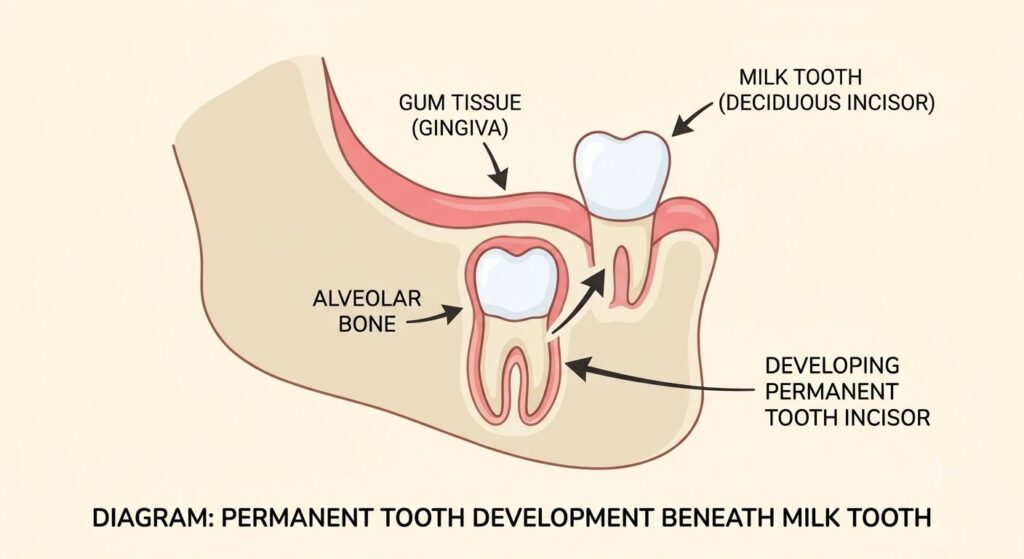
- Space-keeping: Each milk tooth holds the place for the permanent tooth beneath it.
- Jaw development: Chewing exercises the jaw and helps it grow properly.
- Confidence: A healthy smile makes children happier to talk and laugh.
When a milk tooth is lost too early because of decay or injury, neighboring teeth may drift into the gap. This may cause permanent teeth to grow in crowded or misaligned positions.
Milk Teeth Eruption Chart
Every child grows at their own pace, so a few months of difference is normal. The ages below are only a general guide.
| Tooth | Typical age of eruption |
| Lower central incisors (front) | 6 to 10 months |
| Upper central incisors (front) | 8 to 12 months |
| Upper lateral incisors | 9 to 13 months |
| Lower lateral incisors | 10 to 16 months |
| First molars | 13 to 19 months |
| Canines (pointed teeth) | 16 to 23 months |
| Second molars | 23 to 33 months |
By about 3 years of age, most children have all 20 milk teeth.
When Do Milk Teeth Fall Out?
Shedding usually starts around 6 years of age and continues until about 12 years. The front teeth tend to go first, and the back molars are the last to leave.
| Tooth | Typical age of shedding |
| Central incisors | 6 to 7 years |
| Lateral incisors | 7 to 8 years |
| First molars | 9 to 11 years |
| Canines | 9 to 12 years |
| Second molars | 10 to 12 years |
A loose tooth should be allowed to wobble free on its own. Pulling it out early can cause bleeding or leave a sore gap.

Teething: What Is Normal and What Helps
Teething can begin at around 6 months. Babies may drool more, chew on everything, feel fussy or have slightly sore gums. Some also sleep a little less than usual.
Here are safe ways to ease the discomfort:
- Gently rub your baby’s gums with a clean finger.
- Offer a clean, firm rubber teething ring that has been chilled in the fridge, not frozen
- Keep a soft cloth handy for the extra drool
Please avoid teething gels that contain numbing medicine unless a doctor advises them, and do not give honey to a child under one year. If your baby has a high fever, diarrhoea or seems unusually unwell, speak to a doctor rather than blaming teething.
How to Clean Milk Teeth at Every Age
Good habits are easiest when they start early.
- Before the first tooth: Wipe your baby’s gums with a soft, clean, damp cloth after feeds.
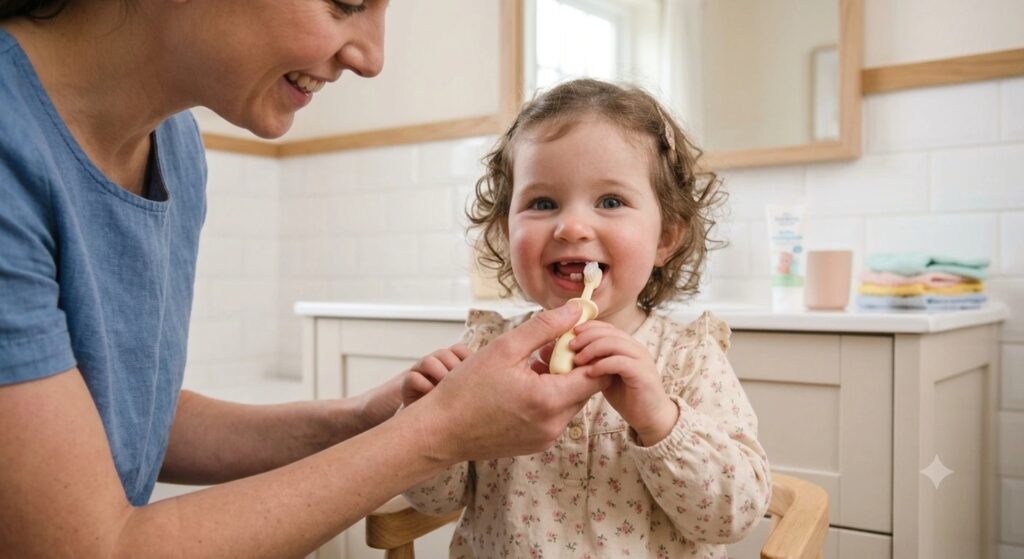
From the first tooth: Brush twice a day with a soft, small-headed brush. Apply a small smear of fluoride toothpaste, approximately the size of a single grain of rice.
Ages 3 to 6: Use a pea-sized amount of fluoride toothpaste and help your child brush until they can do it well alone, usually around 7 or 8 years.
Once teeth touch: Start gentle flossing, because brushes cannot clean between tight teeth. Make brushing fun.Sing a two-minute song, let your child pick a colored brush, or brush together as a family.
Habits That Can Harm Milk Teeth
Some common daily habits may seem harmless, but they can gradually affect children’s dental health and weaken their teeth:
- Sleeping with a milk or juice bottle: Sugar pools around the teeth and fuels decay, often called bottle caries
- Frequent sweet snacks and drinks: Toffees, biscuits, chocolates and packaged juices keep the mouth acidic for long periods.
- Long-term thumb sucking or pacifier use: : Beyond the age of about 3 to 4 years, these habits can push teeth forward and affect the bite.
- Skipping brushing at night: Overnight, there is less saliva to protect the teeth, so bedtime brushing matters most.
Water after sweets, fruit instead of candy and a fixed snack time can make a real difference.
Common Milk Teeth Problems
- Tooth decay (cavities): White or brown spots, small holes or complaints of pain while eating cold or sweet food may signal decay. Early treatment is simple, quick and comfortable. Delaying it can lead to infection and toothache.
- Dental injuries: Falls are common when children begin to walk and run. If a milk tooth is knocked out, do not try to put it back, because this could harm the permanent tooth below. Rinse gently, control any bleeding with clean gauze and see a dentist soon.
- Teeth growing too close together or having noticeable spaces between them: Some spacing between milk teeth is healthy, as it leaves room for larger permanent teeth. Very crowded milk teeth, however, may suggest a lack of space later, so a check-up is wise.
- Delayed or early tooth loss: If teeth appear much later than expected, or a tooth is lost long before the usual age, a dentist can check whether anything needs attention.
When Should My Child First See a Dentist?
It is best to take your child for their first dental check-up as soon as the first tooth appears, and no later than their first birthday. Early visits are short, gentle and mostly about getting your child used to the clinic. The dentist checks the gums and teeth, guides you on cleaning and feeding, and answers your questions.
After that, regular check-ups every six months help catch small problems before they grow.
Five Simple Tips for Strong Milk Teeth
- Start cleaning gums even before teeth appear
- Use a fluoride toothpaste in the right amount for your child’s age
- Limit sugary snacks and drinks, and keep them to mealtimes
- Never put your baby to bed with a bottle
- Schedule dental check-ups every six months
FAQ’s
1. How many baby teeth develop in a child’s mouth?
A child has 20 milk teeth, 10 on top and 10 at the bottom.
2. At what age do milk teeth start to appear?
Most babies get their first tooth at around 6 months, although some begin a little earlier or later. Both are usually normal.
3. Do milk teeth really need fillings if they will fall out anyway?
Yes, when decay is present. An untreated cavity can cause pain, swelling and infection, and may affect the permanent tooth underneath.
4. When should I worry about a late first tooth?
If your child has no teeth by about 15 to 18 months, it is sensible to have a dentist check. Most late teethes turn out to be perfectly healthy.
5. Is it safe to pull out a loose milk tooth at home?
It is best to let the tooth come out naturally. If it is very loose and hanging, a dentist can remove it safely and comfortably.
6. How can I help my child who is afraid of the dentist?
Stay calm, talk about the visit positively and avoid words like “pain” or “injection”. Choose a friendly clinic and book short, early visits so the dentist feels familiar.
7. Which toothpaste is best for toddlers?
A fluoride toothpaste in the right quantity is recommended for children. Use a rice-grain smear for babies and toddlers. For children between 3 and 6 years old, use a small amount of toothpaste about the size of a pea. Ask your dentist to suggest a suitable one.
8. Can a baby tooth be stained or discolored?
Yes. Causes include injury, decay, certain medicines and poor cleaning. A dentist can find the reason and suggest what to do.
Book Your Child’s Dental Check-Up
Healthy milk teeth are the foundation of a lifetime of good smiles. If your child has a new tooth, a loose tooth or a tooth that worries you, a quick check-up can give you peace of mind.
Book an appointment at Oracle Dental Care today, and let us help your little one build a confident, cavity-free smile.
Oracle Dental Care, Road No. 16, opposite Swapna Hospitals, Bharathi Nagar, Kanuru, Vijayawada, Andhra Pradesh 520007. Call: 094902 27599
Everyone deserves to smile.