You take a sip of cold water and one tooth lights up with a sharp, electric pain. It’s gone in seconds, so you shrug it off. Then it happens again with the next cup of chai, or the next scoop of kulfi.
That zing is tooth sensitivity, and it’s one of the most common reasons people book a dental visit. It is usually treatable, but the right treatment depends on what is causing it. This guide covers the usual causes, what dentists actually do about them, and what you can try at home in the meantime.
What’s Happening Inside the Tooth
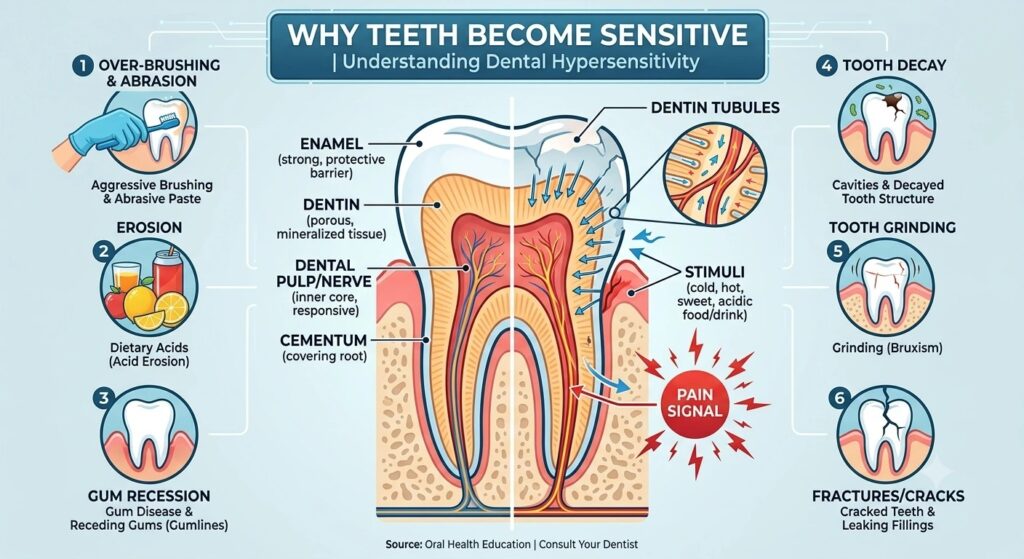
Each tooth has a hard outer shell of enamel. Under it sits dentin, a softer layer full of microscopic channels that lead toward the nerve. While enamel or gum covers the dentin, you feel nothing. Once it is exposed, a cold drink, a hot sip or a sugary bite reaches those channels, and the nerve reacts instantly.
So sensitivity is a symptom, not a disease. Something has exposed the dentin, and the fix depends on what.
Why Teeth Become Sensitive
Brushing too hard: Scrubbing with a stiff brush wears enamel and pushes gums back, especially along the gum line. Many people brush harder because they think it cleans better. It doesn’t.
Acidic food and drink: Fizzy drinks, packaged juices, lemon water and tangy snacks soften enamel a little with each exposure. Sipping them through the day is worse than having them with a meal.
Receding gums: When gums pull back, the root surface is exposed, and roots have no enamel to protect them. Gum disease, age and rough brushing are the usual reasons.
A cavity or a cracked tooth: If only one tooth reacts, especially when you bite down or eat something sweet, suspect decay, a crack or a worn filling rather than general sensitivity.
Night-time grinding: If you wake up with a sore jaw or a dull headache, you may be clenching in your sleep. Over the years, this flattens and thins enamel.
Recent dental work: Whitening, scaling and fillings can leave teeth touchy for a few days. That usually settles by itself.
Tooth Sensitivity or Something More Serious?
Ordinary sensitivity is short and sharp, and it needs a trigger. See a dentist soon if you notice any of these:
- Pain that lingers for a minute or more after the cold or heat is gone
- A toothache that starts on its own, or wakes you at night
- Pain when you bite or chew
- Swollen or bleeding gums
- A visible hole, chip or broken filling
Swelling of the face or gums, or trouble swallowing or breathing, needs urgent care the same day.
Treatment Options, From Simple to Specialized
1. Desensitizing toothpaste: For mild cases, this is where most dentists start. These pastes help calm the nerve response or seal the exposed channels. Use one twice a day and be patient: it usually takes a couple of weeks of regular use to notice a difference. Rinse lightly instead of washing the paste away completely, so some of it stays on your teeth.
2. Fluoride varnish: Applied in the clinic in a few minutes, a fluoride varnish strengthens weak enamel and reduces sensitivity. It is quick, painless and often repeated at check-ups.
3. Bonding or sealing the exposed area: If the root or worn area is bare, the dentist can cover it with a tooth-colored material. This acts as a new protective layer and also helps if the area looks worn.
4. Fillings or repairs: When the cause is a cavity, a cracked tooth or a leaking old filling, no toothpaste will fix it. The tooth needs to be repaired.
5. Gum treatment : If gum disease or recession is exposing the roots, treating the gums is the real solution. This may mean a deep cleaning, better brushing technique, or in some cases a gum graft.
6. A night guard: If you grind your teeth, a custom-made guard protects them while you sleep.
7. . Root canal treatment: This is a last resort, needed only when the nerve inside the tooth is badly inflamed or infected. Sensitivity alone rarely means you need one.
What You Can Do at Home
- Switch to a soft-bristled brush and use light, short strokes.
- Use a fluoride toothpaste, and try one made for sensitive teeth.
- Cut down on sipping fizzy drinks and sour snacks; have them with meals instead.
- Rinse with plain water after acidic foods, but wait around 30 minutes before brushing.
- Let very hot or very cold drinks cool or warm a bit while a tooth is flaring up.
- Clean between teeth daily to keep gums healthy.
These steps ease symptoms, but they don’t fix a cavity or a crack. If the pain keeps coming back, it’s time for an examination.
What to Expect at the Dentist
A visit for sensitivity is usually straightforward. The dentist will ask which foods trigger the pain and how long it lasts, then check your teeth and gums. Tapping a tooth, a gentle puff of air, or an X-ray helps pinpoint the culprit. You’ll then get a plan, ideally with the cost explained up front. Costs vary widely: a fluoride application is a very different expense from a filling or a root canal, so ask for an estimate before you agree to anything.
FAQ’S
1. Can sensitive teeth go back to normal?
Often, yes. Once the cause is dealt with, the discomfort usually settles. Enamel itself doesn’t grow back, though, so protecting what’s left matters.
2. Is sensitivity a sign of a cavity?
It can be. This is more likely when one tooth is affected, or when sweets set it off.
3. Why do my teeth hurt with cold water but not hot tea?
Cold is the most common trigger because it makes the fluid in the dentin channels contract quickly. Some people react to heat or sugar instead, or to both.
4. How long does sensitivity last?
After whitening or a filling, a few days is typical. If it hasn’t improved in two to three weeks, get it checked.
5 Do I need a root canal?
Only if the nerve is infected or irreversibly damaged; a dentist will confirm that with an examination and an X-ray.
6. Can I prevent it?
Largely, yes: gentle brushing, fluoride toothpaste, less acid, healthy gums, no tobacco, and check-ups twice a year.
Don’t Put It Off
A little sensitivity now and then isn’t alarming. Pain that keeps coming back is your tooth telling you something, and the earlier it’s looked at, the simpler and cheaper the fix usually is.
Tooth pain getting in the way of your chai?
Book a consultation at Oracle Dental Care. The dentist will find the cause, explain your options clearly, and get you comfortable again.