Dental checklist: As children get ready for a new school year with items like books, uniforms, backpacks, and school supplies, it is important for parents to also prioritize their dental health. Maintaining a healthy smile plays a significant role in supporting a successful and productive school year, alongside academic preparation.
At Oracle Dental Care, one of the best dental clinics in Vijayayawada, we are dedicated to providing exceptional dental care for children and families. The dental team provides a comprehensive range of services, including preventive care, pediatric dentistry, cavity fillings, fluoride treatments, teeth cleaning, orthodontic consultations, root canal procedures, dental crowns, smile enhancements, dental implants, and overall oral health solutions.
Parents are encouraged to arrange a thorough dental examination for their children before the start of the school year to identify any potential oral health issues. Routine dental check-ups are effective in detecting cavities, plaque accumulation, gum conditions, and other dental concerns at an early stage. Taking preventive measures through regular dental care may help avoid future complications, expenses, and discomfort.
Parents are encouraged to promote healthy oral care routines at home alongside regular dental visits. It is advisable for children to brush their teeth twice daily with fluoride toothpaste, floss every day, and reduce their intake of sugary snacks and drinks. Including nutritious options like fruits, vegetables, cheese, and yogurt in lunchboxes can further support strong teeth and healthy gums.
The focus is on providing a comfortable and child-friendly environment designed to help young patients feel at ease and confident during their dental visits, with the aim of supporting each child in maintaining a healthy and lasting smile.
During the back-to-school season, consider prioritizing your child’s oral health. Scheduling a dental check-up can help address potential dental issues early and support a confident, comfortable start to the academic year with a healthy smile.
Why Oral Health Matters for School Children
Oral health is an integral part of a child’s overall well-being and development, as healthy teeth and gums enable them to eat nutritious foods with ease, communicate clearly, and smile confidently. Proper oral hygiene practices can reduce the likelihood of dental issues that may interfere with their daily activities and overall quality of life.
Dental conditions like cavities, toothaches, gum infections, and sensitivity can result in considerable discomfort and pain, potentially hindering children’s ability to eat, focus during lessons, or engage fully in school activities. Untreated dental issues often contribute to increased school absences, which may negatively impact academic performance and social growth.
Consistent dental check-ups and proper oral hygiene practices can assist in addressing issues before they become severe. Encouraging children to brush and floss daily, alongside scheduling regular dental appointments, can help support their oral health throughout the school year. Maintaining good oral health contributes to overall well-being and confidence, aiding children in concentrating on academics, social interactions, and personal development both in and out of the classroom.
The Ultimate School Reopening Dental Checklist
1. Schedule a Dental Check-Up Before School Starts
A dental examination aids in detecting cavities, gum issues, and other oral health conditions at an early stage, preventing them from escalating into more serious problems.
2. Check for Cavities and Tooth Decay
Untreated cavities have the potential to cause pain and discomfort, which could impact a child’s performance in school.
3. Get Professional Teeth Cleaning
Professional cleaning helps eliminate plaque and tartar accumulation, promoting the maintenance of healthy teeth and gums.
4. Replace Old Toothbrushes
It is recommended to begin the school year with a new toothbrush for your child and to replace toothbrushes every three to four months.
5. Stock Up on Dental Essentials
Ensure your child has:
- Toothbrush
- Fluoride toothpaste
- Dental floss
- Mouthwash (if recommended by the dentist)
6. Encourage Proper Brushing Habits
It is recommended that children brush their teeth twice a day for a minimum of two minutes using fluoride toothpaste.
7. Teach the Importance of Flossing
Flossing is effective in removing food particles and plaque from areas between teeth that are inaccessible to toothbrushes.
8. Evaluate Orthodontic Needs
If your child has misaligned teeth, bite concerns, or requires braces, consider scheduling an orthodontic consultation.
9. Check for Gum Health
Watch for signs such as:
- Bleeding gums
- Swollen gums
- Bad breath
- Gum sensitivity
10. Prepare Healthy School Snacks
Choose tooth-friendly snacks such as:
- Apples
- Carrots
- Cheese
- Yogurt
- Nuts
Avoid excessive sugary snacks and beverages.
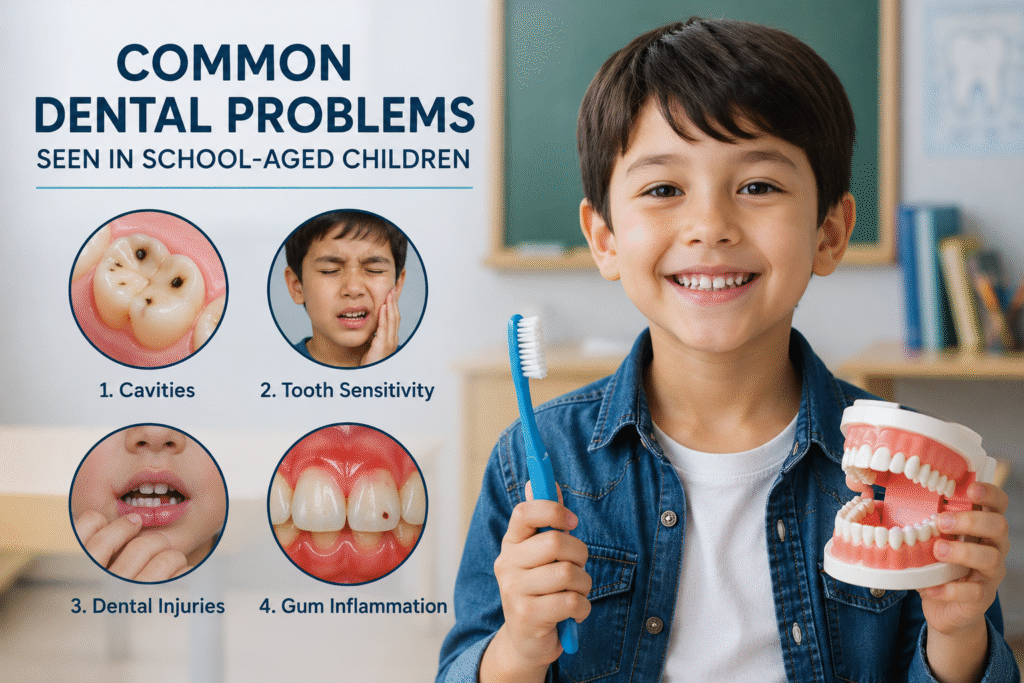
Common Dental Problems Seen in School-Aged Children
Cavities
Cavities are a prevalent dental issue among school-aged children, resulting from acids produced by bacteria in the mouth that erode tooth enamel. The likelihood of tooth decay increases with frequent consumption of sugary snacks, candies, chocolates, and soft drinks. If not addressed, cavities may lead to tooth pain, sensitivity, eating difficulties, and potential infections. Maintaining healthy teeth can be supported by regular brushing, flossing, and routine dental check-ups.
Tooth Sensitivity
Tooth sensitivity is a prevalent issue among children, arising from the erosion of protective enamel or cavities that expose the inner layers of the tooth. This condition can cause discomfort when consuming hot, cold, sweet, or acidic foods, potentially impacting their eating experience. Sensitivity may signify an underlying dental concern that necessitates professional evaluation. Timely diagnosis and intervention are valuable for alleviating discomfort and safeguarding the teeth against additional harm.
Gum Inflammation
Healthy gums are essential for maintaining strong teeth. Poor oral hygiene can lead to plaque buildup along the gum line, causing redness, swelling, tenderness, and bleeding gums. This condition, known as gingivitis or gum inflammation, is common among children who do not brush and floss properly. If ignored, gum problems can worsen over time and affect overall oral health. Encouraging proper brushing habits and regular dental cleanings can help keep gums healthy and disease-free.
Dental Injuries
Children of school age frequently participate in sports, playground activities, and outdoor games, which can increase their risk of dental injuries caused by falls, collisions, or accidents. Such incidents may lead to chipped, cracked, loosened, or knocked-out teeth, requiring prompt attention to avoid long-term complications and to save the affected tooth when feasible. The use of protective mouthguards during sports activities has been shown to effectively minimize the likelihood of dental trauma.
Orthodontic Problems
Orthodontic issues frequently arise in children as their permanent teeth emerge, with common concerns including crooked teeth, overcrowding, gaps, overbites, underbites, and misaligned jaws. These conditions may impact chewing, speaking, oral hygiene, and overall dental alignment. Early orthodontic evaluations can identify potential alignment concerns and assess the need for braces or other treatments, which, when addressed at an early stage, can often result in improved outcomes and long-term oral health.
Warning Signs Parents Should Not Ignore About Their Child’s Oral Health
Maintaining good oral health is essential for a child’s overall well-being. Many dental problems start with small symptoms that are easy to overlook. Recognizing these warning signs early can help prevent serious dental issues and ensure your child maintains a healthy smile.
- Tooth Pain
Tooth pain is a common indication of a dental issue, with children often experiencing sharp, throbbing, or persistent discomfort during activities such as eating, drinking, or even while at rest.
Possible Causes:
- Tooth decay or cavities
- Dental infection or abscess
- Food trapped between teeth
- Cracked or damaged teeth
Why Parents Should Not Ignore It:
Untreated tooth pain can worsen over time and may lead to severe infection, difficulty eating, poor sleep, and discomfort that affects daily activities. Early treatment can prevent complications and relieve pain quickly.
2. Bleeding Gums
Gums that are healthy generally do not bleed when brushing or flossing. Frequent gum bleeding in a child could suggest the presence of an underlying gum issue.
Possible Causes:
- Poor oral hygiene
- Plaque and tartar buildup
- Gingivitis (early gum disease)
- Vitamin deficiencies
Why Parents Should Not Ignore It:
Bleeding gums, if left unaddressed, may develop into more advanced forms of gum disease. Promoting effective brushing habits and arranging a dental check-up can support gum health and help prevent potential long-term issues.
3. White or Brown Spots on Teeth
Spots on the teeth, including white, yellow, or brown discoloration, are frequently indicative of early enamel damage or the onset of tooth decay.
Possible Causes:
- Early stages of cavities.
- enamel demineralization.
- high sugar intake.
- inadequate brushing practices.
Why Parents Should Not Ignore It:
These areas might appear harmless at first, but they have the potential to progress into larger cavities that may require fillings or more advanced treatment. Prompt action can often prevent further decay or reverse its progression.
4. Persistent Bad Breath
Temporary bad breath is common, but persistent bad breath that does not improve with brushing may suggest an underlying oral health concern.
Possible Causes:
- Poor oral hygiene
- Tooth decay
- Gum infection
- Dry mouth
- Bacterial buildup on the tongue
Why Parents Should Not Ignore It:
Temporary bad breath is common, but persistent bad breath that does not improve with brushing may suggest an underlying oral health concern.
5. Difficulty Chewing
Children should be able to chew without experiencing pain or discomfort, as difficulties with certain foods or complaints during meals could suggest a potential dental issue.
Possible Causes:
- Cavities
- Tooth sensitivity
- Loose or damaged teeth
- Jaw problems or infections
Why Parents Should Not Ignore It:
Challenges with chewing can impact a child’s nutrition, growth, and overall quality of life. Timely dental care can aid in improving comfort and ensuring the child obtains the necessary nutrients for healthy development.
Benefits of a Back-to-School Dental Visit
Prevents Future Dental Problems
Improves Oral Hygiene Habits
Supports Better Academic Performance
Boosts Self-Confidence
Tips for Parents to Maintain Children’s Oral Health During the School Year
The school year introduces a variety of responsibilities, including packed schedules, lunches, homework, and extracurricular activities. Amid these demands, prioritizing children’s oral health remains important, as healthy teeth and gums contribute to proper nutrition, speech development, overall well-being, and a confident smile. Below are some practical tips for parents to support their children’s dental health throughout the academic year.
1. Set a Brushing Schedule
Maintaining a consistent routine is essential for effective oral hygiene. It is recommended that children brush their teeth twice daily—once in the morning before school and once at bedtime.
2. Pack Healthy Lunches
The food children consume at school plays an important role in their oral health, as balanced and nutritious meals contribute to stronger teeth and a lower likelihood of cavities.
3. Encourage Drinking Water
Water is a highly effective beverage for supporting oral health, as it aids in removing food particles and maintaining hydration in the mouth.
4. Limit Sugary Treats
Sugary snacks and beverages significantly contribute to tooth decay, as bacteria in the mouth utilize sugar to produce acids that erode tooth enamel.
5. Schedule Regular Dental Check-Ups
Routine dental visits are essential for detecting and preventing oral health problems before they become serious.
Maintaining oral health during the school year can be straightforward by implementing a consistent brushing routine, offering nutritious meals, promoting water consumption, reducing sugary snacks, and ensuring regular dental check-ups. Establishing these practices in childhood supports not only strong teeth and healthy smiles but also contributes to lasting oral and overall health.