
Monsoon dental care tips: The rainy season provides relief from the summer heat; however, it may also impact oral health. Variations in temperature, heightened humidity, and seasonal dietary habits can foster conditions favorable for bacterial growth in the mouth. As a result, practicing effective oral hygiene during the monsoon season is essential to help prevent cavities, gum disease, bad breath, and other dental issues.
At Oracle Dental Care, we believe that prevention is better than cure. Maintaining good oral health through regular checkups and preventive care can help avoid complex dental treatments in the future. As one of the best dental clinics in Vijayawada, we are committed to providing high-quality, patient-centered care and helping you achieve a healthy, beautiful smile for life.
The rainy season’s warm and humid conditions create a favorable environment for the growth of harmful bacteria and microorganisms in the mouth. These bacteria consume food particles and sugars left on the teeth, producing acids that may gradually weaken the enamel and cause cavities. Inadequate oral hygiene can lead to increased plaque accumulation, heightening the likelihood of tooth decay and gum disease.
Another factor that affects oral health during the monsoon is the change in dietary habits. Many individuals tend to seek comfort foods like fried snacks, sweets, chocolates, tea, coffee, and sugary drinks during rainy weather, but consuming these items frequently without maintaining proper dental hygiene through brushing and flossing may lead to dental issues.
Higher humidity levels may contribute to reduced saliva production in certain individuals, potentially causing dry mouth. Saliva is crucial for clearing food particles and neutralizing harmful acids generated by bacteria. A reduction in saliva can promote bacterial growth, which may lead to bad breath, plaque buildup, and a greater susceptibility to infections.
Individuals with pre-existing dental conditions, such as tooth sensitivity, gum disease, or untreated cavities, may notice an exacerbation of symptoms during the rainy season. Factors like cold temperatures and acidic foods can contribute to heightened tooth sensitivity, while a weakened immune system may increase the likelihood of gum inflammation and infection.
Why Does Oral Health Need Extra Attention During the Monsoon?
The humid weather during the rainy season promotes bacterial growth, which can increase the risk of:
- Tooth decay
- Gum infections
- Bad breath
- Mouth ulcers
- Increased tooth sensitivity
Common Dental Problems During the Rainy Season
The rainy season often provides relief from the intense summer heat and brings more comfortable weather, but it may also contribute to a heightened risk of oral health problems. Factors such as increased humidity, shifts in dietary patterns, and the proliferation of harmful bacteria can impact the health of teeth and gums. Being aware of these potential dental concerns can aid in implementing preventive steps to maintain oral health during the monsoon season.
1. Tooth Decay
Tooth decay, or dental cavities, is a prevalent dental issue, particularly during the rainy season. Regular intake of sugary foods, fried snacks, tea, coffee, and sweet beverages creates favorable conditions for bacteria to grow. These bacteria consume food particles and generate acids that progressively wear down the tooth enamel, resulting in cavities.
2. Gum Disease
The heightened humidity during the monsoon season facilitates bacterial growth, potentially leading to plaque accumulation around the gums. If not addressed, this plaque buildup can cause gum inflammation and infection, which may progress to gingivitis or more severe periodontal conditions.
3. Bad Breath
Halitosis, or bad breath, is a prevalent issue during the rainy season, often caused by factors such as heightened bacterial activity, insufficient oral hygiene, dry mouth, and food particles lodged between the teeth.
4. Tooth Sensitivity
Tooth sensitivity often becomes more common during the rainy season, as factors like cold temperatures, acidic foods, and worn tooth enamel can expose the dentin beneath, leading to discomfort when eating or drinking items that are hot, cold, sweet, or acidic.
5. Mouth Ulcers
Mouth ulcers are small sores that form inside the mouth and can cause discomfort. Factors such as weakened immunity, stress, nutritional deficiencies, and infections may contribute to a higher likelihood of their occurrence, particularly during the rainy season.
Top Monsoon Dental Care Tips
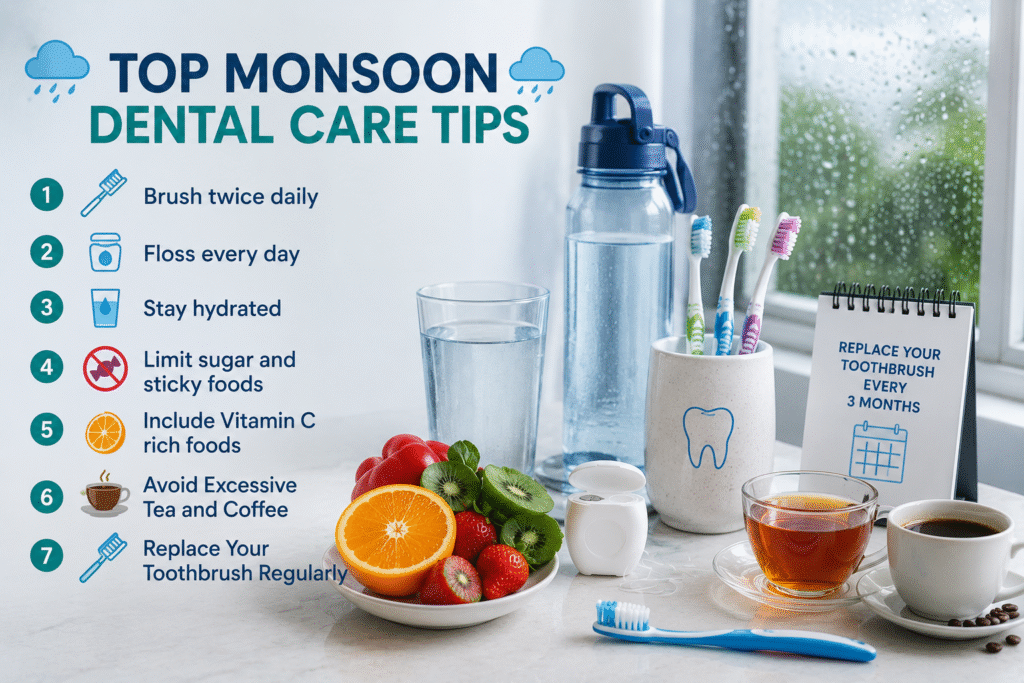
Brush Twice Daily: Brush your teeth twice daily for a minimum of two minutes using fluoride toothpaste to effectively remove plaque and reduce the risk of tooth decay.
Floss Every Day: Flossing eliminates food particles and plaque from spaces that a toothbrush cannot access, contributing to maintaining gum health when practiced daily.
Stay Hydrated: Consuming an adequate amount of water aids in removing bacteria and food particles, as well as reducing the risk of dry mouth, a condition that may lead to bad breath and cavities.
Limit Sugary and Sticky Foods: Snacks and sweets commonly enjoyed during the rainy season can adhere to teeth and promote bacterial growth. Consider limiting the consumption of chocolates, candies, and sugary drinks.
Include Vitamin C-Rich Foods: Fruits like oranges, lemons, guavas, and strawberries contribute to gum health by supporting immunity and lowering the likelihood of gum infections.
Avoid Excessive Tea and Coffee: Regular intake of tea and coffee may lead to teeth staining and enamel erosion; rinsing your mouth with water after drinking these beverages can help mitigate these effects.
Replace Your Toothbrush Regularly: A toothbrush with worn or frayed bristles is less effective at cleaning and should be replaced every three to four months or earlier if necessary.
Use an Antibacterial Mouthwash: Mouthwash reduces bacteria, freshens breath, and offers added protection against gum disease.
Foods That Promote Healthy Teeth During the Monsoon
Adding nutritious foods to your diet can help maintain strong teeth and gums.
- Milk and dairy products provide calcium.
- while leafy green vegetables offer essential vitamins and minerals.
- Apples and carrots can assist in naturally cleaning teeth.
- citrus fruits are a source of Vitamin C and nuts and seeds contribute healthy minerals.
Foods to Avoid During the Rainy Season
To reduce the risk of dental problems, avoid excessive consumption of
- Sticky sweets
- Carbonated soft drinks
- Fried snacks
- Chocolates and candies
- Acidic beverages
Importance of Regular Dental Checkups
Frequent dental checkups are important for identifying issues early, preventing them from becoming serious. Additionally, professional cleanings effectively remove plaque and tartar that cannot be addressed by regular brushing.
It is generally advised to schedule a dental checkup every six months to support proper oral health maintenance.
Tips for Children’s Dental Care Tips During the Monsoon
Parents should encourage children to:
- Brush twice daily.
- Avoid excessive sweets and chocolates.
- Drink enough water.
- Eat fruits and vegetables.
- Visit the dentist regularly.
Good oral hygiene habits developed during childhood can last a lifetime.
The rainy season may elevate the likelihood of dental issues, but adopting basic preventive practices can help maintain oral health. Brushing twice a day, flossing, following a balanced diet, and scheduling regular dental check-ups are important measures to safeguard teeth and gums during this time.
Maintaining a healthy smile requires proper dental care, and addressing signs of dental issues promptly can help preserve teeth and prevent potential complications.